Quercus, Genus, acutissima, Species,
- Genus & species
sawtooth oak
East Asia (Japan, Korea, China, Himalayan foothills of Nepal and northern India)
Overview
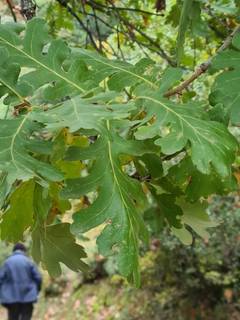
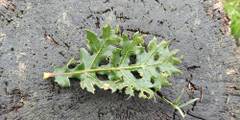
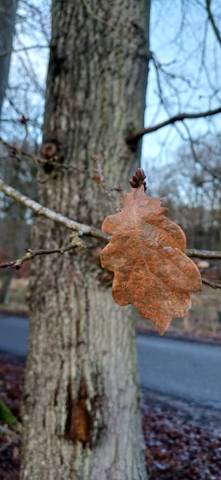
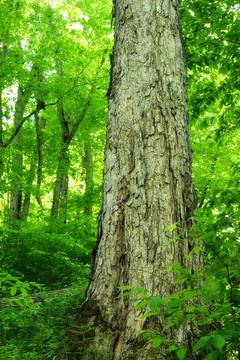
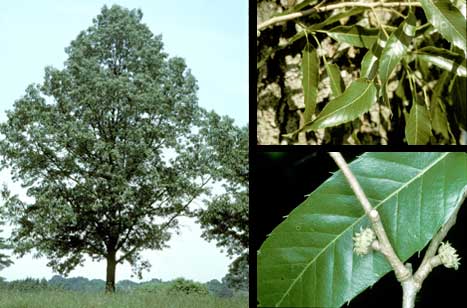
Quercus acutissima is a deciduous tree reaching 40–60 feet (12–18 m) tall and 40–60 feet (12–18 m) wide at maturity, with a broadly rounded to spreading crown on a straight trunk. The specific epithet 'acutissima' translates as 'very sharp,' referring to the bristle-tipped teeth along the leaf margins. Leaves are simple, alternate, oblong to lanceolate, 3–7 inches (8–18 cm) long and 1–2 inches (2.5–5 cm) wide, glossy dark green above with parallel pinnate veins running directly to sharp bristle-tipped teeth along the margins — a leaf shape closer to the chestnut Castanea than to the lobed or entire-margined leaves of most commonly cultivated oaks. Autumn color runs yellow through golden-brown in October–November, and the dead leaves often hold on the tree (marcescent habit) through winter into early spring, producing a rattling tan canopy in cold months rather than bare branches. Acorns are 0.8–1 inch (2–2.5 cm) long, nearly enclosed in a cup covered with long reflexed whisker-like scales 0.3–0.5 inch (8–13 mm) long — the acorn cup geometry is markedly different from the overlapping-scale cups of most oaks, with the whisker scales producing a shaggy fringed appearance on the cup exterior. Acorns mature over 2 growing seasons rather than the single-season maturation of most oaks. Growth rate is moderate to fast at 24–36 inches (60–90 cm) per year after establishment, reaching mature size in 30 years. Hardy to USDA zone 5. Leaves and acorns contain tannins that are harmful if eaten in quantity, especially to horses and grazing livestock; the risk to people is generally low. The species has escaped cultivation and established invasive populations across the southeastern United States — Pennsylvania, Maryland, Virginia, North Carolina, South Carolina, and Tennessee all list it as invasive or potentially invasive.
Native Range
Quercus acutissima is native to East Asia — Japan, Korea, China, and the Himalayan foothills of Nepal and northern India — occurring in deciduous broadleaf forests from lowlands to moderate elevations of 5,000 feet (1,500 m).Suggested Uses
Used historically as a shade tree, park tree, and wildlife mast tree at 30–40 foot (9–12 m) spacing. The 24–36 inch (60–90 cm) annual growth rate produces visible tree presence within 5–8 years of planting from standard nursery stock, which is faster than most oaks and placed the species in widespread parkway and backyard plantings from the 1960s through the 2000s. Heavy acorn production supports wildlife including deer, turkey, squirrels, and black bears, though the 2-year mast cycle produces heavy acorn drops that create litter and hazard on paved surfaces and sidewalks. The species has escaped cultivation and established invasive populations across the southeastern United States, and gardeners in Pennsylvania, Maryland, Virginia, North Carolina, South Carolina, and Tennessee choosing a fast-growing shade oak should select native alternatives such as Q. alba (white oak), Q. rubra (northern red oak), or Q. michauxii (swamp chestnut oak) rather than sawtooth oak. The plant does not grow well in small gardens (mature 40–60 foot spread exceeds residential lot dimensions) or sites where acorn drop creates litter or hazard problems.How to Identify
Appearance
Size & Dimensions
Height40' - 60'
Width/Spread40' - 60'
Bloom Information
Inconspicuous green catkins appear on new growth in April–May over a 2 week window. Acorns develop from pollinated flowers through 2 growing seasons, maturing in the autumn of the year following flowering — a biennial maturation cycle typical of the Cerris subgenus of oaks. Mast crops produce heavy acorn drops every 2–4 years that carpet the ground beneath mature trees. Heavy acorn production supports wildlife including deer, turkey, squirrels, and black bears in the tree's introduced range.
Detailed Descriptions
Foliage Description
Glossy dark green above; simple, alternate, oblong to lanceolate, 3-7 inches long and 1-2 inches wide, with parallel pinnate veins running to sharp bristle-tipped teeth along the margins; yellow to golden-brown autumn color; marcescent leaf retention through winterGrowing Conditions
Sun Requirements
Requires 6-12 hours of direct sunlight daily
• Full Sun: 6+ hours of direct sunlight
• Partial Shade: 3-6 hours of direct sunlight
• Full Shade: Less than 3 hours of direct sunlight
Care & Maintenance
Care Guide
Grow in full sun with 6 or more hours of direct light in moist, well-drained, acidic to slightly alkaline loam, clay, sand, or silt at pH 5.0–7.5. The species is among the more adaptable cultivated oaks for soil and site conditions, tolerating heavy clay, seasonally wet soils, urban compaction, and mild drought once established. Growth rate is faster than most oaks at 24–36 inches (60–90 cm) per year, which has historically recommended the species as a fast-maturing shade tree. Water deeply once per week during the first three growing seasons to establish. The species has become invasive across the southeastern United States — Pennsylvania, Maryland, Virginia, North Carolina, South Carolina, and Tennessee all list it as invasive or potentially invasive as of 2024, and planting recommendations in those regions have shifted toward native alternatives such as Q. alba, Q. rubra, or Q. michauxii. Hardy to USDA zone 5.Pruning
Prune in late winter (January–February) while trees are dormant. Remove crossing or rubbing branches and establish a central leader during the first 10–15 years of training. The broadly rounded crown develops its spreading form without shaping cuts after the leader is established. Raise lower branches for pedestrian clearance over 10 years to reach a clear trunk height of 7–8 feet (2.1–2.4 m) beneath mature specimens.Pruning Schedule
Prune: January–February
winter