Overview
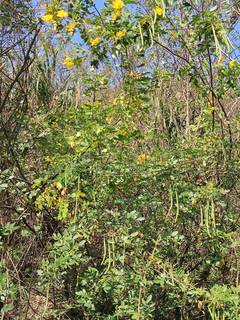
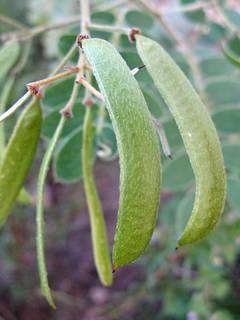
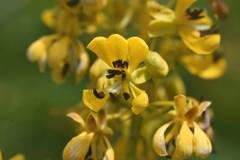
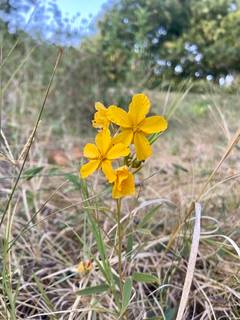
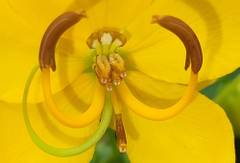
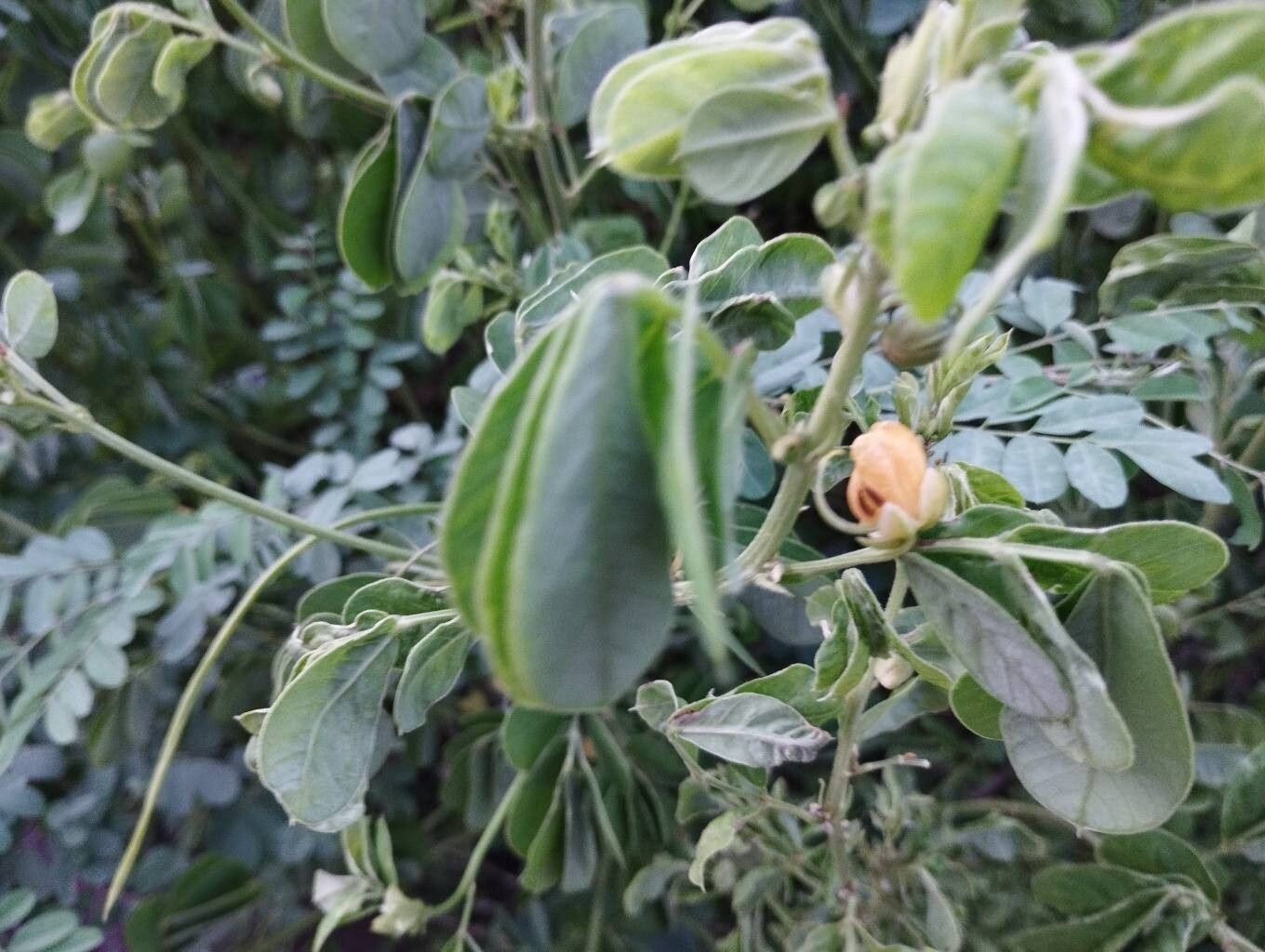
Senna obtusifolia is a warm-season annual legume that grows 1-4 feet (30-120 cm) tall, branching into a bushy form. The compound leaves have three pairs of rounded, obovate leaflets that fold together at night. From summer into fall it produces five-petaled yellow flowers about 0.5-0.75 inch (1.3-2 cm) across, borne singly or in pairs in the leaf axils. The flowers ripen into slender, curved, sickle-shaped pods 4-7 inches (10-18 cm) long that hold many four-sided seeds. The species is native to tropical and subtropical America and has spread as a weed of croplands and disturbed ground across warm regions worldwide. It grows in full sun on a wide range of soils and germinates after soils warm in late spring. The foliage and seeds contain anthraquinone compounds that are toxic to cattle and other livestock if eaten in quantity. Crushed foliage gives off a strong odor. It self-seeds heavily and can persist as a weed where left uncontrolled. Grown only as a frost-free annual.
Native Range
Senna obtusifolia is native to tropical and subtropical America, including the southern United States, Mexico, Central America, and South America. It grows in fields, pastures, roadsides, and disturbed ground, and has naturalized through much of the warm-climate world.Suggested Uses
Grown in some regions as a leafy vegetable and for traditional culinary uses, including fermented seasoning from the seeds. Used as a warm-season cover that fixes nitrogen on poor soils. Planted in field rows or blocks where it is cultivated.How to Identify
Appearance
Size & Dimensions
Height1' - 4'
Width/Spread1' - 3'
Bloom Information
Detailed Descriptions
Foliage Description
GreenGrowing Conditions
Sun Requirements
Requires 6-12 hours of direct sunlight daily
• Full Sun: 6+ hours of direct sunlight
• Partial Shade: 3-6 hours of direct sunlight
• Full Shade: Less than 3 hours of direct sunlight
Water & Climate
Water Needs
Drought Tolerance
Drought tolerant when established
Care & Maintenance
Care Guide
Sow seed in late spring after the soil warms, as the crop will not germinate in cold ground. Grow in full sun on most soils, including poor and compacted ground. It tolerates heat and short dry spells once established. The foliage and seeds contain anthraquinones that are toxic to grazing livestock. Because it self-seeds heavily, seed pods are removed before they shed where spread is a concern. No fertilizer is needed, as the legume fixes its own nitrogen.Pruning
Routine pruning is not practiced. Seed pods may be removed before ripening to limit self-seeding. Whole plants are pulled or cut at the base where unwanted.Toxicity Warning
Toxic to petsPlanting Guide
Planting Methods & Timing
Planting Method
direct sow
Direct Sow Timing
After last frost when soil is warm
Days to Maturity
90–120 days
Plant Spacing
12 inches