Senna, Genus, lindheimeriana, Species,
- Genus & species
Lindheimer's senna
southwestern United States and northern Mexico
Overview
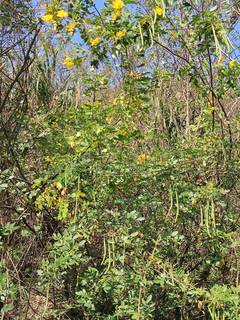
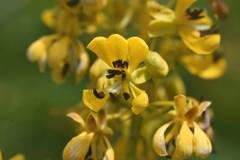
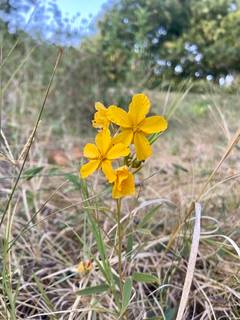
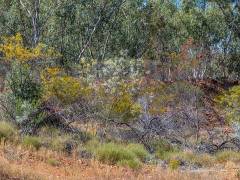
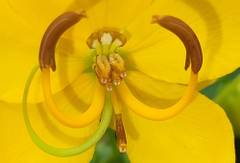
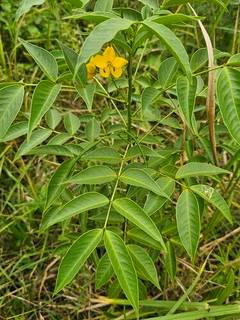
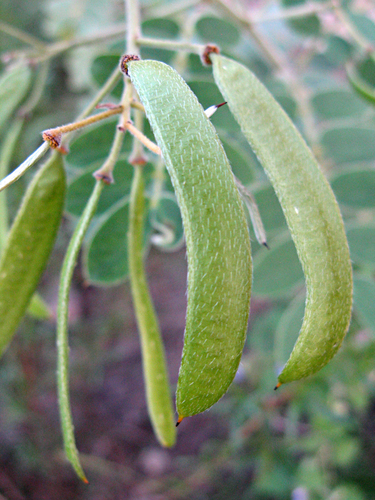
Senna lindheimeriana is an upright, soft-woody perennial or subshrub in the pea family (Fabaceae), growing 2–5 feet (60–150 cm) tall from a woody crown. Its pinnately compound leaves carry four to eight pairs of oval leaflets, all densely coated in short velvety hairs that give the gray-green foliage a soft, felted texture. From late summer into autumn it bears loose clusters of five-petaled yellow flowers about 0.8 inch (2 cm) across, held among the upper leaves; unlike many pea flowers, these are nearly symmetrical with prominent curved anthers. Flat to slightly curved seedpods 1–2.4 inches (2.5–6 cm) long follow and dry to brown. It grows on dry, rocky limestone slopes, canyon sides, and roadcuts across western Texas, New Mexico, and northern Mexico. The plant dies back in hard winters and returns from the woody base in spring. Its foliage and seeds contain compounds that can sicken livestock that graze them in quantity, a consideration on rangeland.
Native Range
Senna lindheimeriana is native to the south-central and southwestern United States and northern Mexico, centered on western and central Texas and extending into New Mexico and Chihuahua. It grows on dry limestone and rocky soils in grassland, desert scrub, and open woodland.Suggested Uses
Senna lindheimeriana is used in native, xeric, and wildlife gardens on dry sites, and in revegetation of rocky slopes. It serves as a larval host for sulphur butterflies and supplies late-season pollen for bees. Its seeds feed quail and other ground-feeding birds.How to Identify
Appearance
Size & Dimensions
Height2' - 5'
Width/Spread2' - 3'
Colors
Bloom Information
Detailed Descriptions
Foliage Description
gray-greenGrowing Conditions
Sun Requirements
Requires 6-12 hours of direct sunlight daily
• Full Sun: 6+ hours of direct sunlight
• Partial Shade: 3-6 hours of direct sunlight
• Full Shade: Less than 3 hours of direct sunlight