Sedum, Genus, divergens, Species,
- Genus & species
spreading stonecrop
Pacific Northwest North America: British Columbia, Washington, Oregon
Overview
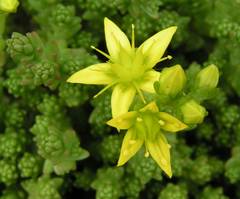
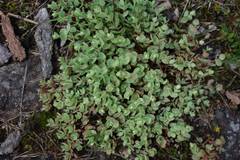
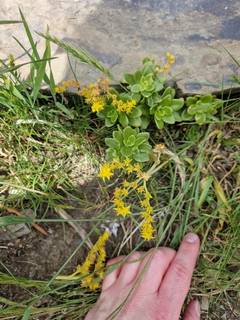
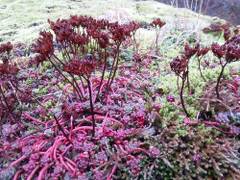
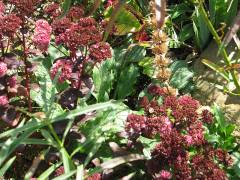
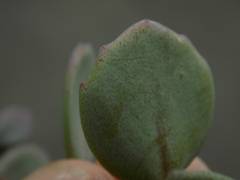
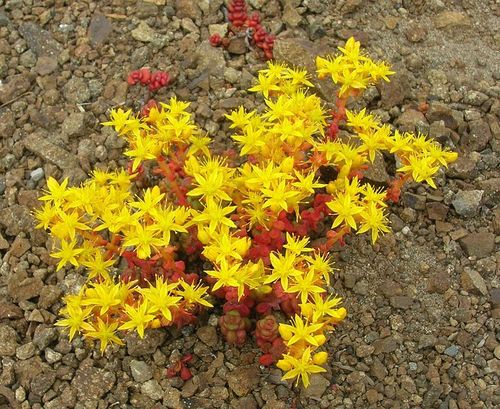
Sedum divergens is a low-growing evergreen succulent reaching 2-4 inches (5-10 cm) tall with stems trailing 6-12 inches (15-30 cm) across, forming open mats on rocky alpine and subalpine sites. Leaves are succulent, opposite or whorled (in groups of 3-4), egg-shaped to nearly round, 0.2-0.4 inches (5-10 mm) long, fleshy, and turn from bright green in spring to bronze, red, or maroon in fall and winter. Stems are slender and lax; older stems become woody at the base. Flowers are bright yellow stars 0.4-0.5 inches (10-13 mm) across with 5 narrow pointed petals, in flat-topped cymes of 3-15 from June through August. Indigenous use of the leaves as a cooked winter green is documented in Pacific Northwest ethnobotanical records. Plants spread by stem-rooting where lateral shoots touch moist mineral substrate; broken stem fragments regenerate readily, and rock garden growers commonly propagate the species from stem cuttings. S. divergens is intolerant of summer drought below 4,000 feet (1,200 m) and declines on hot, low-elevation sites within 1-2 seasons. Heavy snowpack and consistent winter moisture are required for long-term persistence.
Native Range
Native to alpine and subalpine sites in the Pacific Northwest of North America from southwestern British Columbia south through the Cascades and Olympics of Washington and Oregon. Grows on rocky talus, scree slopes, gravelly stream margins, and exposed ridgelines at 3,000-7,000 feet (900-2,100 m) elevation.Suggested Uses
Used in alpine troughs, rock gardens, green roofs, and crevice plantings in zones 5-8 west of the Cascades. Spaced 8-12 inches (20-30 cm) apart for groundcover function; full coverage develops in 2-3 seasons. Not suited to standard mixed perennial beds with rich moist soil, where the species declines within 1-2 years.How to Identify
Appearance
Size & Dimensions
Height2" - 4"
Width/Spread6" - 1'
Bloom Information
June through August in alpine sites, beginning as early as late May at the lowest elevations and extending into early September on north-facing snowfield margins. Individual flowers last 4-6 days; total bloom period at the colony level lasts 4-6 weeks. Bloom timing closely follows snowmelt and varies by 4-6 weeks across the elevation range.
Detailed Descriptions
Foliage Description
Bright green spring-summer; bronze, red, or maroon fall-winterGrowing Conditions
Sun Requirements
Requires 6-12 hours of direct sunlight daily
• Full Sun: 6+ hours of direct sunlight
• Partial Shade: 3-6 hours of direct sunlight
• Full Shade: Less than 3 hours of direct sunlight
Care & Maintenance
Care Guide
Establish in lean, gritty, sharply drained mineral soil at pH 6.0-7.5; rich garden soil produces lax floppy growth and increases winter rot risk. Bright direct sun for at least 6 hours per day produces compact growth in cool maritime climates; afternoon shade is required in zones 7-8 below 1,000 feet (300 m), where summer heat causes leaf scorch. Water during the first growing season; established plants survive on natural rainfall in the native range but require occasional summer water in low-elevation gardens. Crown rot develops in winter wet conditions on heavy soils; planting on raised mounds, in rock garden crevices, or in containers with sharp drainage prevents this loss. Few pests trouble the species. Aphids occasionally appear on flowering stems but cause no long-term damage.Pruning
Trim stem tips back by 1-2 inches (2.5-5 cm) in early spring to promote denser branching; cuttings root readily where they fall and produce volunteer mats. Spent flower stems can be sheared off after bloom to redirect energy into rhizome and stem growth. Mature mats need no annual pruning beyond removal of dead patches that develop from winter rot.Pruning Schedule
Prune: March–April
early spring
Container Growing
Suitable for container growing
Minimum container size: 1 gallons