Overview
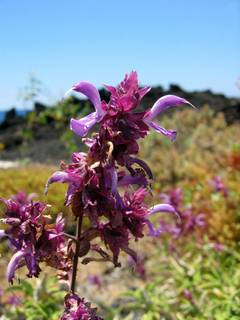
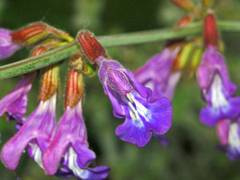
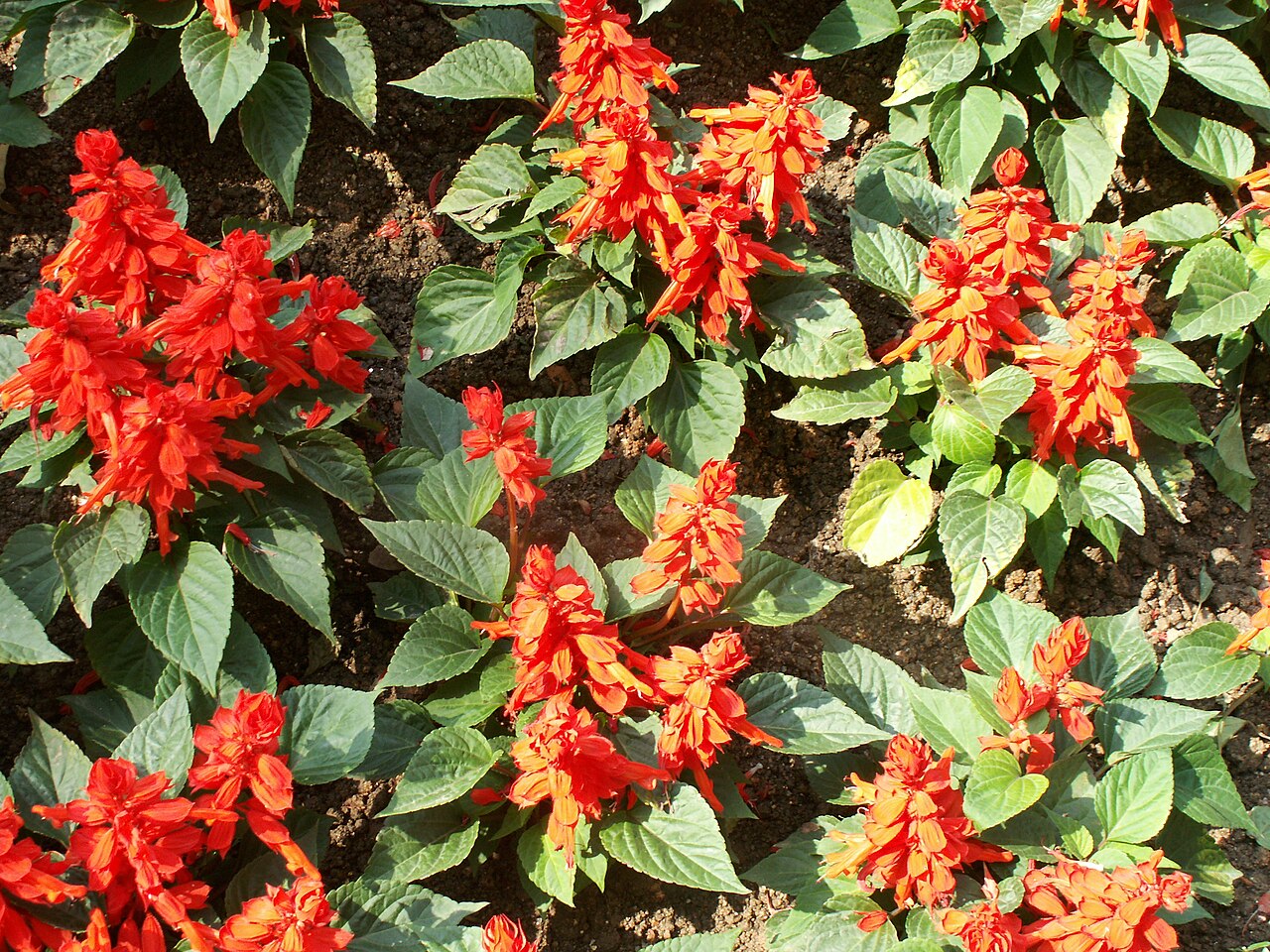
Salvia splendens is a tender, upright perennial from Brazil that is grown as an annual outside zones 10–11. Plants form compact mounds 12–36 inches (30–90 cm) tall and 12–18 inches (30–45 cm) wide, depending on the cultivar. Stems are square in cross-section and branch from the base. Leaves are opposite, ovate, 2–4 inches (5–10 cm) long, with toothed margins and a bright green upper surface. Flowers are tubular and two-lipped, 1–1.5 inches (2.5–4 cm) long, borne in whorls on terminal spikes 4–10 inches (10–25 cm) tall, with scarlet petals emerging from a red calyx that persists after the petals drop. Bloom runs from early summer until frost, about 12–16 weeks from transplanting, and seed-raised plants flower 70–90 days after sowing. Cultivars range from white and salmon to purple. Growth slows below 50°F (10°C) and frost kills the plant. Flowering slows above 90°F (32°C), and foliage wilts quickly in dry soil.
Native Range
Native to southeastern Brazil, growing in forest openings and disturbed ground in the Atlantic Forest region. Cultivated worldwide as a bedding plant and naturalized in some tropical regions.Suggested Uses
Planted in mass bedding, borders, and containers at 10–12 inch (25–30 cm) spacing. Container plantings use 1–2 gallons (4–8 L) of soil per plant. Flowers are visited by hummingbirds and bees, and plants decline in cool, wet weather.How to Identify
Appearance
Size & Dimensions
Height1' - 3'
Width/Spread1' - 1'6"
Bloom Information
Detailed Descriptions
Foliage Description
Bright greenGrowing Conditions
Sun Requirements
Requires 6-8 hours of direct sunlight daily
• Full Sun: 6+ hours of direct sunlight
• Partial Shade: 3-6 hours of direct sunlight
• Full Shade: Less than 3 hours of direct sunlight
Water & Climate
Water Needs
Care & Maintenance
Care Guide
Transplants go outdoors after the last frost, when soil reaches 60°F (16°C), set 10–12 inches (25–30 cm) apart. Plants grow in full sun to part shade in evenly moist, well-drained soil at pH 6.0–7.0. Water supplies of 1 inch (2.5 cm) per week are needed in the absence of rain, and container plants wilt within a day of drying. Light feeding every 4–6 weeks maintains flowering, whereas heavy nitrogen produces foliage at the expense of flowers. Aphids, whiteflies, and spider mites occur on stressed plants, and root rot develops in waterlogged soil. Plants die at the first hard frost in zones 9 and colder.Pruning
Pinching the tips of young plants at 4–6 inches (10–15 cm) tall produces 3–5 side branches. Removing spent spikes prompts new flower spikes within 2–3 weeks. In zones 10–11, where plants persist, stems are cut back by half in early spring.Pruning Schedule
Prune: June
summer
Container Growing
Suitable for container growing
Minimum container size: 1 gallons
Toxicity
Non-toxicPlanting Guide
Planting Methods & Timing
Planting Method
transplant
Indoor Start
8 weeks before last frost
Days to Maturity
70–90 days
Plant Spacing
10 inches