Image 1 of 10
1 / 10
© Franco Folini from San Francisco, USA, some rights reserved (CC-BY-SA) · Wikimedia Commons
Salix, Genus, lasiolepis, Species,
- Genus & species
arroyo willow
Overview
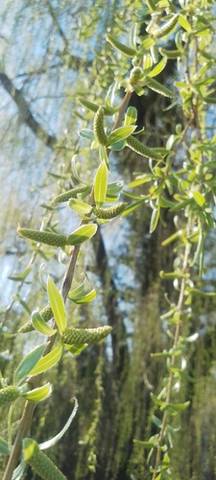
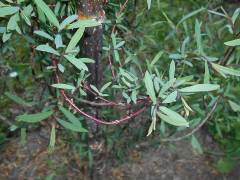
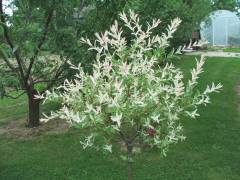
Salix lasiolepis is a deciduous shrub or small tree in the willow family, commonly 6-25 feet (1.8-7.6 m) tall, sometimes to 35 feet (10.7 m), forming a thicket of slender, upright stems from a spreading root system. The narrow leaves are 2-5 inches (5-13 cm) long, dark green above and pale to whitish-hairy below, widest above the middle with smooth or slightly toothed edges. As with all willows it is dioecious, with male and female catkins on separate plants. Catkins 0.75-2 inches (2-5 cm) long appear from late winter into spring, often before the leaves, the male catkins yellow with pollen. Native to streamsides, springs, and wet bottomlands of the western United States and Mexico, it roots quickly from cuttings and tolerates seasonal flooding. It spreads by root sprouts to form colonies that stabilize stream banks and shade water. The wood is soft and brittle, and stems are short-lived but readily renewed. It needs steady moisture and full sun.
Native Range
Native to the western United States and northern Mexico, from Washington and Idaho south to Texas and into Baja California. It grows along streams, springs, seeps, canyon bottoms, and other wet ground.Suggested Uses
Salix lasiolepis is used in streambank stabilization, wetland and riparian restoration, and erosion control on wet sites. It gives cover and browse for wildlife, and the early catkins are an important pollen source for bees. It is too vigorous and thicket-forming for small gardens.How to Identify
Appearance
Size & Dimensions
Height6' - 35'
Width/Spread6' - 20'
Bloom Information
Detailed Descriptions
Foliage Description
dark greenGrowing Conditions
Sun Requirements
Requires 6-12 hours of direct sunlight daily
• Full Sun: 6+ hours of direct sunlight
• Partial Shade: 3-6 hours of direct sunlight
• Full Shade: Less than 3 hours of direct sunlight
Care & Maintenance
Care Guide
Salix lasiolepis grows in full sun and moist to wet soils, including clay, loam, and sand along watercourses, and tolerates seasonal flooding. It needs steady moisture and declines in dry ground. The plant roots easily from dormant cuttings pushed into wet soil. It spreads by root sprouts, so it suits stream banks and erosion control more than small gardens. Stems are brittle and benefit from periodic renewal pruning.Pruning
Pruning is done in late winter while dormant, removing dead or broken stems and cutting older stems to the base to renew the thicket. The plant resprouts strongly from cut stumps and roots. It tolerates coppicing every few years.Pruning Schedule
Prune: January–February
winter