Salix, Genus, lasiandra, Species, var., Variety, lasiandra, Variety,
- Genus & species
- Variety
Pacific willow
Alaska south through British Columbia, Washington, and Oregon to California; stream banks, river floodplains, lake shores, and wet forest edges
Overview
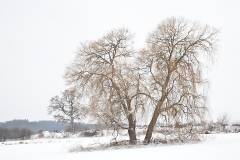
Salix lasiandra var. lasiandra is Pacific willow (western shining willow), an upright deciduous tree growing 15-50 feet (4.6-15 m) tall and 15-30 feet (4.6-9 m) wide; mature trees can reach 50 feet (15 m) and surpass other native Pacific Northwest willows in size. Lance-shaped leaves 2-6 inches (5-15 cm) are dark green and glossy above and pale glaucous beneath, 3-6 times longer than wide; 2-4 prominent rounded glandular bumps occur at the petiole-leaf blade junction, a feature found in no other native PNW willow, and serve as the diagnostic field character. Catkins emerge with the leaves in March-May (4 weeks); this catkin-with-leaf timing distinguishes S. lasiandra from S. scouleriana, which produces catkins on bare branches before leaves emerge. Family Salicaceae. Lasiandra = hairy-stamened, referring to the hairy filaments on the male flower stamens. Dioecious — male and female catkins occur on separate trees. Native to Alaska south through British Columbia, Washington, and Oregon to California; the species occurs on stream banks, river floodplains, lake shores, and at wet forest edges. Used as food and dam-building material by beavers and as forage and nesting habitat by many wetland birds. Like other willows, the roots are aggressively water-seeking and damage foundations, sewer lines, and septic systems; planting at least 30 feet (9 m) from utilities and structures avoids root conflict. Suitable for large-scale landscapes, riparian restoration, and wetland edge plantings. Susceptible to many willow pests and diseases. Non-toxic. Hardy in zones 4-9. Grown in full sun. Growth rate is fast.
Native Range
Native to Alaska south through British Columbia, Washington, and Oregon to California. Found on stream banks, river floodplains, lake shores, and at wet forest edges.Suggested Uses
Salix lasiandra is grown in large-scale riparian restoration, wetland edge plantings, and large native landscapes far from structures, spaced 15-30+ feet (4.6-9+ m) apart. Mature size surpasses other native Pacific Northwest willows. Aggressive roots damage utilities and structures. Beaver food. Non-toxic. Hardy in zones 4-9.How to Identify
Appearance
Size & Dimensions
Height15' - 50'
Width/Spread15' - 30'
Bloom Information
Spring (March-May). Male catkins with yellow anthers; female catkins greenish; 1-3 inches (2.5-7.5 cm); catkins emerge with the leaves. Bloom lasts about 4 weeks. Dioecious. Wind-pollinated. Cottony seed dispersal in May-June.
Detailed Descriptions
Flower Description
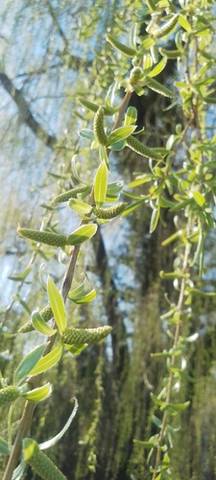
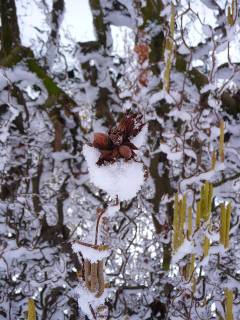
Catkins emerge with the leaves (not before leaf-out, distinguishing from S. scouleriana); male catkins with yellow anthers, female catkins greenish; 1-3 inches (2.5-7.5 cm); March-May; dioecious (separate male and female trees); fluffy cottony seed dispersal in May-June; lasiandra = hairy-stamened.Foliage Description
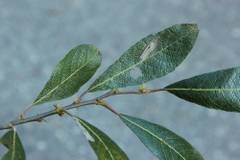
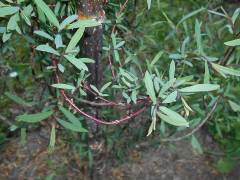
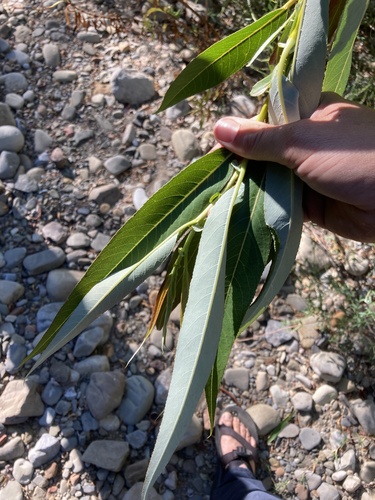
Dark green and glossy above, pale glaucous beneath; lance-shaped leaves 2-6 inches (5-15 cm), 3-6 times longer than wide, with serrated margins; 2-4 prominent rounded glandular bumps at the junction of the petiole and leaf blade are the diagnostic feature, found in no other native Pacific Northwest willow; yellowish to orange-brown flexible twigs; foliage turns yellow in fall.Growing Conditions
Sun Requirements
Requires 6-12 hours of direct sunlight daily
• Full Sun: 6+ hours of direct sunlight
• Partial Shade: 3-6 hours of direct sunlight
• Full Shade: Less than 3 hours of direct sunlight
Care & Maintenance
Care Guide
Grown in full sun with 6-12 hours of direct sun. Soil is wet to moist clay, loam, or silt with a pH of 5.5-7.5. Cold-hardy to zone 4. Aggressive water-seeking roots damage foundations, sewer lines, and septic systems; planting at least 30 feet (9 m) from utilities and structures avoids root conflict. Non-toxic. Hardy in zones 4-9.Pruning
Pruned in late winter (February-March) before bud break. Crossing or damaged branches are removed. The natural multi-stem or single-trunk form is the typical goal. The wood is weak and branch failure is common in storms.Pruning Schedule
Prune: February–March
early spring