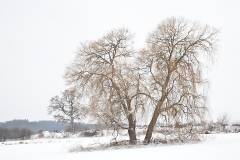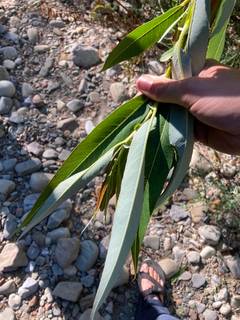
Salix, Genus, integra, Species, 'Hakuro Nishiki', Cultivar,
- Genus & species
- Cultivar
variegated willow
Species native to Japan, Korea, and northeastern China; riparian zones and moist lowland areas; cultivar selected in Japan
Overview
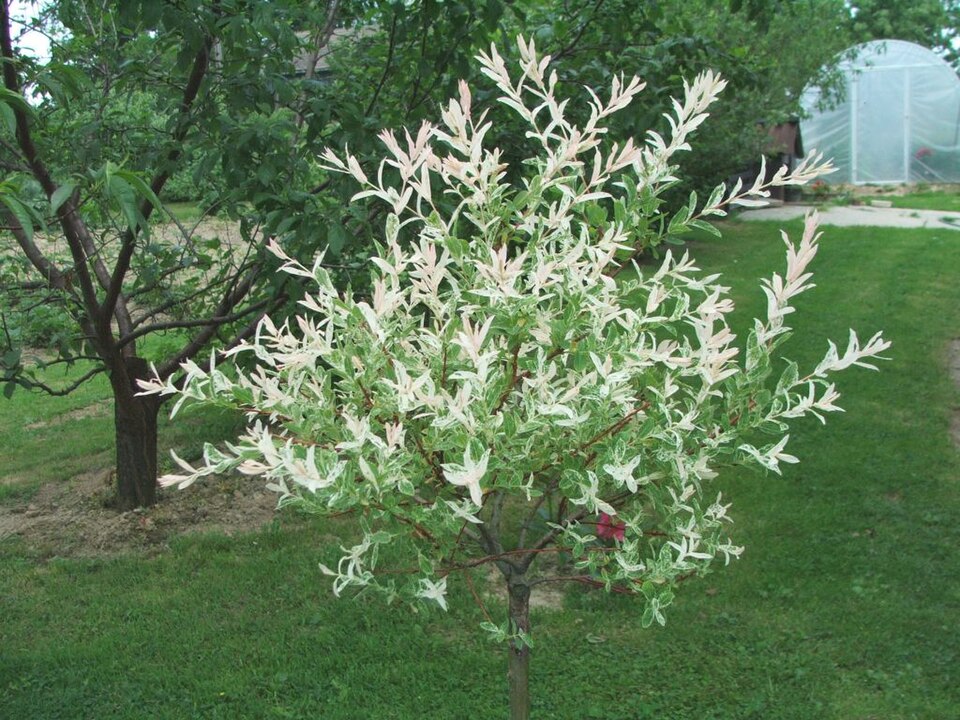
Salix integra 'Hakuro Nishiki' is dappled willow (Japanese variegated willow), a mounding deciduous shrub growing 4-6 feet (1.2-1.8 m) tall and 4-6 feet (1.2-1.8 m) wide. New spring growth emerges with vivid pink-and-white variegation on a pale green base — pink most vivid on newest growth, fading to white-and-green by midsummer. Pale yellow male catkins in February-March (3 weeks). Narrow lance-shaped leaves 1.5-3 inches (4-7 cm) turning yellow in fall. In Salicaceae. Hakuro Nishiki = white and variegated brocade. Often grown as a grafted standard tree on a 3-4 foot (90-120 cm) stem. The pink-and-white spring color comes from new growth — annual hard pruning (cut back by half to two-thirds in late winter / February-March) maximizes the colorful new growth. Without annual hard pruning, the variegation diminishes and the effect is lost — this is the primary maintenance limitation. Susceptible to willow scab, black canker, and various willow pests. Short-lived (10-15 years). Non-toxic. Zones 5-8. Full sun to partial shade. Growth rate is fast.
Native Range
Species native to Japan, Korea, and northeastern China — riparian zones and moist lowland areas. Cultivar selected in Japan.Suggested Uses
Grown as a colorful accent shrub or grafted standard tree in mixed borders, foundation plantings, and in containers of at least 10 gallons (38 L), spaced 4-6 feet (1.2-1.8 m). Pink-and-white new growth. Annual hard pruning required. Short-lived. Non-toxic. Zones 5-8.How to Identify
Appearance
Size & Dimensions
Height4' - 6'
Width/Spread4' - 6'
Bloom Information
Detailed Descriptions
Flower Description
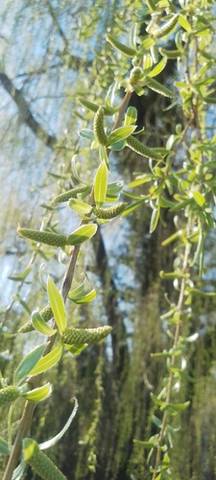
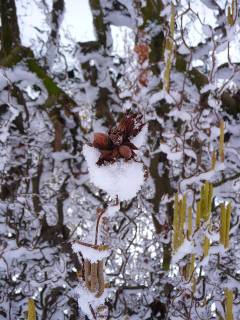
Pale yellow male catkins (this cultivar is male) 0.5-1 inch (13-25 mm); February-March; emerge before the leaves; not the primary ornamental featureFoliage Description
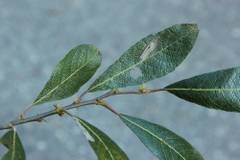
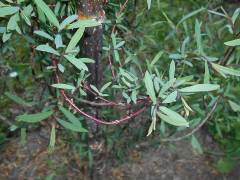
New spring growth emerges with strong pink and white variegation on a pale green base — the pink tones are most vivid on the very newest growth; fades to white-and-green variegation by midsummer; turns yellow in fall; narrow lance-shaped, 1.5-3 inches (4-7 cm)Growing Conditions
Sun Requirements
Requires 4-12 hours of direct sunlight daily
• Full Sun: 6+ hours of direct sunlight
• Partial Shade: 3-6 hours of direct sunlight
• Full Shade: Less than 3 hours of direct sunlight
Care & Maintenance
Care Guide
Full sun to partial shade (4-12 hours). Moist loam, clay, or silt pH 5.5-7.5. Annual hard pruning required (cut back by half to two-thirds in late winter / February-March) to maintain colorful variegation. Susceptible to willow scab and canker. Short-lived (10-15 years). Non-toxic. Zones 5-8.Pruning
Annual hard pruning required — cut back by half to two-thirds in late winter (February-March) before new growth. This maximizes the colorful pink-and-white new growth. For grafted standards, prune the head into a tight ball each year. Without annual hard pruning, the variegation fades and the form becomes coarse.Pruning Schedule
Prune: February–March
early spring
Container Growing
Suitable for container growing
Minimum container size: 10 gallons