Salix, Genus, exigua, Species,
- Genus & species
narrowleaf willow
North America (Alaska and Canada to Mexico)
Overview
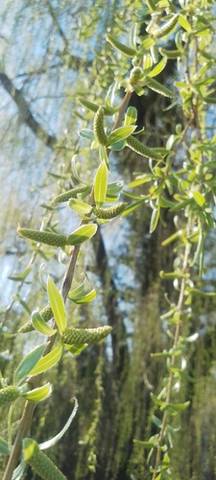
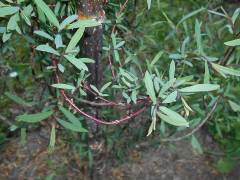
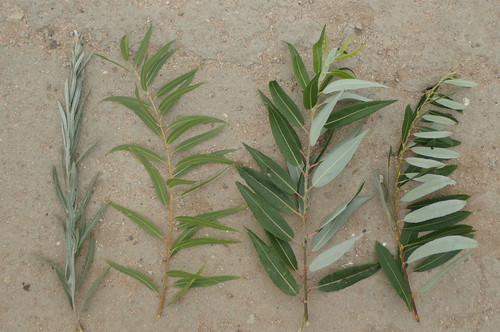
Salix exigua, narrowleaf or coyote willow, is a deciduous shrub or small tree of streambanks across much of North America, forming dense, suckering thickets 6-20 feet (1.8-6 m) tall. Its very narrow, silvery-gray leaves are 2-5 inches (5-13 cm) long and only 0.1-0.4 inch (3-10 mm) wide, with scattered small teeth, giving the whole plant a slender, willowy texture that shimmers in wind. Slender catkins appear with or just after the leaves in spring, the male and female flowers on separate plants, and female catkins release tufted, wind-borne seed by early summer. The plant spreads aggressively by root suckers and forms colonies that can reach many feet across, which makes it useful for holding streambanks but too invasive for small gardens. It is native to riverbanks, sandbars, washes, and other wet, sandy or gravelly ground from Alaska and Canada south through the western and central United States into Mexico. Salix exigua tolerates flooding, drought once rooted, and poor soil, but its running roots, brittle wood, and thicket habit call for room and wet ground to grow well.
Native Range
Salix exigua is native across much of North America, from Alaska and Canada south through the western and central United States into northern Mexico. It grows along rivers, streams, sandbars, washes, and other wet, sandy or gravelly sites, often as the first woody colonizer of fresh deposits.Suggested Uses
Salix exigua is used for streambank and erosion control, riparian restoration, and wildlife thickets on wet ground. Its catkins feed early bees, and the dense stems shelter birds and feed browsing wildlife.How to Identify
Appearance
Size & Dimensions
Height6' - 20'
Width/Spread10' - 20'
Bloom Information
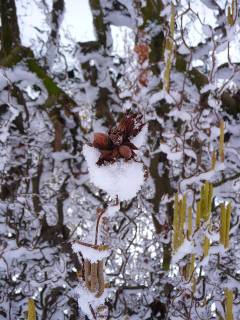
Catkins appear in spring, from March to May, opening with or just after the new leaves. Male and female catkins grow on separate plants, the females ripening tufted seed that blows free by early summer. There is no showy flower beyond the soft gray catkins.
Detailed Descriptions
Foliage Description
silvery gray-greenGrowing Conditions
Sun Requirements
Requires 6-10 hours of direct sunlight daily
• Full Sun: 6+ hours of direct sunlight
• Partial Shade: 3-6 hours of direct sunlight
• Full Shade: Less than 3 hours of direct sunlight
Care & Maintenance
Care Guide
Grow Salix exigua in full sun in moist to wet, sandy or gravelly soil with a pH of about 6.0 to 8.0. It tolerates flooding, fluctuating water, and poor soil, and once rooted it withstands seasonal drought, though it grows most strongly with a high water table. Plants root easily from dormant cuttings pushed into damp ground. The running roots form wide thickets, so it needs space well away from drains, paving, and small beds. Cutting stems to the ground every few years renews the colony and keeps it lower.Pruning
Cut stems back hard in late winter to renew the thicket and control height; willows resprout vigorously from the base. Remove suckers to limit spread where the colony is not wanted. Dead and broken wood can be cleared at any time.Pruning Schedule
Prune: February–March
winter