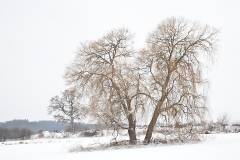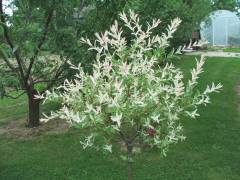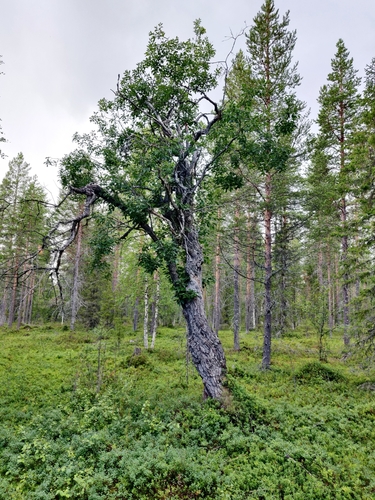
Salix, Genus, caprea, Species,
- Genus & species
goat willow
Overview
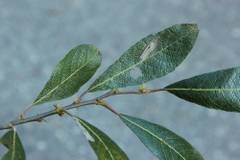
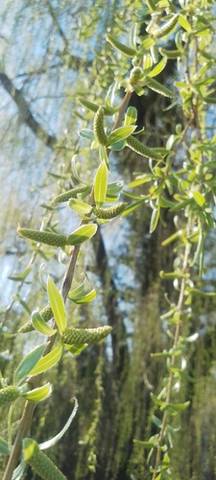
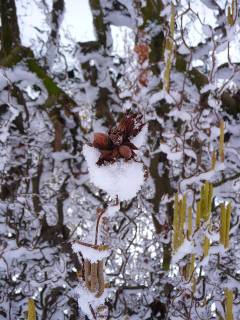
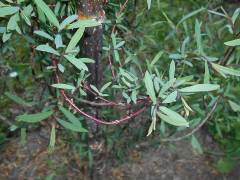
Salix caprea is a deciduous large shrub or small tree reaching 13-33 feet (4-10 m) tall and 13-26 feet (4-8 m) wide, with a short trunk and a broad, rounded crown. Unlike most willows, the twigs are stout and the plant does not root easily from cuttings. Leaves are oval to broadly elliptic, 2-5 inches (5-12 cm) long, dull green and slightly wrinkled above, gray-felted beneath, with wavy margins. It is dioecious: silvery silky male catkins, the familiar pussy willows, appear on bare twigs in late winter and turn yellow with pollen, while female catkins on separate plants are greener and longer. Catkins open from February to April, well before the leaves. Female trees release tufts of cottony, wind-borne seed in late spring. Growth is rapid, and the species is short-lived, often declining within 30 years. The wood is brittle and limbs break in storms, and the early catkins are an early-season pollen and nectar source for bees. It seeds freely into damp open ground and can colonize disturbed wet sites.
Native Range
Native to Europe and western and central Asia, from Ireland east to the Russian Far East. Grows in woodland clearings, hedgerows, scrub, stream sides, and damp disturbed ground from lowlands to about 5,500 feet (1,675 m).Suggested Uses
Planted in damp gardens, wildlife plantings, and stream-side and reclamation sites at 13-20 foot (4-6 m) spacing. The early catkins are used in cut stems for indoor arrangements. The brittle wood and seeding habit limit its use near paving and in small gardens.How to Identify
Appearance
Size & Dimensions
Height13' - 33'
Width/Spread13' - 26'
Bloom Information
Catkins open in late winter to early spring, February through April, before the leaves emerge. Male and female catkins occur on separate trees; the male catkins are insect- and wind-pollinated over two to three weeks. Female trees shed plumed seed in late spring.
Detailed Descriptions
Flower Description
silver to yellowFoliage Description
dull green above, gray beneathGrowing Conditions
Sun Requirements
Requires 5-12 hours of direct sunlight daily
• Full Sun: 6+ hours of direct sunlight
• Partial Shade: 3-6 hours of direct sunlight
• Full Shade: Less than 3 hours of direct sunlight
Care & Maintenance
Care Guide
Grows in full sun to partial shade on moist to wet soils and tolerates seasonal flooding and poor ground. It is cold-hardy and establishes quickly on disturbed wet sites. The brittle wood breaks in storms, and the shallow roots can lift nearby paving and block drains. Aphids, sawflies, and willow rusts occur but are seldom serious. It seeds freely into open damp ground and can spread beyond where it is planted. Trees decline within about 30 years and are often coppiced to renew growth.Pruning
Coppicing or pollarding in late winter renews vigor and is repeated every few years. Dead and broken limbs are removed as they appear in the brittle wood. Pruning is timed before catkins form where the flowering display is wanted.Pruning Schedule
Prune: February
winter