Saccharum, Genus, officinarum, Species,
- Genus & species
Sugarcane
Overview
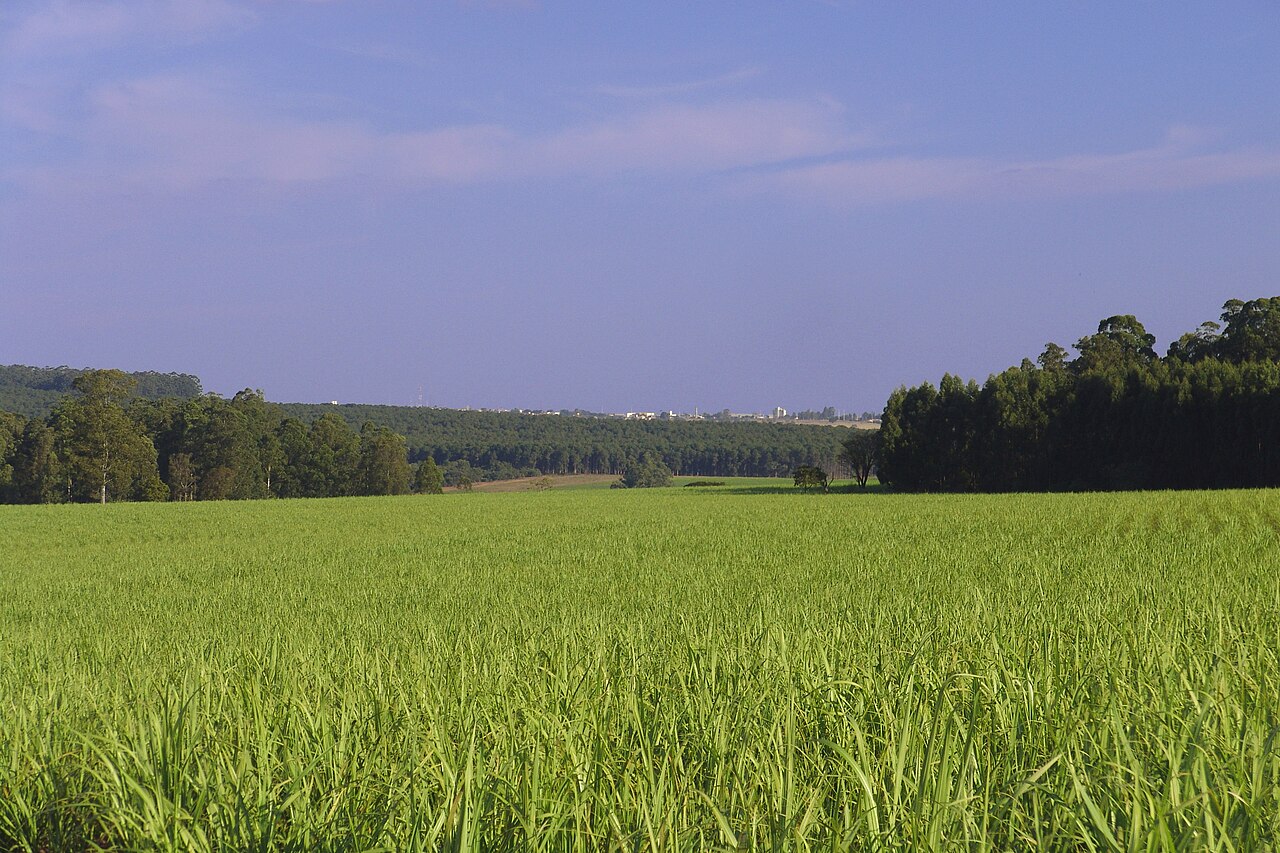
Saccharum officinarum is a giant perennial grass forming clumps of jointed canes 8-20 feet (2.5-6 m) tall and 1-2 inches (2.5-5 cm) thick, spreading 3-6 feet (0.9-1.8 m) wide from a short rhizome. The canes are solid, filled with fibrous pith holding 10-16 percent sucrose by weight, and are green, yellow, purple, red, or striped depending on variety. Leaves are 3-6 feet (0.9-1.8 m) long and 2-4 inches (5-10 cm) wide with a stout white midrib; the margins carry silica teeth that cut skin, and the leaf sheaths of many varieties bear irritant hairs. Flowering produces a silvery plume 12-24 inches (30-60 cm) long, triggered by shortening days in late autumn. Most cultivated clones set little or no viable seed and are propagated from cane sections carrying 2-3 buds. A planting is cut at 12-24 months and regrows from the stubble as a ratoon crop for a further 2-5 harvests before yields fall far enough to warrant replanting. Water and nutrient demand stays high throughout, and canes lodge in wind once they pass 12 feet (3.7 m).
Native Range
Saccharum officinarum was domesticated in New Guinea from Saccharum robustum several thousand years ago and spread west into Southeast Asia and east through Melanesia and Polynesia by canoe. Hawaiian voyagers carried dozens of named varieties, and roughly 40 traditional Hawaiian ko varieties survive in collections. The crop is now grown commercially between about 35 degrees north and 30 degrees south, with Brazil and India together accounting for over half of world production.Suggested Uses
Grown as a field crop in rows 4-6 feet (1.2-1.8 m) apart for sugar, molasses, rum, and ethanol, and in home gardens for chewing cane and fresh juice. Striped and purple varieties are planted as tall screens and accent clumps in tropical gardens, cut back annually to hold height. Bagasse left after milling is burned for process energy and pressed into board and paper products.How to Identify
Appearance
Size & Dimensions
Height8' - 20'
Width/Spread3' - 6'
Bloom Information
Flowering is triggered as day length drops below about 12.5 hours and occurs from October to December in most growing regions. The plume emerges over 2-3 weeks and sheds pollen for a further 2-3 weeks. Most commercial clones set little viable seed, and seed is used only in breeding programmes. Flowering halts cane elongation and lowers recoverable sugar, so crops are commonly harvested before or shortly after plumes appear.
Detailed Descriptions
Foliage Description
Green, with a broad white midribGrowing Conditions
Sun Requirements
Requires 8-12 hours of direct sunlight daily
• Full Sun: 6+ hours of direct sunlight
• Partial Shade: 3-6 hours of direct sunlight
• Full Shade: Less than 3 hours of direct sunlight
Care & Maintenance
Care Guide
Saccharum officinarum needs full sun for 8 hours or more, mean temperatures of 75-95F (24-35C), and 60-100 inches (1,500-2,500 mm) of water a year through rainfall or irrigation. It grows on deep loam, silt, or heavy clay at pH 5.5-7.5 and responds to high fertility, taking 100-200 pounds of nitrogen per acre (110-225 kg per hectare) each crop cycle plus potassium at similar rates. Growth stops below 60F (16C) and frost kills the tops, though established stools in USDA zone 9 regrow from underground buds. Waterlogging beyond a week causes root death and yellowing. Canes are earthed up or set in furrows for anchorage, since lodging in wind breaks stems and complicates harvest. Sugarcane borer, aphids carrying yellow leaf virus, rats in dense stands, and ratoon stunting disease are the recurring problems, and clean seed cane is the usual control.Pruning
Dead lower leaves are stripped from the canes two or three times during the crop, which lowers rat harbourage and lets light into the stool. Whole canes are cut at ground level at harvest, leaving a stubble that regrows as the ratoon crop within 2-3 weeks. In ornamental plantings, canes are cut to the ground in late winter to force fresh coloured growth. Flowering plumes are cut out where cane is grown for sugar or juice.Pruning Schedule
Prune: January–February
winter
Container Growing
Suitable for container growing
Minimum container size: 25 gallons