Image 1 of 7
1 / 7
Plant Reference
Phyllostachys, Genus, aurea, Species,
- Genus & species
golden bamboo
Southeastern China — primarily Fujian, Zhejiang, and Jiangxi provinces; along rivers and in moist valley bottoms at low to middle elevations
Overview
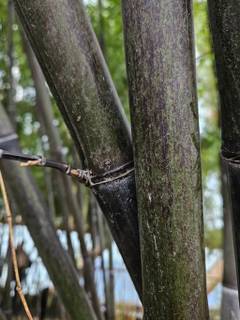
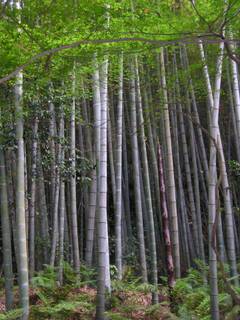
Phyllostachys aurea is an upright running bamboo in the grass family Poaceae growing 15–30 feet (4.5–9 m) tall on woody culms (the technical name for bamboo stems) 1–2 inches (2.5–5 cm) in diameter that emerge from a network of horizontally spreading underground rhizomes. The specific epithet aurea is from Latin meaning golden and refers to the culm color of mature stems, which age from emerging green through the first growing season to a characteristic golden-yellow on plants in full-sun positions over 1–2 years. The species' field diagnostic is the basal internode pattern: the lower internodes of the culms (the spaces between the joints near the base of each stem) are characteristically compressed, swollen, and distorted in an irregular pattern that resembles a tortoise shell, and this tortoiseshell pattern is not matched as prominently by any other commonly cultivated Phyllostachys species. The species is a running (monopodial) bamboo in which the underground leptomorph rhizomes spread horizontally outward from the parent clump at rates of 15–20 feet (4.5–6 m) per year in warm climates with long growing seasons — this aggressive horizontal rhizome spread is the basis for the species' invasive behavior in cultivation. Limitation: the species is classified as an invasive plant in several southeastern United States (including Tennessee, North Carolina, and Alabama) and in parts of Australia and Europe where escaped clumps have colonized riparian corridors, woodland edges, and disturbed ground, and regional invasive species lists should be consulted before planting in jurisdictions where the species is restricted. Containment is mandatory for any in-ground planting outside the species' native range: a 60-mil HDPE rhizome barrier buried 24–30 inches (60–75 cm) deep around the entire planting perimeter is the standard horticultural containment method, and the alternative is container culture in containers of at least 25 gallons (95 L) on a hardscape surface that prevents rhizome escape. Flowering is extremely rare in cultivation — Phyllostachys species follow a gregarious flowering pattern in which all plants of a single clonal population worldwide flower simultaneously at intervals of approximately 60–120 years and then typically die back after seed set, so flowering is essentially never observed in garden cultivation. Native to southeastern China. Drought-tolerant once established. Non-toxic. Not deer-resistant.
Native Range
Native to southeastern China — primarily Fujian, Zhejiang, and Jiangxi provinces — growing along rivers and in moist valley bottoms at low to middle elevations. The species was introduced to western horticulture in the 19th century as an ornamental and as a fishing-rod material (the basis for the alternative common name fish pole bamboo, reflecting the species' historical use for the production of cane fishing rods) and has subsequently naturalized as an invasive plant in several southeastern United States and in parts of Australia and Europe where escaped clumps have colonized riparian corridors, woodland edges, and disturbed ground.Suggested Uses
Used as an evergreen privacy screen, tall hedge, or grove planting only with mandatory rhizome containment, and in large containers of at least 25 gallons (95 L) on a hardscape surface, at 3–5 foot (90–150 cm) spacing within contained planting areas in USDA zones 6 through 10. The species is unsuitable for unconfined in-ground planting because of the aggressive 15–20 foot per year horizontal rhizome spread that produces invasive colonization of native vegetation. Jurisdictions where the species is classified as invasive (several southeastern United States, parts of Australia and Europe) are unsuitable for any in-ground planting, and gardeners in those regions should select clumping (sympodial) bamboo species such as Fargesia robusta or Fargesia murielae that do not produce running rhizomes and do not pose the same invasive risk. Container culture on hardscape surfaces is the safest planting method for any region.How to Identify
Appearance
Size & Dimensions
Height15' - 30'
Width/Spread5' - 10'
Bloom Information
Flowering is extremely rare and unpredictable in cultivation. Phyllostachys species follow a gregarious flowering pattern in which all plants of a single clonal population worldwide flower simultaneously at intervals of approximately 60–120 years and then typically die back after seed set. The cultivated genetic clones in the western horticultural trade have not flowered in living memory in most regions, so flowering is essentially never observed in garden cultivation. The culms (woody stems) and the evergreen foliage — not flowers — are the year-round ornamental features.
Detailed Descriptions
Flower Description
flowering is extremely rare and unpredictable in cultivation — Phyllostachys species follow a gregarious flowering pattern in which all plants of a single clonal population worldwide flower simultaneously at intervals of approximately 60-120 years and then typically die back after seed set; the cultivated genetic clones in the western horticultural trade have not flowered in living memory in most regions, so flowering is essentially never observed in garden cultivationFoliage Description
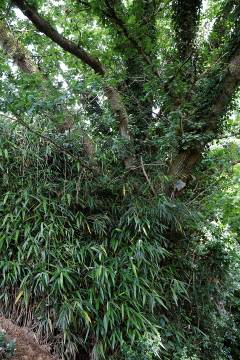
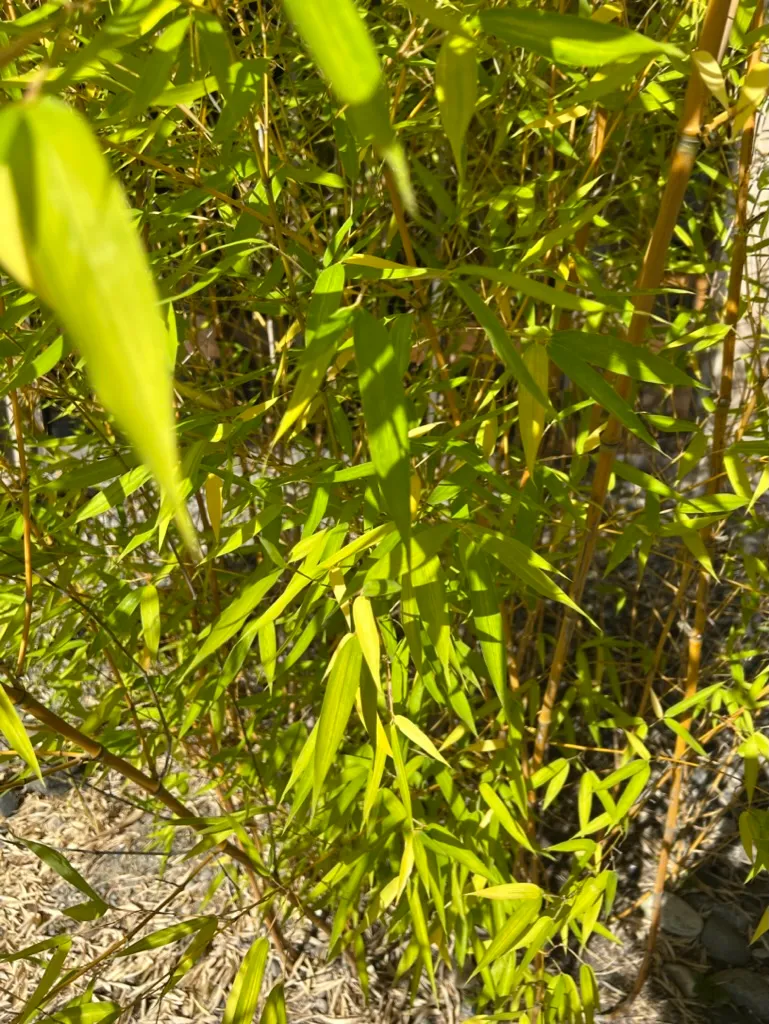
bright green narrow lance-shaped leaves 2-5 inches (5-13 cm) long carried on slender branches that emerge from the upper nodes of the culms (the woody stems); evergreen year-round with a partial leaf drop and replacement flush in spring as new leaves push out the previous year's foliageGrowing Conditions
Sun Requirements
Requires 4-10 hours of direct sunlight daily
• Full Sun: 6+ hours of direct sunlight
• Partial Shade: 3-6 hours of direct sunlight
• Full Shade: Less than 3 hours of direct sunlight
Care & Maintenance
Care Guide
Site in full sun to partial shade with 4–10 hours of direct sun per day in well-drained loam, clay, or sand soil with a pH of 5.5–7.5 — full-sun positions develop the strongest golden-yellow culm coloration on the mature stems while shaded positions produce culms that remain green or develop a duller olive-yellow tone. Drought tolerance develops once the root system is established. The species is classified as an invasive plant in several southeastern United States (Tennessee, North Carolina, Alabama) and in parts of Australia and Europe — regional invasive species lists should be consulted before planting in jurisdictions where the species is restricted. Containment is mandatory for any in-ground planting outside the native range: a 60-mil HDPE rhizome barrier buried 24–30 inches (60–75 cm) deep around the entire planting perimeter is the standard horticultural containment method, or the species can be grown in containers of at least 25 gallons (95 L) on a hardscape surface that prevents rhizome escape. Twice-annual inspection of the barrier perimeter for escaping rhizomes is the cultural maintenance task that prevents containment failure. Non-toxic. Not deer-resistant. Hardy in USDA zones 6–10.Pruning
Old, dead, or damaged culms are removed at ground level in early spring (February or March) before the new shoot flush emerges. Dense groves are thinned by removing approximately one-third of the oldest culms each year to maintain air circulation through the planting and to support vigorous new culm production from the rhizome system. Escaping rhizomes that have crossed the rhizome barrier are cut at the barrier edge and pulled out by hand or with a sharp spade — this rhizome-edge inspection is done twice annually (in late spring and again in fall) to prevent containment failure. New culms (shoots) emerge from the rhizome system in spring and are not cut during the active vertical elongation period because the cut shoots will not regrow.Pruning Schedule
Prune: February–March
early spring
Container Growing
Suitable for container growing
Minimum container size: 25 gallons