Image 1 of 3
1 / 3
Plant Reference
Phyllostachys, Genus, nigra, Species,
- Genus & species
black bamboo
Central and southern China — primarily Hunan and Zhejiang provinces; mountain valleys and along streambanks
Overview
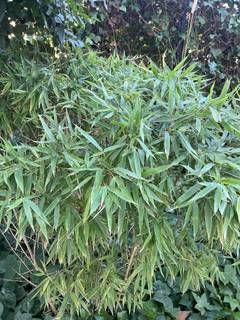
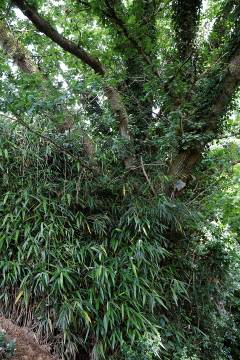
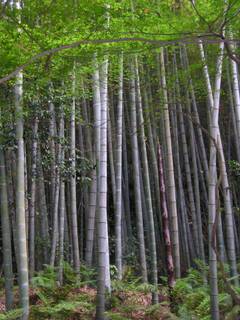
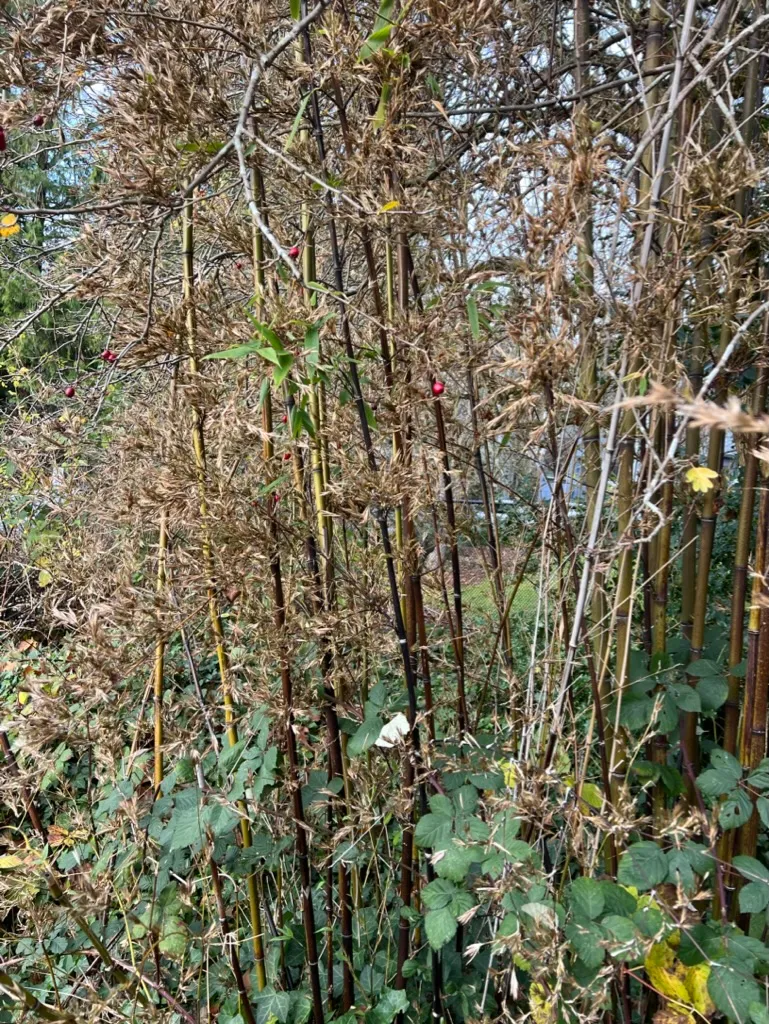
Phyllostachys nigra is an upright running bamboo in the grass family Poaceae growing 15–30 feet (4.5–9 m) tall on woody culms (the technical name for bamboo stems) 1–2 inches (2.5–5 cm) in diameter that emerge from a network of horizontally spreading underground rhizomes. The specific epithet nigra is from Latin meaning black and refers to the culm color of mature stems, which emerge bright green from the rhizome system in spring and progressively darken to a polished jet-black color over 1–2 growing seasons of weathering and pigment development — the jet-black mature culm color is not matched by any other commonly cultivated bamboo species in the western horticultural trade and is the species' primary ornamental character. Full-sun positions develop the deepest blackest culm color, and shaded positions produce culms that retain more green coloration or develop a duller dark-brown tone rather than the polished jet-black that characterizes plants in open exposure. Leaves are medium green, narrow, lance-shaped, and 2–5 inches (5–13 cm) long, carried on slender branches that emerge from the upper nodes of the culms. Like the related P. aurea (golden bamboo), P. nigra is a running (monopodial) bamboo in which the underground leptomorph rhizomes spread horizontally outward from the parent clump at rates of 15 feet (4.5 m) or more per year in warm climates with long growing seasons — this aggressive horizontal rhizome spread is the basis for the species' invasive behavior in cultivation outside the native range. Limitation: containment is mandatory for any in-ground planting outside the species' native range — a 60-mil HDPE rhizome barrier buried 24–30 inches (60–75 cm) deep around the entire planting perimeter is the standard horticultural containment method, and the alternative is container culture in containers of at least 15 gallons (57 L) on a hardscape surface that prevents rhizome escape. The species is less aggressively invasive in cool-summer climates than in the long warm-season climates of the southeastern United States, but containment remains a cultural requirement everywhere outside the native range. Flowering is extremely rare in cultivation following the gregarious 60–120 year flowering pattern of Phyllostachys species. The young new shoots in spring are edible after cooking and have been consumed as a vegetable in Chinese and Japanese cuisine for centuries (the Japanese name kuro chiku means black bamboo). Native to central and southern China (primarily Hunan and Zhejiang provinces). Non-toxic. Deer-resistant.
Native Range
Native to central and southern China — primarily Hunan and Zhejiang provinces — growing in mountain valleys and along streambanks at low to middle elevations. The species was introduced to Japan in ancient times for ornamental garden use and for the production of culinary bamboo shoots, where it is known as kuro chiku (黒竹, meaning black bamboo). Western introduction followed in the 19th century as an ornamental bamboo with the polished jet-black culm color that became its primary ornamental character in European and North American gardens.Suggested Uses
Used as an evergreen privacy screen, ornamental specimen grove, container specimen, and Asian-garden focal planting only with mandatory rhizome containment in USDA zones 7 through 10. The polished jet-black culm color, the contrast of the green foliage against the black stems, and the year-round screening density combine to make the species a high-value ornamental bamboo for positions where the black culm color can be viewed against a contrasting background such as a light-colored wall or evergreen hedge. Containment in 60-mil HDPE rhizome barrier or in containers of at least 15 gallons (57 L) on hardscape surfaces is non-negotiable because the running rhizomes spread aggressively. Full-sun positions develop the deepest blackest culm color and are the design choice for landscape use; shaded positions retain more green or dull dark-brown culm tones and supply less of the species' primary ornamental character. The young spring shoots can be harvested for cooking as a vegetable.How to Identify
Appearance
Size & Dimensions
Height15' - 30'
Width/Spread4' - 8'
Bloom Information
Flowering is extremely rare in cultivation following the gregarious 60–120 year flowering pattern of Phyllostachys species in which all plants of a single clonal population worldwide flower simultaneously and then typically die back after seed set. The cultivated genetic clones in the western horticultural trade have not flowered in living memory in most regions. The polished jet-black culms and the medium green evergreen foliage — not flowers — are the year-round ornamental features.
Detailed Descriptions
Flower Description
flowering is extremely rare and unpredictable in cultivation — Phyllostachys species follow a gregarious flowering pattern in which all plants of a single clonal population worldwide flower simultaneously at intervals of approximately 60-120 years and then typically die back after seed set; the cultivated genetic clones in the western horticultural trade have not flowered in living memory in most regionsFoliage Description
medium green narrow lance-shaped leaves 2-5 inches (5-13 cm) long carried on slender branches that emerge from the upper nodes of the culms (the woody stems); evergreen year-round with a partial leaf drop and replacement flush in springGrowing Conditions
Sun Requirements
Requires 4-10 hours of direct sunlight daily
• Full Sun: 6+ hours of direct sunlight
• Partial Shade: 3-6 hours of direct sunlight
• Full Shade: Less than 3 hours of direct sunlight
Care & Maintenance
Care Guide
Site in full sun for the deepest jet-black culm color (4–10 hours of direct sun per day) in well-drained loam soil with a pH of 5.5–7.5 — shaded positions produce culms that retain more green coloration or develop a duller dark-brown tone rather than the polished jet-black that characterizes plants in open exposure. Consistent moisture supports new culm production, and the species is less drought-tolerant than the related P. aurea. Containment is mandatory for any in-ground planting outside the species' native range — a 60-mil HDPE rhizome barrier buried 24–30 inches (60–75 cm) deep around the entire planting perimeter is the standard horticultural containment method, or the species can be grown in containers of at least 15 gallons (57 L) on a hardscape surface. Twice-annual inspection of the barrier perimeter for escaping rhizomes is the cultural maintenance task that prevents containment failure. The young new shoots in spring are edible after cooking. Non-toxic. Deer-resistant. Hardy in USDA zones 7–10.Pruning
Old, dead, or damaged culms are removed at ground level in late winter or early spring (February or March) before the new shoot flush emerges. Dense groves are thinned by removing the oldest culms each year (approximately one-third of the total culm count) to maintain air circulation through the planting and to support vigorous new culm production from the rhizome system. Unwanted new spring shoots that emerge outside the desired planting area are cut at ground level when they emerge, and the cut shoots will not regrow. The rhizome barrier is inspected twice annually (in late spring and again in fall) for any rhizomes that have crossed over the top of the barrier or that have grown around the lower edge.Pruning Schedule
Prune: February–March
winterearly spring
Container Growing
Suitable for container growing
Minimum container size: 15 gallons