Arundo, Genus, donax, Species,
- Genus & species
giant reed
eastern Asia and Mediterranean (uncertain)
Overview
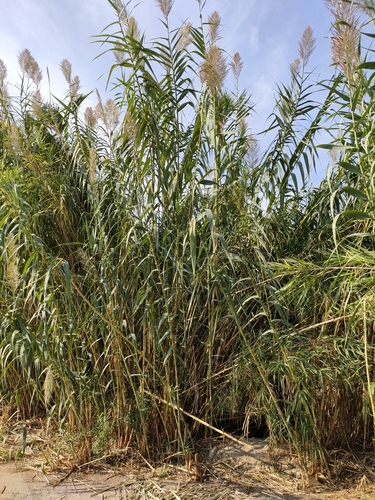
Arundo donax is a tall, cane-forming perennial grass that grows 10-20 feet (3-6 m) tall from thick, knotty rhizomes, forming dense stands. The hollow, bamboo-like stems are up to 1.5 inches (4 cm) thick and persist for more than a year, branching in their second season. Grey-green leaves are flat, 1-2 feet (30-60 cm) long and up to 2.5 inches (6 cm) wide, clasping the stem in two ranks. In late summer and autumn the canes are topped with plume-like flower heads 1-2 feet (30-60 cm) long, silvery to purplish, though plants in most introduced areas rarely set viable seed. Spread is almost entirely by rhizome and by stem fragments that root in moist soil. The grass grows along rivers, ditches, and damp ground and forms tall thickets that crowd out native vegetation. It is listed as an invasive species in California, the Gulf states, the Mediterranean basin, and elsewhere. Stands are highly flammable when dry. The deep rhizomes resprout vigorously, which makes established stands hard to remove.
Native Range
Arundo donax is thought to be native to eastern Asia and possibly the Mediterranean, and has been cultivated and spread so widely that its exact origin is unclear. It grows along watercourses, wetlands, and disturbed moist ground in warm-temperate and subtropical regions, where it is often invasive.Suggested Uses
Grown for screening, erosion control on banks, and as a source of cane for reeds in woodwind instruments. Because it spreads aggressively, planting is restricted in many areas. The dried canes are also used for stakes, fencing, and biomass.How to Identify
Appearance
Size & Dimensions
Height10' - 20'
Width/Spread6' - 20'
Colors
Bloom Information
Feathery, silvery to purple flower plumes form at the cane tips in late summer and autumn. In most introduced regions the flowers produce little or no viable seed. Spread instead occurs through rhizomes and rooting stem pieces.
Detailed Descriptions
Flower Description
silvery to purplishFoliage Description
grey-greenGrowing Conditions
Sun Requirements
Requires 6-12 hours of direct sunlight daily
• Full Sun: 6+ hours of direct sunlight
• Partial Shade: 3-6 hours of direct sunlight
• Full Shade: Less than 3 hours of direct sunlight
Care & Maintenance
Care Guide
Plants grow in full sun in moist to wet soil and tolerate brackish water, drought, and a range of soil types once established. Growth is rapid, with canes adding many feet in a single season. Spread by rhizome is aggressive, and containment with root barriers limits escape into waterways. The species is regulated as a noxious or invasive plant in many regions. Dry canes are a fire hazard in late summer. Top growth is cut or burned back, and the rhizomes resprout each spring.Pruning
Canes can be cut to the ground in late winter before new growth begins. Removing dead canes reduces the fire hazard from dry stems. Cutting alone does not kill the plant, as the rhizomes resprout.Pruning Schedule
Prune: February
winter