Arundo, Genus, spp., Multiple species,
- Genus
- Multiple species
Mediterranean basin, Middle East, and warm temperate Asia
Overview
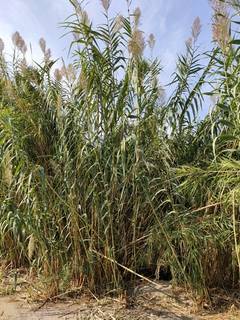
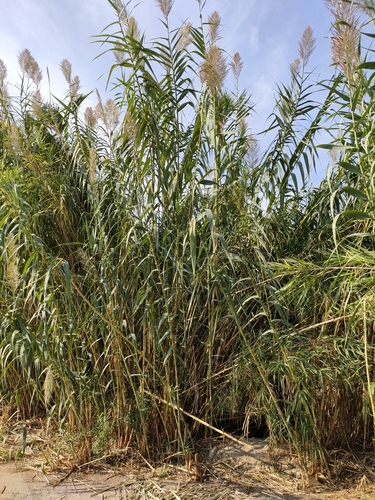
Arundo is a genus of tall, cane-forming perennial grasses in the grass family, native to the Mediterranean region and warm parts of Asia. The dominant species, A. donax, giant reed, sends up hollow, bamboo-like canes 6-20 feet (1.8-6 m) tall from thick, spreading rhizomes. Broad blue-green leaves 12-24 inches (30-60 cm) long are arranged in two ranks along the canes. Feathery plume-like panicles 12-24 inches (30-60 cm) long rise above the foliage in late summer and autumn, silvery to pale purple, though seed is rarely fertile in cool climates. The cultivated form versicolor has white-and-green striped leaves and reaches about 6-8 feet (1.8-2.4 m). Plants spread aggressively by rhizome and by stem fragments that root in water. A. donax is listed as a noxious or invasive species in California, Texas, and other warm regions, where it crowds out riverbank vegetation and raises wildfire fuel loads. Foliage contains alkaloids that are toxic to grazing livestock.
Native Range
Native to the Mediterranean basin, the Middle East, and warm temperate Asia. Grows along riverbanks, ditches, and other moist, disturbed ground, and is naturalized in warm regions worldwide.Suggested Uses
Grown as a tall screen, windbreak, and pondside accent in large spaces, with the variegated form spaced 36-48 inches (90-120 cm) apart. The species is used for erosion control and biomass within its native range but spreads into waterways elsewhere. Container culture or a rhizome barrier confines it in smaller gardens.How to Identify
Appearance
Size & Dimensions
Height6' - 20'
Width/Spread3' - 10'
Bloom Information
Plume-like panicles appear in late summer and autumn, about August through October. The silvery to purplish plumes persist for several weeks and fade to tan. In cool climates flowering is sparse and seed rarely ripens, so spread is mainly by rhizome.
Detailed Descriptions
Flower Description
silvery to pale purpleFoliage Description
blue-green, or white-and-green striped in the variegated formGrowing Conditions
Sun Requirements
Requires 6-12 hours of direct sunlight daily
• Full Sun: 6+ hours of direct sunlight
• Partial Shade: 3-6 hours of direct sunlight
• Full Shade: Less than 3 hours of direct sunlight
Care & Maintenance
Care Guide
Plants grow in full sun in moist to wet soil and tolerate seasonal flooding, drought once established, and a wide pH range. The thick rhizomes spread widely and resprout from fragments, making established stands difficult to remove. Top growth is killed by hard frost but the rhizome resprouts in spring in zones 6 and warmer. The variegated form is less hardy and less vigorous than the species. Foliage contains alkaloids including gramine that are toxic to livestock if grazed. Canes are cut to the ground in late winter before new growth.Pruning
Old canes are cut to the ground in late winter or early spring before new shoots emerge. Rhizomes are confined with a deep barrier or container to limit lateral spread. Cut canes and dug rhizome fragments are removed rather than composted, since fragments root readily.Pruning Schedule
winterearly spring
Container Growing
Suitable for container growing
Minimum container size: 15 gallons