Festuca, Genus, glauca, Species,
- Genus & species
blue fescue
Europe — southern France (the alpine and subalpine meadows of the Massif Central and the Alps) and adjacent rocky slopes; the taxonomy of the species is confused and plants sold in nurseries as {F. glauca} may include {F. cinerea}, {F. valesiaca}, and other closely related European blue fescues
Overview
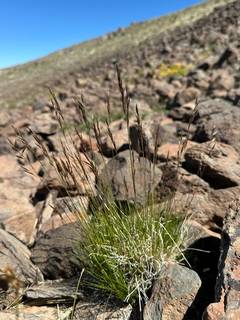
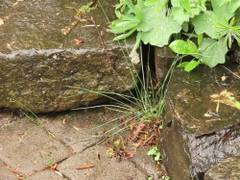
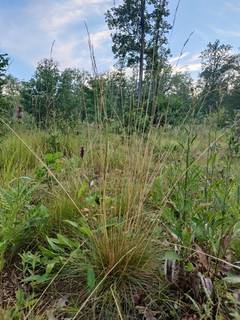
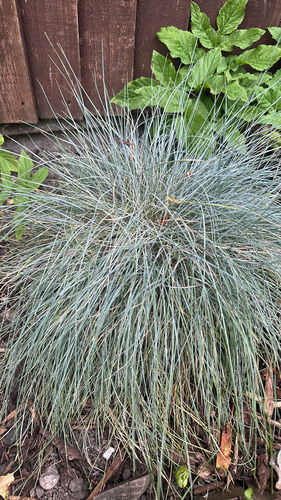
Festuca glauca is a small clumping semi-evergreen ornamental grass in the family Poaceae growing 6–12 inches (15–30 cm) tall and 6–12 inches (15–30 cm) wide in a tight dome-shaped tuft of narrow hair-like foliage. Leaves are blue-gray to silver-blue, 6–10 inches (15–25 cm) long, and so narrow they are almost cylindrical (inrolled to conserve moisture on dry rocky sites in the native range), and the coloration comes from a waxy glaucous coating on the leaf surface that reflects blue wavelengths of light — the specific epithet glauca means blue-gray in Latin and refers to this waxy coating. Blue-green flower panicles open on slender stalks 6–8 inches (15–20 cm) above the foliage tuft in May and June across a 4-week bloom period and ripen to tan-buff by July, and the wind-pollinated panicles carry no ornamental interest beyond the color contrast with the silver-blue foliage. The blue color is most intense in cool weather during spring and fall and dulls toward green in hot humid summer conditions, which is the main reason the species performs less well in USDA zones 7 and 8 than it does in zones 4 through 6 where cool summers hold the blue color through the growing season. The taxonomy of F. glauca is confused: plants sold in the nursery trade under this name may include F. cinerea, F. valesiaca, and other closely related European blue fescues, and the commercial cultivars are selected for leaf color rather than for species-pure origin. 'Elijah Blue' is the cultivar most commonly planted in North American nurseries because of the reliable silver-blue color and the compact tight dome form. Limitation: the tight dome-shaped tuft dies out in the center after 3–5 years as the perimeter of the clump spreads outward and the old central growth exhausts the soil, and the central dieback is the main maintenance task for the species — clumps are dug up every 3–4 years in early spring, the dead center is discarded, and the live outer ring is broken apart and replanted as smaller divisions to rebuild the planting. Sharp drainage is the second cultural requirement because crown rot develops in wet winter soils and heavy clay positions, and rich garden soils combined with overwatering produce floppy green growth with diminished blue color rather than the tight silver-blue tuft that is the design reason for planting the grass.
Native Range
Native to southern France, particularly the alpine and subalpine meadows of the Massif Central and the French Alps, and adjacent rocky slopes at middle to upper elevations. The taxonomy of the species is confused and plants sold in the nursery trade as F. glauca may include F. cinerea, F. valesiaca, and other closely related European blue fescues, and the commercial cultivars are selected for leaf color and form rather than for species-pure origin.Suggested Uses
Used in rock gardens, gravel gardens, dry border fronts, mixed silver-and-blue foliage plantings, and containers of at least 2 gallons (7.5 L) at 6–12 inch (15–30 cm) spacing, or mass-planted in drifts at the same spacing for a ground-cover effect across a larger area. The tight silver-blue dome form supplies year-round color contrast against darker-foliaged perennials and shrubs, and the compact size suits formal edging and small-scale designs where larger ornamental grasses would be out of scale. Rich irrigated border positions, heavy clay sites, and hot humid summer climates in zones 7 and 8 are unsuitable because of the floppy growth response to rich soil, the crown rot risk in wet winter soils, and the loss of blue color during hot humid summers.How to Identify
Appearance
Size & Dimensions
Height6" - 1'
Width/Spread6" - 1'
Bloom Information
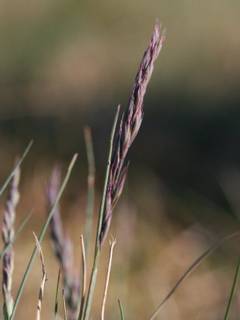
Blue-green flower panicles open on slender stalks 6–8 inches (15–20 cm) above the foliage tuft in May and June across a 4-week bloom period and ripen to tan-buff by July. The flowers are wind-pollinated and carry no nectar or pollen value for insect pollinators, and the ornamental contribution of the panicles is limited to the color contrast between the blue-green seed heads and the silver-blue foliage beneath them. Seed heads can be left for summer interest or cut after ripening if a cleaner tuft silhouette is the design preference.
Detailed Descriptions
Flower Description
blue-green panicles ripening to tan-buff, carried on slender flowering stalks 6-8 inches (15-20 cm) above the foliage tuftFoliage Description
blue-gray to silver-blue, narrow and hair-like, 6-10 inches (15-25 cm) long; the blue color is most intense in cool weather during spring and fall and fades toward green in hot humid summers; the specific epithet glauca means blue-grayGrowing Conditions
Sun Requirements
Requires 6-12 hours of direct sunlight daily
• Full Sun: 6+ hours of direct sunlight
• Partial Shade: 3-6 hours of direct sunlight
• Full Shade: Less than 3 hours of direct sunlight
Care & Maintenance
Care Guide
Site in full sun with 6 or more hours of direct sun per day in well-drained sandy or rocky soil with a pH of 5.5–7.5; sharp drainage is essential because crown rot develops in wet winter soils and heavy clay positions, and raised beds or amended drainage are used on clay sites. Rich garden soil and regular watering produce floppy green growth with diminished blue color rather than the tight silver-blue tuft that is the design reason for the species, so lean soil and restrained irrigation hold the intended form and color. The blue color is most intense in cool weather and dulls toward green during hot humid summers, which limits performance in zones 7 and 8. The tight dome-shaped tuft dies out in the center after 3–5 years and calls for division every 3–4 years in early spring to rebuild the planting: clumps are dug, the dead center is discarded, and the live outer ring is broken apart and replanted as smaller divisions. Accumulated dead brown foliage is combed or raked out of the tuft in early spring (March) before new growth emerges. The species is deer-resistant and non-toxic. Hardy in USDA zones 4–8.Pruning
Accumulated dead brown foliage is combed or raked out of the tuft in early spring (March) before new growth emerges, rather than shearing the entire clump back, because the semi-evergreen foliage includes live leaves among the dead ones. Spent flower stalks can be cut to the base after the panicles ripen in July if the tan seed heads are not wanted, or left for summer interest. Every 3–4 years the clump is dug, the dead center discarded, and the live outer ring broken apart into smaller divisions and replanted to rebuild the planting. The species is not sheared or mowed because cutting through the living foliage produces a ragged appearance that takes most of the growing season to recover.Pruning Schedule
Prune: March
early spring
Container Growing
Suitable for container growing
Minimum container size: 2 gallons