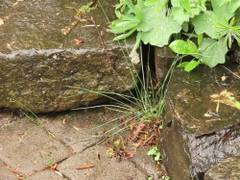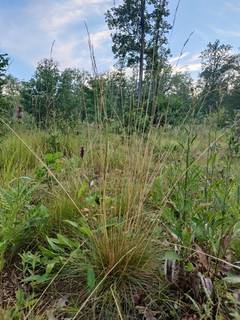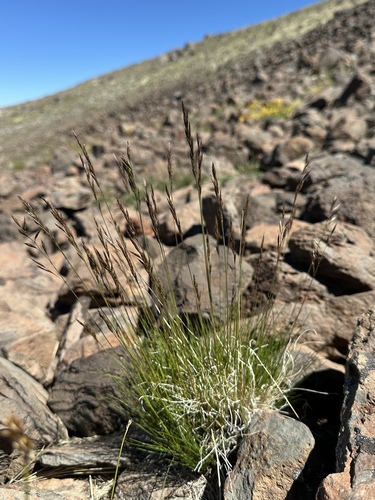
Festuca, Genus, idahoensis, Species,
- Genus & species
Idaho fescue
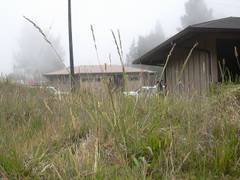
British Columbia south through Washington, Oregon, California; east through Rocky Mountains to Great Plains; dry to mesic meadows, bunchgrass prairies, open forests, rocky slopes
Overview
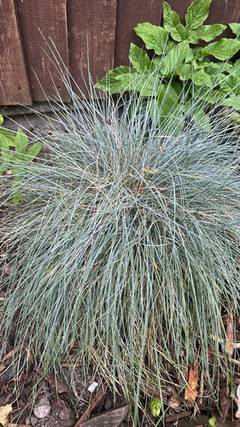
Festuca idahoensis (Idaho fescue, blue bunchgrass) is a native evergreen bunchgrass growing 12–24 inches (30–60 cm) tall (foliage tuft 8–18 inches / 20–45 cm; flower stems to 24 inches / 60 cm) and 8–14 inches (20–35 cm) wide. Blue-green to gray-green needle-like foliage forms a dense tuft. Pale green to straw-colored open nodding panicles 3–6 inches (7–15 cm) appear above the foliage in late spring to early summer (May–June) for about 3 weeks. The species belongs to Poaceae. A dominant bunchgrass component of Pacific Northwest prairies, dry meadows, and open forests, including remnant Garry oak (Quercus garryana) prairie ecosystems in the Willamette Valley, Puget Sound lowlands, and southern Vancouver Island. A cool-season grass: actively growing in spring and fall, semi-dormant in hot dry summer. The foliage tuft persists longer than that of F. glauca — the center does not die out as readily, though old clumps may thin after 5–7 years. Adapted to summer-dry conditions — summer irrigation causes crown rot and decline, which is the principal cultural limitation. Native to British Columbia south through Washington, Oregon, and California, east through the Rocky Mountains to the Great Plains. Non-toxic. Deer-resistant. Drought-tolerant (summer-dry adapted). Hardy in zones 4–9.
Native Range
Native to British Columbia south through Washington, Oregon, and California, east through the Rocky Mountains to the Great Plains, growing in dry to mesic meadows, bunchgrass prairies, open forests, and rocky slopes.Suggested Uses
Used in native prairie restoration, meadows, rock gardens, dry sunny borders, and in containers of at least 2 gallons (7.5 L), spaced 8–14 inches (20–35 cm). A component of remnant Garry oak (Quercus garryana) prairie ecosystems. Summer irrigation causes crown rot — adapted to dry summer conditions. Non-toxic. Deer-resistant. Zones 4–9.How to Identify
Appearance
Size & Dimensions
Height1' - 2'
Width/Spread8" - 1'2"
Bloom Information
Detailed Descriptions
Flower Description
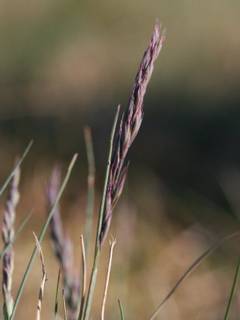
Pale green to straw-colored; in open nodding panicles 3-6 inches (7-15 cm) above the foliage; May-JuneFoliage Description
Blue-green to gray-green; needle-like; foliage tuft 8-18 inches (20-45 cm); flower stems to 24 inches (60 cm); evergreenGrowing Conditions
Sun Requirements
Requires 6-10 hours of direct sunlight daily
• Full Sun: 6+ hours of direct sunlight
• Partial Shade: 3-6 hours of direct sunlight
• Full Shade: Less than 3 hours of direct sunlight
Care & Maintenance
Care Guide
Grows in full sun with 6–10 hours of direct light. Tolerates sandy or loamy soil at pH 5.5–7.5 with well-drained conditions. Adapted to summer-dry climates — summer irrigation causes crown rot and decline. A cool-season grass: actively growing in spring and fall, semi-dormant in hot summer. Old clumps may thin in the center after 5–7 years and can be divided or replanted. Non-toxic. Deer-resistant. Suitable for zones 4–9.Pruning
Comb or rake out dead foliage from the tuft in early spring (March). The evergreen tuft is not sheared to the ground. Remove flower stems after seed set if a tidy mound appearance is desired; leave seed heads for bird food and self-sowing in native plantings.Pruning Schedule
Prune: March
early spring
Container Growing
Suitable for container growing
Minimum container size: 2 gallons