Festuca, Genus, rubra, Species,
- Genus & species
red fescue
Northern hemisphere — Europe, Asia, North America (circumboreal); native populations from Alaska south through British Columbia, the Pacific Northwest, and across northern states and Canada
Overview
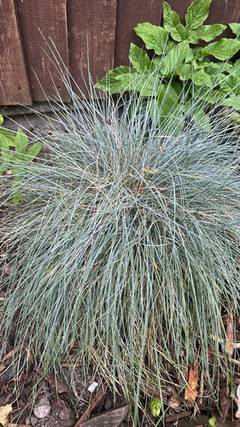
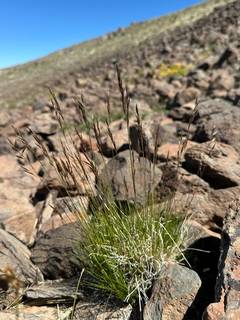
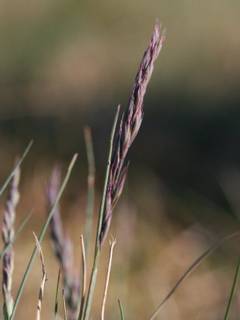
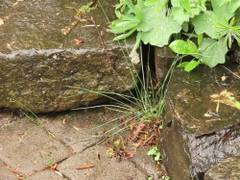
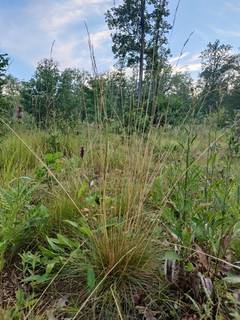
Festuca rubra is a cool-season, rhizomatous perennial grass in the grass family (Poaceae), growing 8-24 inches (20-60 cm) tall, spreading by slender rhizomes to form a narrow-leaved, dense sod. The common name "red" references the reddish-purple colour of the leaf sheaths at the base, not the leaf blades, which are narrow, 1-2 mm wide, dark green, and semi-evergreen. Three subspecies are commonly grown: ssp. rubra (creeping red fescue — strong rhizomes, forming sod), ssp. commutata (Chewings fescue — bunch-type, no rhizomes), and ssp. litoralis (slender creeping red fescue — narrow rhizomes). The creeping red fescue (ssp. rubra) is the dominant narrow-leaved fescue used in the Pacific Northwest, forming the backbone of shade-tolerant, low-maintenance turf mixes. The species tolerates shade (2-3 hours of direct sun minimum), drought, acidic soil (pH 5.0-6.5), and cold temperatures to -40°F (-40°C). Heavy foot traffic, high fertility, and waterlogged soil are not tolerated. Growth slows in summer heat above 80°F (27°C). In the Pacific Northwest, red fescue greens up year-round in the maritime climate.
Native Range
Festuca rubra is native across the northern hemisphere — Europe, Asia, and North America (circumboreal distribution). In North America, native populations occur from Alaska south through British Columbia, the Pacific Northwest, and across northern states and Canada. The species grows in meadows, open woodland, coastal grassland, and sandy soils.Suggested Uses
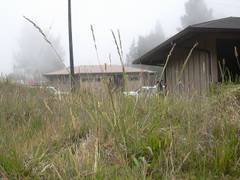
The standard shade-tolerant turf grass for the Pacific Northwest — blended with perennial ryegrass and other narrow-leaved fescues for all-purpose lawn mixes. No-mow lawn applications. Erosion control on slopes and embankments. Native meadow restoration. Coastal erosion control — subsp. litoralis is naturally salt-tolerant.How to Identify
Appearance
Size & Dimensions
Height8" - 2'
Width/Spread1' - 3'
Bloom Information
Detailed Descriptions
Foliage Description
Dark green with reddish basal sheathsGrowing Conditions
Sun Requirements
Requires 2-8 hours of direct sunlight daily
• Full Sun: 6+ hours of direct sunlight
• Partial Shade: 3-6 hours of direct sunlight
• Full Shade: Less than 3 hours of direct sunlight