Festuca, Genus, roemeri, Species,
- Genus & species
Roemer's fescue
Overview
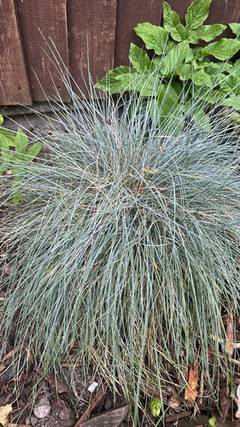
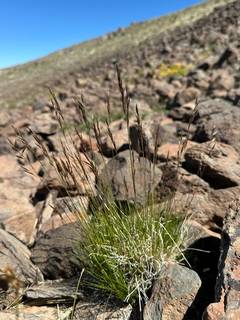
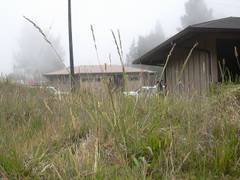
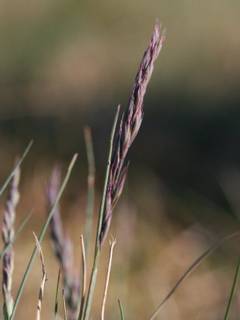
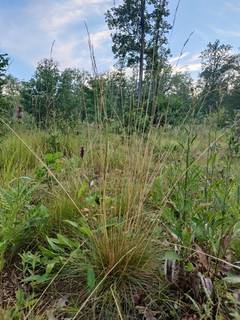
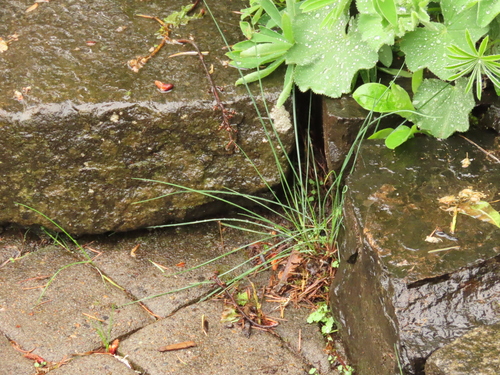
Festuca roemeri is a perennial cool-season bunchgrass forming dense tufts 8-16 inches (20-40 cm) tall in foliage and 18-30 inches (45-75 cm) tall in flower, with clumps spreading 12-18 inches (30-45 cm) wide. Leaf blades are narrow (0.04-0.08 inch / 1-2 mm wide), strongly inrolled, and gray-green to blue-green. Flower spikes are open panicles with drooping tips; spikelets are 4-7 mm long with awns shorter than the lemma. Bloom occurs from May through July. Plants are densely caespitose (clump-forming) and do not spread by rhizomes. New leaves emerge in fall from cool-season root growth and remain green through winter in zones 7-9, browning back partially in colder zones. Plants persist 8-15 years on dry, well-drained sites and decline within 3-5 years on irrigated sites or heavy soils. Spent flower stems may be left to dry through fall and cut back in late winter. The species is the principal native bunchgrass of Willamette Valley prairie and Garry oak savanna in southwestern Oregon and southwestern Washington.
Native Range
Native to the Pacific Northwest of North America, occurring in the Willamette Valley of Oregon, the Puget Trough of Washington, southern Vancouver Island, and the Klamath-Siskiyou region of southwestern Oregon and northwestern California. Found on dry rocky balds, prairie grasslands, and Garry oak savanna at sea level to 4,000 feet (0-1,200 m) elevation.Suggested Uses
Used in dry meadow plantings, native prairie restorations, and rock gardens at 12-18 inch (30-45 cm) spacing. Suited to hellstrips, oak savanna restoration, and unirrigated parking buffers; cool-season growth produces early-spring green cover and summer dormancy. Performs poorly in wet sites, conventional irrigated lawns, and small containers.How to Identify
Appearance
Size & Dimensions
Height1' - 2'6"
Width/Spread1' - 1'6"
Bloom Information
Flower stems emerge in May, with peak bloom from late May through June at low elevations and into July at higher sites. Individual panicles last 4-6 weeks before drying to straw color. Total ornamental display from emergence through dried seedheads extends from May through August. Bloom is reduced in plants that experienced summer drought stress the previous year.
Detailed Descriptions
Flower Description
green-tan, drying to strawFoliage Description
gray-green to blue-green; narrow, strongly inrolled bladesGrowing Conditions
Sun Requirements
Requires 6-12 hours of direct sunlight daily
• Full Sun: 6+ hours of direct sunlight
• Partial Shade: 3-6 hours of direct sunlight
• Full Shade: Less than 3 hours of direct sunlight
Care & Maintenance
Care Guide
Water deeply every 10-14 days during the first growing season; established plants require no supplemental irrigation in regions receiving at least 20 inches (50 cm) of annual precipitation, most of it in winter. Plants on irrigated sites or in summer-watered borders develop crown rot and decline within 3-5 years. Aphid colonies occasionally form on developing flower stems; populations remain low and do not significantly affect vigor. Voles may feed on basal stems in winter under heavy mulch; populations expand in moist years. Plants self-sow modestly on bare disturbed soil, producing 5-15 seedlings per parent annually. Replace plants when central crowns die out, typically after 8-15 years.Pruning
Cut clumps to 3-4 inches (7.5-10 cm) above the crown in late winter (February-March) before new growth emerges, removing dried flower stalks and any winter-damaged foliage. Spring-cleaned plants resume active growth within 2-3 weeks. Mid-summer cutbacks reduce subsequent vigor; plants enter summer dormancy and do not resprout reliably.Pruning Schedule
Prune: February–March
winterearly spring
Container Growing
Suitable for container growing
Minimum container size: 3 gallons