Rudbeckia, Genus, subtomentosa, Species,
- Genus & species
sweet black-eyed susan
Overview
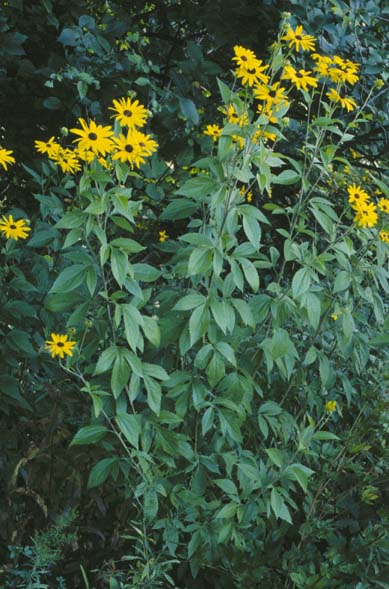
Rudbeckia subtomentosa is an upright clump-forming perennial reaching 3-5 feet (0.9-1.5 m) tall and 2-3 feet (60-90 cm) wide, with sturdy branching stems. The lower leaves are often three-lobed, while the upper leaves are lance-shaped, 3-6 inches (8-15 cm) long, with soft hairs on the undersides and a faint anise scent when crushed. From midsummer into fall it bears many daisy-like heads 2-3 inches (5-8 cm) across, each with 12 to 20 yellow ray florets around a domed dark brown to purple-brown disk. The seeds are small dry achenes held in the dried cones into winter. R. subtomentosa grows in moist prairies, meadows, and open woodland edges across the central United States. It blooms for 8 to 10 weeks and spreads slowly into clumps. The seed heads stand through winter. Plants flop in rich soil or shade and stand more upright in full sun.
Native Range
Rudbeckia subtomentosa is native to the central United States, from Texas and Louisiana north to Wisconsin and Michigan. It grows in moist tallgrass prairies, meadows, low woods, and the edges of marshes and streams.Suggested Uses
Rudbeckia subtomentosa is grown in prairie and meadow plantings, rain gardens, and the back of mixed borders, spaced 24-36 inches (60-90 cm) apart. Its late-summer flowers draw bees and butterflies, and the seed heads feed finches in winter. The tall stems add height to native and pollinator plantings.How to Identify
Appearance
Size & Dimensions
Height3' - 5'
Width/Spread2' - 3'
Bloom Information
Detailed Descriptions
Flower Description
Yellow with dark brown centerFoliage Description
GreenGrowing Conditions
Sun Requirements
Requires 6-10 hours of direct sunlight daily
• Full Sun: 6+ hours of direct sunlight
• Partial Shade: 3-6 hours of direct sunlight
• Full Shade: Less than 3 hours of direct sunlight
Care & Maintenance
Care Guide
Rudbeckia subtomentosa grows in full sun to part shade in medium to wet soil with a pH from 5.5 to 7.0. It tolerates clay and seasonal moisture and grows with steady water, though it withstands short dry spells once established. Plants form clumps and spread slowly by short rhizomes and self-seeding. In rich soil or shade the tall stems tend to flop, while full sun keeps them more upright. Cutting back the stems by half in late spring lowers the mature height. It is hardy in zones 4 to 8.Pruning
Cutting the stems back by about half in late spring produces shorter, sturdier plants that flower a little later. Spent flower heads can be left for winter seed and interest or removed to limit self-seeding. Cutting the clump to the ground in late winter clears old growth before spring.Pruning Schedule
Prune: May
late spring
Toxicity
Non-toxicRelated Rudbeckia species
 Large black-eyed susanRudbeckia hirta
 Black-eyed susanRudbeckia fulgida var. sullivantii 'Goldsturm'
 Deams black-eyed susanRudbeckia fulgida var. deamii
 Little suzy black-eyed susanRudbeckia fulgida var. speciosa 'Viette's Little Suzy'
 Indian summer black-eyed susanRudbeckia hirta 'Indian Summer'
 Brown-eyed susanRudbeckia triloba