Rudbeckia, Genus, occidentalis, Species,
- Genus & species
western black-eyed susan
Western North America (Intermountain West and Rocky Mountains)
Overview
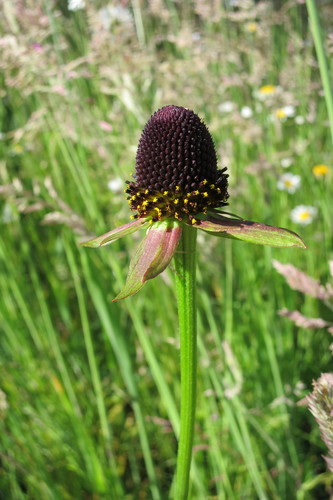
Rudbeckia occidentalis is a tall herbaceous perennial reaching 3-6 feet (90-180 cm) tall and 2-3 feet (60-90 cm) wide on stout upright stems from a fibrous-rooted crown. Leaves alternate, simple, ovate to lance-ovate, 4-10 inches (10-25 cm) long, medium green and roughly hairy with toothed margins; lower leaves stalked, upper leaves clasping. Flower heads borne singly or in small clusters on long branched stems from June through September. This species lacks ray florets entirely (uncommon within Rudbeckia); what appears as the flower is a dark brown to nearly black cylindrical-conical disk 1-2 inches (2.5-5 cm) tall and 0.6-0.8 inch (15-20 mm) wide composed of tightly packed brown disk florets, subtended by reflexed green bracts. Plants spread slowly from short rhizomes to form clumps 2-3 feet (60-90 cm) wide in 4-5 years. Reseeds readily in moist soils and may produce 20-50 volunteer seedlings per parent plant per year.
Native Range
Native to moist meadows, streambanks, sub-alpine clearings, and aspen groves in mountain ranges of western North America from southeastern Oregon and southern Idaho south through Wyoming, Utah, Colorado, Nevada, and northern California, generally at elevations of 4,500-10,000 feet (1,370-3,050 m).Suggested Uses
Used in moist meadow plantings, sub-alpine restoration sites, and the back of mixed perennial borders at 24-36 inch (60-90 cm) spacing in zones 4-8. Combines with Rudbeckia laciniata, Helianthus species, and ornamental grasses such as Calamagrostis where height and bold dark cones add structure. Containers tolerate the species in pots of at least 7-10 gallons (26-38 L); container plants are typically shorter (2-4 feet / 60-120 cm) and require staking to remain upright.How to Identify
Appearance
Size & Dimensions
Height3' - 6'
Width/Spread2' - 3'
Bloom Information
June through September across the species range, with peak bloom in July and August. At highest elevations, bloom may begin in late July and continue into early October. Individual flower heads persist 4-6 weeks as the disk darkens and dries; total stand bloom spans 8-10 weeks.
Detailed Descriptions
Flower Description
Dark brown to nearly black disk only (no rays)Foliage Description
Medium green, roughly hairyGrowing Conditions
Sun Requirements
Requires 6-10 hours of direct sunlight daily
• Full Sun: 6+ hours of direct sunlight
• Partial Shade: 3-6 hours of direct sunlight
• Full Shade: Less than 3 hours of direct sunlight
Care & Maintenance
Care Guide
Establishes from container stock or direct-sown seed within 1-2 growing seasons in moist loam or sandy loam soils with weekly water through the first summer. Mature plants tolerate periodic drought but require more consistent moisture than dry-prairie Rudbeckia species; bloom and stature decline in dry summers without supplemental water. Crown rot occurs in heavy clay soils that stay saturated through winter. Powdery mildew may affect lower leaves in late summer in still-air sites; affected leaves are removed at the base. Plants reseed readily in undisturbed soil and may form colonies that crowd smaller perennials over time. Tall stems can flop in windy sites or in heavily fertilized garden beds; staking or plant-through grids 18-24 inches (45-60 cm) above the ground keep stems upright.Pruning
Cut spent flower stems at the base in late autumn after seed dispersal or leave standing through winter for textural form and bird forage. Tattered or browned outer leaves are removed in early spring before new growth emerges. Pinching the growing tips at 12-18 inches (30-45 cm) tall in late spring reduces ultimate height by 6-12 inches (15-30 cm) and produces shorter, branchier stems with more flower heads.Pruning Schedule
Prune: March & November
early springfall
Container Growing
Minimum container size: 7 gallons
Toxicity
Non-toxicRelated Rudbeckia species
 Large black-eyed susanRudbeckia hirta
 Black-eyed susanRudbeckia fulgida var. sullivantii 'Goldsturm'
 Deams black-eyed susanRudbeckia fulgida var. deamii
 Little suzy black-eyed susanRudbeckia fulgida var. speciosa 'Viette's Little Suzy'
 Indian summer black-eyed susanRudbeckia hirta 'Indian Summer'
 Brown-eyed susanRudbeckia triloba