Rubus, Genus, cuneifolius, Species,
- Genus & species
sand blackberry
Southeastern and eastern United States
Overview
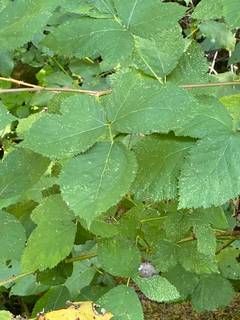
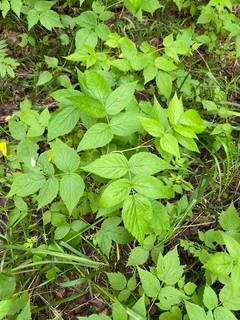
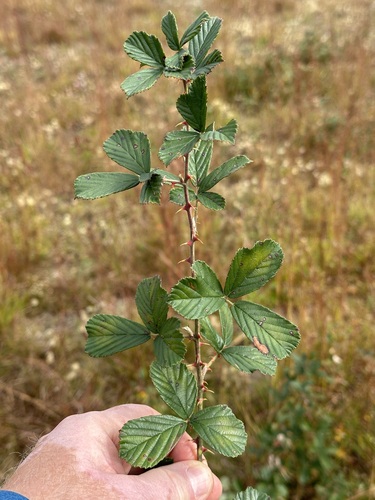
Rubus cuneifolius is a deciduous to semi-evergreen shrub 1.5-5 feet (0.5-1.5 m) tall, forming colonies of stiff, erect to arching canes armed with stout, hooked prickles. The leaves are divided into three to five wedge-shaped leaflets 1-2.5 inches (2.5-6 cm) long, dark green above and densely white-woolly beneath, with toothed margins toward the rounded tips. White five-petalled flowers about 1 inch (2.5 cm) across open in small clusters from March to May. These are followed by rounded black aggregate fruits 0.4-0.6 inch (10-15 mm) wide that ripen from June to August and are edible. The canes are biennial: first-year canes produce only leaves, and second-year canes flower, fruit, and then die back. Native to sandy soils of the southeastern United States, it grows in full sun on dry, well-drained ground and spreads by root sprouts to form dense thickets. It tolerates poor, droughty sand but declines in shade and wet soils. The prickly canes and colonizing roots can make established stands difficult to remove.
Native Range
Rubus cuneifolius is native to the southeastern and eastern United States, from New York and Connecticut south to Florida and west to Louisiana. It grows in sandy fields, pine flatwoods, dunes, roadsides, and other dry, open, disturbed ground.Suggested Uses
Used for erosion control and wildlife plantings on dry, sandy sites and in naturalized hedgerows. The fruit is eaten fresh or used in preserves, and the thickets shelter and feed birds and small mammals. Suited to large open areas where its spreading roots have room rather than small borders.How to Identify
Appearance
Size & Dimensions
Height1'6" - 5'
Width/Spread3' - 6'
Bloom Information
White five-petalled flowers about 1 inch (2.5 cm) across open in small clusters from March to May on second-year canes. Bees and other insects pollinate the flowers. Black aggregate fruits ripen from June to August and drop or are taken by birds and mammals.
Detailed Descriptions
Foliage Description
dark green above, white beneathGrowing Conditions
Sun Requirements
Requires 6-12 hours of direct sunlight daily
• Full Sun: 6+ hours of direct sunlight
• Partial Shade: 3-6 hours of direct sunlight
• Full Shade: Less than 3 hours of direct sunlight
Care & Maintenance
Care Guide
Rubus cuneifolius grows in full sun on dry, sandy, well-drained soil of low fertility and tolerates drought once established. It spreads readily from root sprouts and seed and forms thickets that expand year to year. New plants establish from root cuttings, division of suckers, or seed cleaned from ripe fruit. No supplemental water or fertilizer is needed on typical sandy sites. Canes are biennial, so each cane lives two years before dying. Hardy in USDA zones 6-9, it withstands heat, salt spray, and poor soils but not deep shade or standing water.Pruning
Dead second-year canes can be cut to the ground after fruiting, when they die naturally. Thinning crowded canes in late winter improves air movement within the clump. Cutting alone does not stop spread, as the roots resprout.Pruning Schedule
Prune: February–March
winter