Rubus, Genus, spp., Multiple species,
- Genus
- Multiple species
brambles
Worldwide, mainly temperate Northern Hemisphere
Overview
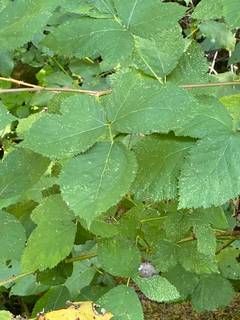
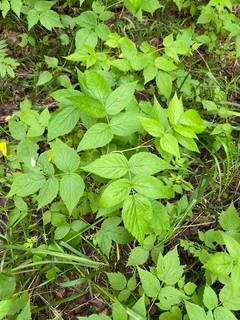
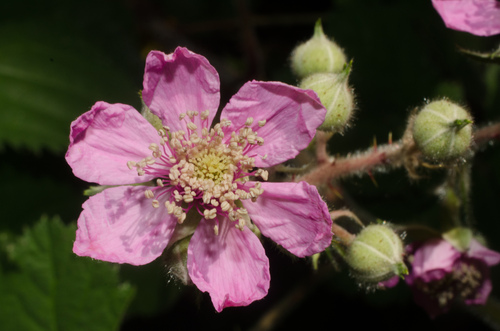
Rubus is a large genus in the rose family that includes blackberries, raspberries, and dewberries, with a few hundred well-marked species and many more apomictic microspecies. Most are thorny shrubs that grow as biennial canes from a perennial root system: canes grow vegetatively the first year, flower and fruit the second, then die. Across the genus, canes range from erect to arching or trailing and reach about 2 to 10 feet (0.6 to 3 m) long, usually armed with prickles, though thornless forms exist. The leaves are compound with 3-7 toothed leaflets. Five-petaled white to pink flowers open in spring and early summer, followed by aggregate fruits — clusters of small drupelets — that ripen red to black through summer and autumn and are eaten by people and wildlife. Plants spread by seed, by rooting cane tips, and by suckers, and several species form dense, spreading thickets that can become invasive. Many species hybridize freely. Across the genus, plants differ in cane habit, prickliness, leaf form, and fruit color and flavor.
Native Range
The genus is found almost worldwide but is concentrated in the temperate Northern Hemisphere, with species native to North America, Europe, and Asia, and others in tropical mountains and the Southern Hemisphere. Brambles grow in woodland edges, clearings, hedgerows, old fields, and disturbed ground. Across the genus they favor sunny to lightly shaded sites with moist, fertile soil.Suggested Uses
Brambles are grown in fruit gardens and along fences and trellises for their edible berries, spaced about 3-6 feet (0.9-1.8 m) apart by type. Vigorous and ornamental species are used in wildlife plantings and informal hedges where their thickets give cover and food. Across the genus, the spreading, thorny habit makes containment part of any planting.How to Identify
Appearance
Size & Dimensions
Height2' - 10'
Width/Spread3' - 10'
Bloom Information
Across the genus, flowering runs from mid spring into summer, mainly May and June, on second-year canes, with everbearing types of some species flowering again on first-year canes in late summer. Bloom lasts about 3-5 weeks. Flowering and fruiting timing varies widely with species and climate.
Detailed Descriptions
Flower Description
white to pinkFoliage Description
greenGrowing Conditions
Sun Requirements
Requires 6-8 hours of direct sunlight daily
• Full Sun: 6+ hours of direct sunlight
• Partial Shade: 3-6 hours of direct sunlight
• Full Shade: Less than 3 hours of direct sunlight
Care & Maintenance
Care Guide
Most brambles grow in full sun in moist, fertile, well-drained soil, with the heaviest fruiting in sun. Across the genus they need steady moisture while fruit swells, and they tolerate short dry spells once established. Canes are often tied to wires or a fence to keep the thorny growth manageable and to expose fruit to light and air. Spent second-year canes are removed at the base after fruiting, since they die. Aphids, cane borers, spotted-wing drosophila, and fungal cane and leaf diseases affect many species, and viruses build up in old plantings. Suckering species spread well beyond their original planting and need regular containment.Pruning
Remove second-year canes at ground level once they finish fruiting, since they die and harbor disease if left. Thin the remaining first-year canes to the strongest few per clump and shorten them to a manageable height in late winter. Cut back stray suckers and rooted cane tips through the season to limit spread.Pruning Schedule
summerwinter