Rosa, Genus, woodsii, Species,
- Genus & species
woods rose
Overview
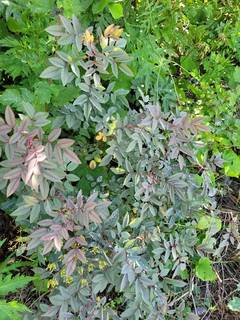
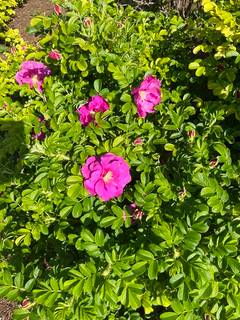
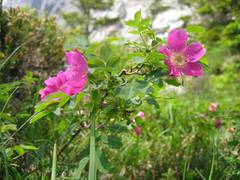
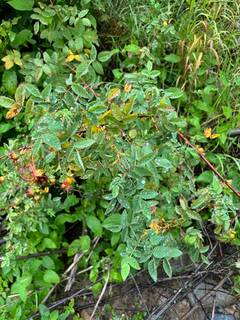
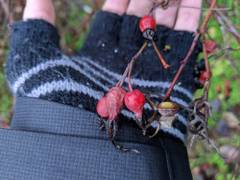
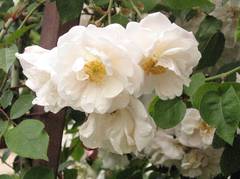
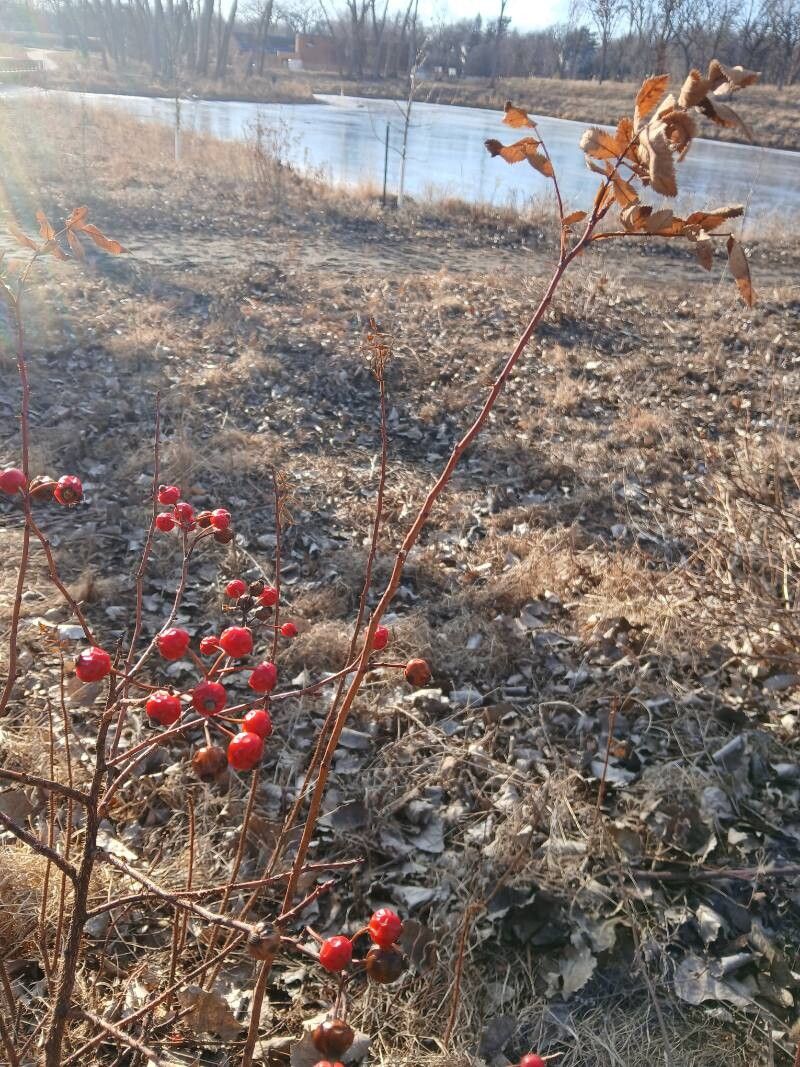
Rosa woodsii is a deciduous suckering shrub reaching 3-7 feet (0.9-2.1 m) tall and spreading 6-12 feet (1.8-3.7 m) by underground rhizomes. Stems erect to arching, brown to reddish, armed with paired straight or slightly curved 0.2-0.4 inch (5-10 mm) thorns at the nodes. Leaves pinnately compound with 5-9 leaflets; each leaflet ovate to elliptic, 0.4-1.5 inches (1-4 cm) long with serrated margins, dull green above and paler below. Flowers solitary or in clusters of 2-5 at branch tips, pink (occasionally white), 1-2 inches (2.5-5 cm) across with five petals surrounding yellow stamens; fragrant. Bloom period extends from late May through July across most of the range. Hips globose to ovoid, 0.3-0.5 inches (8-13 mm) long, ripening from green to red or orange-red in August-September and persisting on stems through winter into early spring. Foliage turns yellow to dull red before leaf drop in October. Forms dense thickets within 4-6 years; rhizomatous spread can extend 2-3 feet (60-90 cm) per year in moist soils. Cane lifespan 4-6 years; older canes die back and are replaced by new shoots from the rhizome.
Native Range
Native to western and central North America from southern Alaska south through British Columbia, the Rocky Mountains, and Great Plains to northern Mexico, east to Manitoba, North Dakota, and central Texas. Found along stream banks, in moist meadows, open woodlands, sagebrush steppe, and montane slopes at 1,500-9,500 feet (450-2,900 m) elevation.Suggested Uses
Planted in wildlife hedgerows, riparian restoration, erosion control on slopes, and as a thicket-forming barrier at 4-6 foot (1.2-1.8 m) spacing in zones 3-8. Suckering habit suits naturalistic plantings and large-scale habitat projects but limits use in formal beds and small gardens. Used in mine reclamation and post-fire revegetation across the Intermountain West.How to Identify
Appearance
Size & Dimensions
Height3' - 7'
Width/Spread6' - 12'
Bloom Information
Late May through July across most of the species range; bloom begins in early May at low elevations and southern latitudes, late June through August above 7,000 feet (2,100 m). Individual flowers last 2-4 days; each plant blooms for 3-5 weeks. Flowering is reduced after dry winters and by heavy spring browsing.
Detailed Descriptions
Foliage Description
Dull greenGrowing Conditions
Sun Requirements
Requires 6-10 hours of direct sunlight daily
• Full Sun: 6+ hours of direct sunlight
• Partial Shade: 3-6 hours of direct sunlight
• Full Shade: Less than 3 hours of direct sunlight
Care & Maintenance
Care Guide
Establishes within one season from bare-root or container plants spaced 4-6 feet (1.2-1.8 m) apart. Mature plants tolerate 6-8 weeks without rain in zones 4-7. Suckering produces 5-15 new shoots per square yard (per 0.8 m²) annually in moist soils; root barriers limit spread in mixed plantings. Powdery mildew, blackspot, and rose rust occur in humid conditions but are usually cosmetic on this species. Rose curculio weevils may damage flower buds in May-June. Annual removal of dead canes maintains shoot vigor.Pruning
Remove dead and 4+ year-old canes at ground level in late winter (February-March) before bud break. Tip-prune live canes by one-third in late winter to encourage branching and increase bloom. Sucker shoots that extend beyond the planting bed are cut back at ground level during the growing season; mowing is sufficient where naturalized populations are managed as ground cover.Pruning Schedule
Prune: February–March
winterearly spring
Container Growing
Minimum container size: 10 gallons