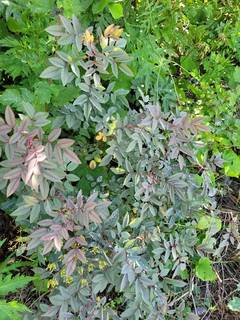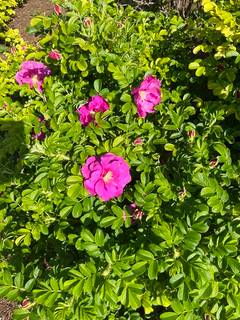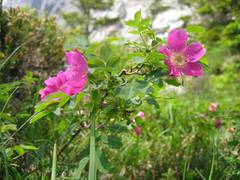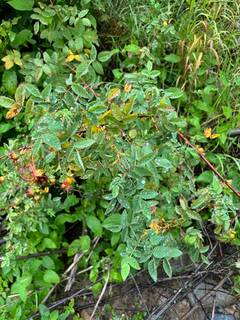
Rosa, Genus, 'Stanwell Perpetual', Cultivar,
- Genus
- Cultivar
Stanwell perpetual rose
Overview
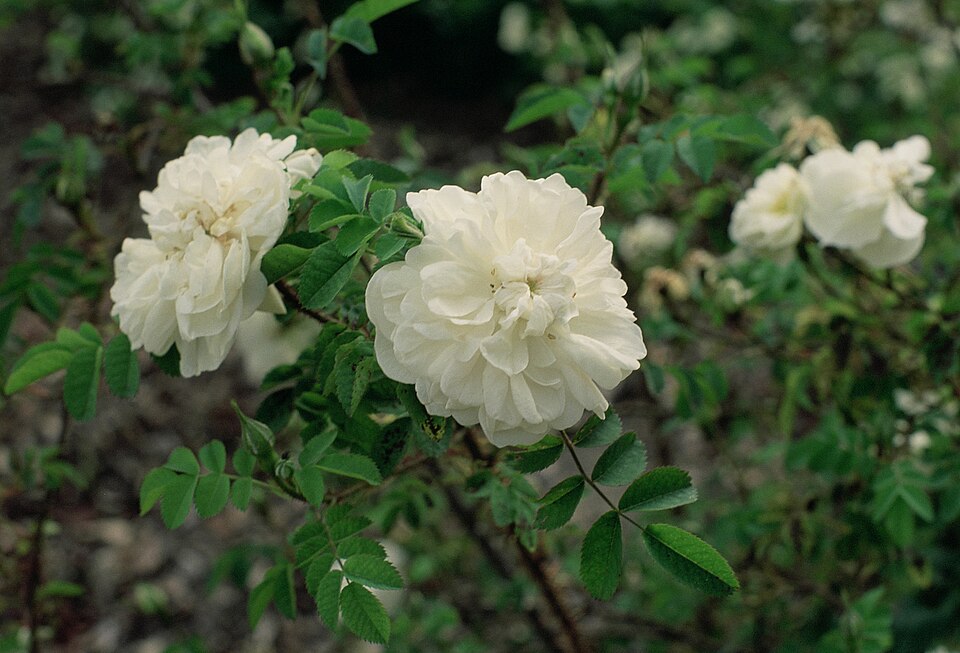
Rosa 'Stanwell Perpetual' is a deciduous shrub rose reaching 3-5 feet (0.9-1.5 m) tall with a spread of 3-5 feet (0.9-1.5 m) and a dense, arching, twiggy habit with very thorny stems. A Scotch rose (R. spinosissima) hybrid found by Lee at Stanwell, England in 1838 with R. damascena presumed as the other parent, it produces medium double to very double flat quartered flowers 2.5-3 inches (6-8 cm) wide in soft blush-pink fading to creamy-white, with a pale button eye at the center. Flowering is recurrent from June through the first frost, which is atypical among R. spinosissima hybrids since most bloom only once. The foliage is grey-green and ferny, with 7-9 tiny leaflets per leaf inherited from R. spinosissima. Growth rate is moderate, reaching full size in 3-4 years. Hardy to USDA zone 3, with winter survival documented to -35 F (-37 C), a trait also inherited from the Scotch rose parent. Fragrance is strong and of the old-rose class. Dense thorny stems form a barrier hedge at maturity. The thorn density makes close maintenance slow, and the plant is difficult to site near paths.
Native Range
Rosa 'Stanwell Perpetual' is a hybrid of garden origin, found by Lee at Stanwell, England in 1838. Presumed parentage is R. spinosissima x R. damascena.Suggested Uses
Planted as a barrier hedge, in mixed borders, or as a specimen at 3-4 foot (0.9-1.2 m) spacing. Zone 3 hardiness and drought tolerance once established suit cold-climate and low-input plantings, including prairie-edge and xeric borders. Dense thorns limit use along frequently used paths and narrow passages; the ferny foliage and recurrent bloom pair with heritage and cottage-style plantings.How to Identify
Appearance
Size & Dimensions
Height3' - 5'
Width/Spread3' - 5'
Bloom Information
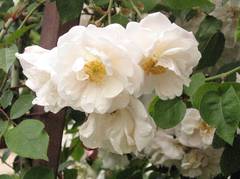
Double to very double flat quartered soft blush-pink flowers 2.5-3 inches (6-8 cm) wide, fading to creamy-white with a button eye at the center, blooming recurrently from June through frost. Recurrent bloom is atypical among R. spinosissima hybrids. Bloom duration across the season is approximately 18-20 weeks in zones 4-7. Fragrance is strong and of the old-rose class.
Detailed Descriptions
Flower Description
Soft blush-pink fading to creamy-white; double quartered flat 2.5-3 inches (6-8 cm); button eye; recurrent June-frost; strong old-rose fragranceFoliage Description
Grey-green; ferny; 7-9 tiny leaflets per leaf; spinosissima-type; deciduousGrowing Conditions
Sun Requirements
Requires 6-10 hours of direct sunlight daily
• Full Sun: 6+ hours of direct sunlight
• Partial Shade: 3-6 hours of direct sunlight
• Full Shade: Less than 3 hours of direct sunlight
Care & Maintenance
Care Guide
Grows in full sun in well-drained soil at pH 5.5-7.0, including lean and sandy sites where many roses decline. Hardy to USDA zone 3. Drought tolerance develops once established, supported by the R. spinosissima parentage. Deep watering during the first two summers supports establishment. Thorny stems form a dense hedge when plants are spaced 3-4 feet (0.9-1.2 m) apart. A single application of balanced fertilizer in early spring supports recurrent bloom; heavy feeding is not required.Pruning
Pruning is in late winter to early spring before bud break, and is kept light so the dense twiggy structure is retained. One-third of the oldest canes are removed at the base, with new basal canes retained. The thorn density makes pruning slow, and long sleeves together with heavy-duty gloves are the common practical accommodation.Pruning Schedule
Prune: February–March
early spring