Rosa, Genus, setigera, Species,
- Genus & species
climbing prairie rose
Overview
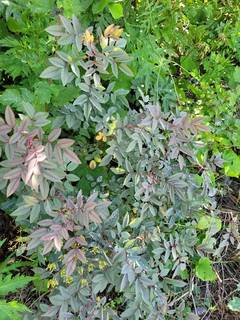
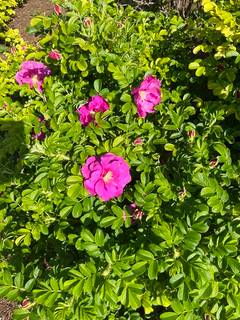
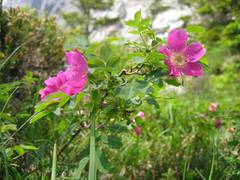
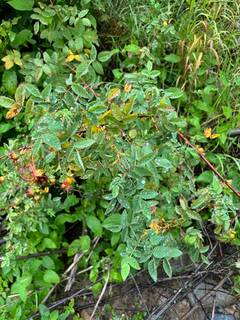
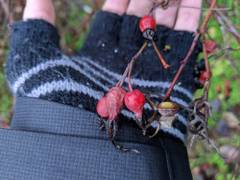
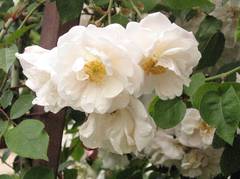
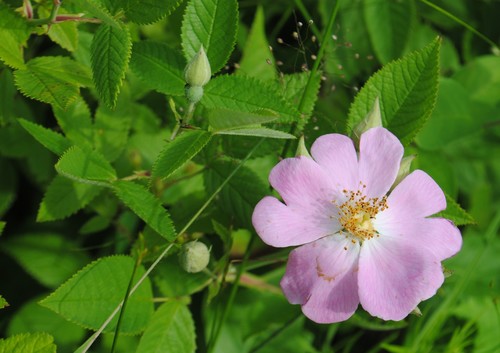
Rosa setigera, climbing prairie rose, is a deciduous native rose in the Rosaceae with long, arching to climbing canes 6-15 ft (1.8-4.6 m) long that sprawl over supports or mound on themselves. The canes bear scattered curved prickles and leaves usually divided into three (occasionally five) coarsely toothed, glossy leaflets, a count lower than most roses. In early to midsummer it produces clusters of single, five-petaled flowers 2-2.5 in (5-6 cm) across, deep rose-pink fading to pale pink or near white as they age, each with a center of yellow stamens. Unlike many garden roses it blooms once per year and does not repeat. Small round red hips follow and persist into winter, feeding birds. Rosa setigera is native to prairies, thickets, fencerows, and woodland edges across the central and eastern United States. It is functionally dioecious, with separate plants tending toward male or female function, so fruit set depends on nearby plants. The long canes need a fence, trellis, or open space to sprawl, and the plant suckers and self-layers into broad colonies if left untrained. It tolerates clay, heat, drought, and cold, and shows reddish-purple fall foliage.
Native Range
Native to the central and eastern United States, from Ontario and New England west to Kansas and south to Texas and Florida. It grows in prairies, thickets, fencerows, streambanks, and open woodland edges.Suggested Uses
Used on fences, arbors, trellises, and large banks, and in naturalized thickets and wildlife plantings. Suited to covering rough ground or sprawling through shrub borders. Combines with native grasses and shrubs in informal settings.How to Identify
Appearance
Size & Dimensions
Height6' - 15'
Width/Spread6' - 10'
Bloom Information
Blooms once a year in early to midsummer, mainly June and July, two to four weeks later than many shrub roses. Flowers open in clusters over three to four weeks and do not repeat. Deep pink buds fade to pale pink and white as the flowers age.
Detailed Descriptions
Flower Description
deep pink fading to whiteFoliage Description
glossy green, reddish-purple in fallGrowing Conditions
Sun Requirements
Requires 6-12 hours of direct sunlight daily
• Full Sun: 6+ hours of direct sunlight
• Partial Shade: 3-6 hours of direct sunlight
• Full Shade: Less than 3 hours of direct sunlight
Care & Maintenance
Care Guide
Grows in full sun to light shade in average, well-drained loam, clay, or sandy soil with pH 5.5 to 7.0. It tolerates heat, cold, drought once established, and poor ground. The long canes need a fence, trellis, or room to sprawl, and the plant suckers and layers into colonies where canes touch the soil. Fruit set is heavier where more than one plant grows together. Routine fertilizing is not needed in average soil.Pruning
Prune just after flowering, since blooms form on the previous year's wood. Remove the oldest canes at the base to renew growth and thin crowded stems. Suckers and rooted cane tips can be cut out to limit spread.Pruning Schedule
Prune: July
summer