Rosa, Genus, 'Sander''s White Rambler', Cultivar,
- Genus
- Cultivar
Sanders' white rambler
Overview
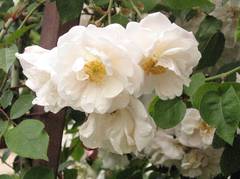
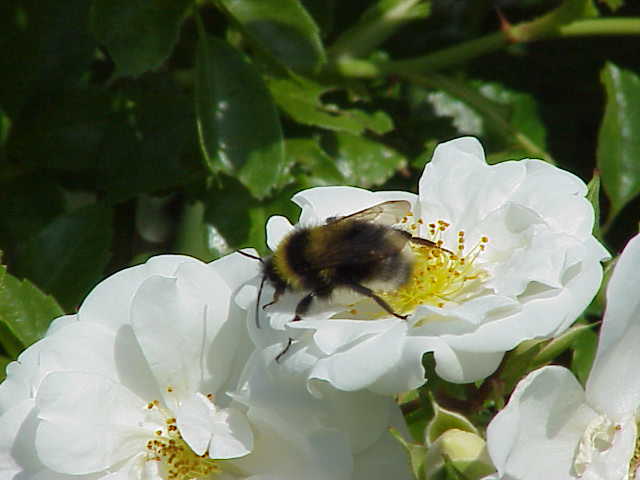
Rosa 'Sander's White Rambler' (also spelled Sanders' White Rambler) is a deciduous rambling rose reaching 12-18 feet (3.6-5.5 m) tall with a spread of 8-10 feet (2.4-3 m), with flexible, arching canes. A Wichuraiana rambler bred by Sanders of England in 1912, it produces small double to fully double rosette-form flowers 1.5-2 inches (4-5 cm) wide in pure white with a pale creamy-yellow center, carried in large clusters of 20-40 blooms. Flowering is a single heavy flush in July-August, 3-4 weeks later than most old ramblers such as R. 'Paul's Scarlet Climber' or R. 'Albertine'. Fragrance is strong and sweet. The foliage is glossy dark green with small leaflets 0.5-1 inch (1.3-2.5 cm) long, a trait inherited from R. wichuraiana parentage along with flexible canes and above-average disease resistance. Growth rate is fast, reaching full size in 3-4 years. Hardy to zone 5. Single-flush bloom limits the display to a 3-4 week window each summer, and the rambling habit requires a substantial support such as a wall, pergola, or mature host tree.
Native Range
Rosa 'Sander''s White Rambler' is a hybrid of garden origin, bred by Sanders of England in 1912. R. wichuraiana is one parent; the other is undocumented.Suggested Uses
Trained on walls, pergolas, arches, and arbors, or allowed to scramble through large host trees, at one plant per 8-10 foot (2.4-3 m) structural section. The late July-August bloom window pairs in mixed rambler plantings with June-flowering types to extend the display sequence. Single-flush bloom and 12-18 foot mature size limit use to sites with sufficient space and structure; compact gardens and small arbors are undersized.How to Identify
Appearance
Size & Dimensions
Height12' - 18'
Width/Spread8' - 10'
Bloom Information
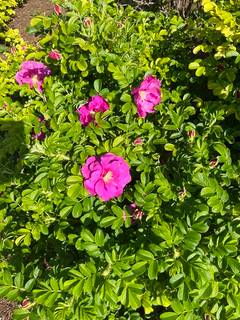
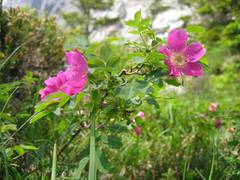
Large clusters of small double to fully double rosette-form pure white flowers 1.5-2 inches (4-5 cm) wide with creamy-yellow centers, blooming in a single flush in July-August. Bloom duration is 3-4 weeks. Fragrance is strong and sweet. The July-August window extends the rambler display 3-4 weeks past most June-flowering ramblers.
Detailed Descriptions
Flower Description
Pure white with creamy-yellow center; double to fully double rosette 1.5-2 inches (4-5 cm); large clusters; July-August; strong sweet fragranceFoliage Description
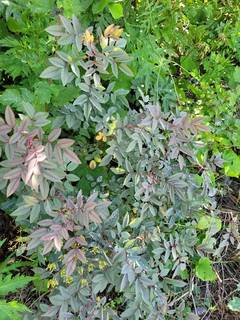
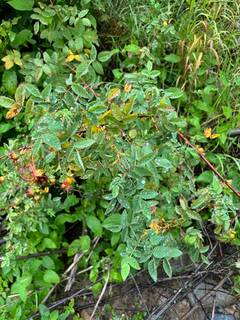
Glossy dark green; small leaflets 0.5-1 inch (1.3-2.5 cm); Wichuraiana-type; above-average disease resistance; deciduousGrowing Conditions
Sun Requirements
Requires 6-10 hours of direct sunlight daily
• Full Sun: 6+ hours of direct sunlight
• Partial Shade: 3-6 hours of direct sunlight
• Full Shade: Less than 3 hours of direct sunlight
Care & Maintenance
Care Guide
Grows in full sun in well-drained loam at pH 6.0-7.0. Hardy to USDA zone 5. Deep watering during establishment and summer drought supports the fast growth rate; established plants tolerate moderate dry spells. Glossy Wichuraiana-type foliage shows above-average resistance to blackspot and mildew. A balanced rose fertilizer applied in early spring supports the following summer's bloom. Large-scale support is required at maturity; a wall, pergola, arbor, or mature host tree can carry the 12-18 foot cane length.Pruning
Pruning is after flowering in late summer, since the single-flush bloom appears on the previous season's wood. Oldest canes are removed at the base every 3-4 years, with new basal canes retained and trained. Spring pruning removes next summer's flower buds and is avoided. Flexible Wichuraiana-type canes train easily while young.Pruning Schedule
Prune: August–September
summer