Rosa, Genus, 'Sally Holmes', Cultivar,
- Genus
- Cultivar
sally holmes rose
Overview
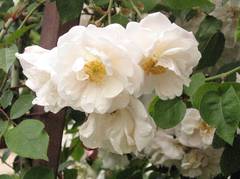
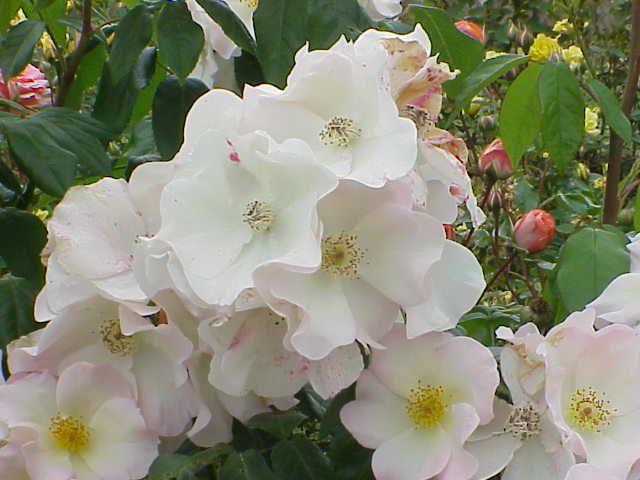
Rosa 'Sally Holmes' is a deciduous shrub rose reaching 5-8 feet (1.5-2.4 m) tall with a spread of 4-5 feet (1.2-1.5 m) in an upright, open habit that can also be trained as a short climber. Bred by Robert Holmes in England in 1976 and named for the breeder's wife, it produces single to semi-double flowers 3-3.5 inches (8-9 cm) wide in creamy-white, opening from apricot-buff buds and carried in dome-shaped clusters of 10-20 blooms. The bud-to-open color transition gives each cluster a warm-to-white gradient. Flowering is recurrent from June through the first frost, with the heaviest flush in early summer. Fragrance is light. The foliage is glossy dark green with above-average resistance to blackspot and mildew. Growth rate is fast, reaching full size in 2-3 years. Hardy to zone 5. The open habit can look sparse when grown as a freestanding shrub and develops stronger structure when the canes are trained against a wall or pillar. The plant declines in crowded plantings and requires air circulation.
Native Range
Rosa 'Sally Holmes' is a hybrid of garden origin, bred by Robert Holmes in England in 1976. Parentage is R. 'Ivory Fashion' x R. 'Ballerina', combining hybrid musk habit with hybrid floribunda flower size.Suggested Uses
Used as a specimen shrub, in mixed borders with perennials, and as a short climber on walls and pillars at 4-5 foot (1.2-1.5 m) spacing. The open habit requires space and shows stronger structure where air circulation is good. Light fragrance limits the contribution of scent when sited away from close approach; the visual effect comes from massed cluster display.How to Identify
Appearance
Size & Dimensions
Height5' - 8'
Width/Spread4' - 5'
Bloom Information
Blooms recurrently from June through frost with the heaviest flush in June-July and lighter rebloom through autumn. Flowers are 3-3.5 inches (8-9 cm) wide, single to semi-double with 5-12 petals, creamy-white from apricot-buff buds, carried in clusters of 10-20. Fragrance is light. Bloom duration across the season is approximately 18-20 weeks in zones 6-8.
Detailed Descriptions
Flower Description
Creamy-white opening from apricot-buff buds; single to semi-double 3-3.5 inches; dome-shaped clusters of 10-20; recurrent June-frostFoliage Description
Glossy dark green; 5-7 leaflets per leaf; deciduous; above-average disease resistanceGrowing Conditions
Sun Requirements
Requires 6-10 hours of direct sunlight daily
• Full Sun: 6+ hours of direct sunlight
• Partial Shade: 3-6 hours of direct sunlight
• Full Shade: Less than 3 hours of direct sunlight
Care & Maintenance
Care Guide
Grows in full sun in well-drained, fertile loam at pH 6.0-7.0. Hardy to USDA zone 5. Deep weekly watering during establishment and summer drought supports the fast growth rate; established plants tolerate moderate dry spells. A balanced rose fertilizer applied in early spring and again after the first flush supports repeat bloom. Mulch 2-3 inches (5-7.5 cm) deep, kept clear of the crown, conserves moisture. Air circulation reduces blackspot pressure, and the glossy foliage shows above-average resistance without being immune.Pruning
Pruning is in late winter to early spring before bud break. As a shrub, canes are reduced by one-third; as a short climber, main canes are trained horizontally and laterals shortened to 2-3 buds. Oldest canes are removed at the base every 2-3 years. Deadheading spent cluster stems supports rebloom.Pruning Schedule
Prune: February–March
early spring