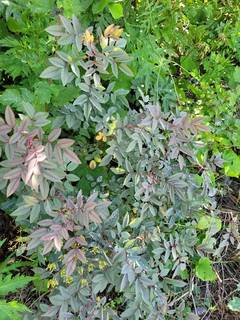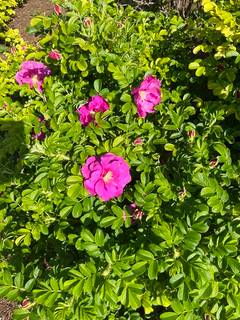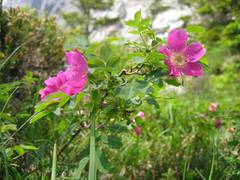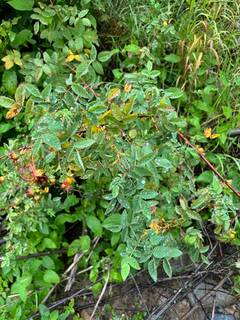
Rosa, Genus, 'Peggy Martin', Cultivar,
- Genus
- Cultivar
peggy martin rose
Found rose from Plaquemines Parish, Louisiana; identity and parentage unknown; survived Hurricane Katrina submersion in 2005
Overview
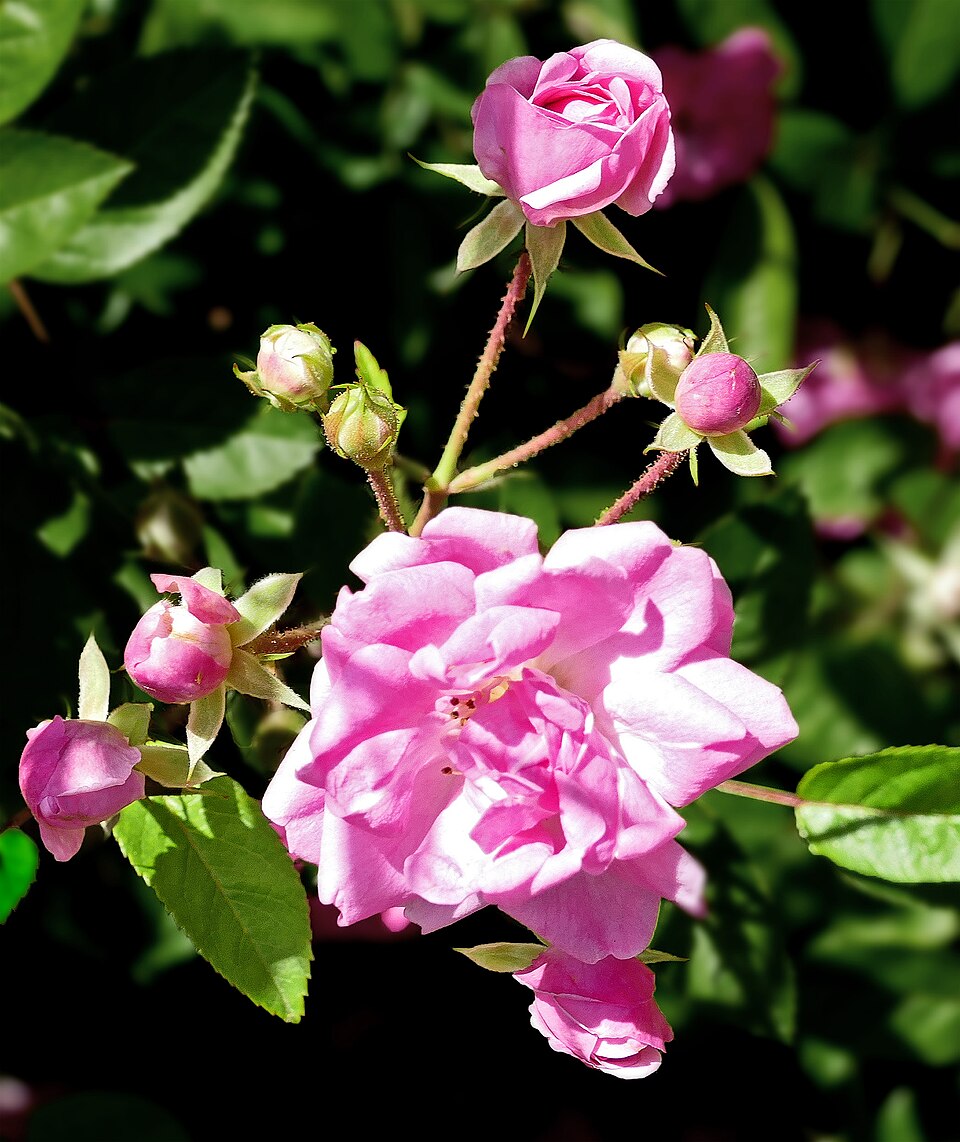
Rosa 'Peggy Martin' is a thornless climbing rose, climbing 10-15 feet (3-4.5 m) on a sturdy support and spreading 4-6 feet (1.2-1.8 m) wide. Deep pink double flowers 1.5-2 inches (4-5 cm) across appear in cascading clusters from spring through fall, with peak bloom in May-June. Canes are smooth and thornless — uncommon in climbing roses and allowing bare-handed handling and training. Spent petals drop without deadheading. Foliage shows resistance to black spot (Diplocarpon rosae) and powdery mildew. Named for Peggy Martin of Plaquemines Parish, Louisiana — this unidentified found rose was the sole survivor of more than 450 rose plants on her property after submersion under approximately 20 feet (6 m) of saltwater for two weeks during Hurricane Katrina in August 2005. The plant resprouted from its roots and bloomed the following season. It was propagated by Mike Shoup of Antique Rose Emporium and distributed across the Gulf Coast, with sales proceeds supporting hurricane recovery. The salt-water survival suggests root-zone salinity tolerance. Lightly fragrant. Non-toxic to humans and pets. Hardy in zones 5-10. Full sun (6+ hours) supports continuous bloom; partial shade reduces flowering. Bloom occurs on new wood — late-winter pruning of one-third of cane length stimulates flowering. Japanese beetles (Popillia japonica) feed on flowers in regions where they are established. Powdery mildew develops in humid stagnant conditions.
Native Range
An unnamed found rose discovered in Plaquemines Parish, Louisiana. Identity and parentage remain unknown; the plant was likely a long-cultivated heirloom rose growing on the property prior to Hurricane Katrina. The genus Rosa originated across the Northern Hemisphere.Suggested Uses
Grown on arbors, trellises, fences, and pergolas in zones 5-10 in full sun. Coverage of 10-15 feet (3-4.5 m) of cane length per plant. The thornless canes allow placement near walkways, doorways, and seating areas where thorny climbing roses cannot be used. Lightly fragrant.How to Identify
Appearance
Size & Dimensions
Height10' - 15'
Width/Spread4' - 6'
Bloom Information
Continuous deep pink flowers from spring through fall — April through October in zones 7-10 and May through September in zones 5-6. Peak bloom occurs in May-June with a lighter rebloom through summer and fall. Self-cleaning. Bloom develops on new wood produced after late-winter pruning.
Detailed Descriptions
Foliage Description
Dark green and glossy with resistance to black spotGrowing Conditions
Sun Requirements
Requires 6-10 hours of direct sunlight daily
• Full Sun: 6+ hours of direct sunlight
• Partial Shade: 3-6 hours of direct sunlight
• Full Shade: Less than 3 hours of direct sunlight
Care & Maintenance
Care Guide
Full sun (6+ hours) supports continuous flowering; shade reduces bloom by 50% or more. Sturdy support is required — the vigorous canes pull down lightweight trellises. Slightly acidic to neutral soil at pH 6.0-7.0 and consistent moisture during the first growing season. Late-winter pruning of one-third of cane length stimulates bloom on new growth. Japanese beetles feed on flowers from June through August in affected regions. Powdery mildew develops in humid stagnant conditions; spacing of 6-8 feet (1.8-2.4 m) apart improves air circulation. Hardy in zones 5-10.Pruning
Cut canes back by one-third in late winter to stimulate new wood and bloom. Train horizontal canes along a fence or arbor — horizontal training increases flower count compared to vertical training. The thornless canes allow bare-handed pruning and tying. Remove dead canes at the base each spring.Pruning Schedule
Prune: February–March
winterearly spring
Container Growing
Suitable for container growing
Minimum container size: 15 gallons