Rosa, Genus, carolina, Species,
- Genus & species
Carolina rose
Overview
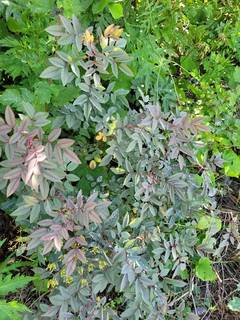
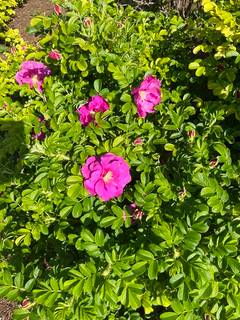
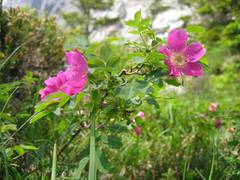
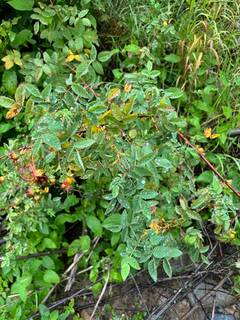
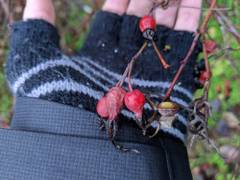
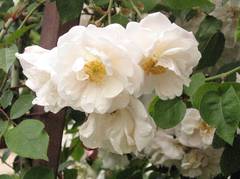
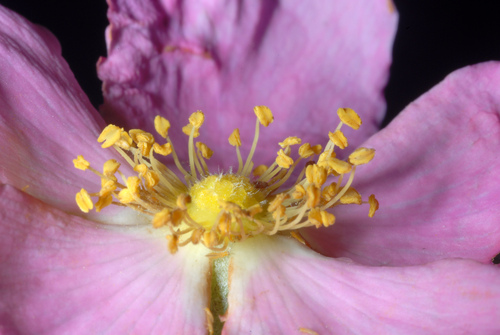
Rosa carolina is a low, suckering deciduous shrub reaching 1-3 ft (30-90 cm) tall and spreading 3-5 ft (90-150 cm) through underground runners to form open colonies. Stems carry slender, straight paired prickles below each leaf node, narrower than the curved prickles of many cultivated roses. Pinnately compound leaves bear 5-7 serrated leaflets, each 0.8-1.6 in (2-4 cm) long, dull green above and paler below. Single five-petaled flowers open 1.5-2.5 in (4-6 cm) across in pink, each with a central boss of yellow stamens, borne singly or in small clusters at branch tips. Flowering runs through early to midsummer, followed by rounded red hips 0.3-0.5 in (8-13 mm) wide that persist into winter. It grows in dry to medium soils across prairies, open woods, and roadsides. The suckering habit produces thickets that can spread beyond their planting area, and the prickly stems make removal labor-intensive. Foliage may develop blackspot and rust in humid, crowded conditions. Hips feed birds and small mammals, and the open flowers draw native bees.
Native Range
Native to central and eastern North America, from Nova Scotia and Ontario south to Florida and Texas. It occurs in tallgrass prairies, dry open woodlands, sandy clearings, and along roadsides and field edges.Suggested Uses
Used in native plant gardens, prairie and meadow restorations, and informal hedgerows where its suckering habit fills space. It stabilizes banks and sandy slopes and is planted at the back of borders spaced 3-4 ft (90-120 cm) apart. The hips and flowers support pollinators and birds in wildlife plantings.How to Identify
Appearance
Size & Dimensions
Height1' - 3'
Width/Spread3' - 5'
Bloom Information
Flowers open from late spring into midsummer, roughly May through July depending on latitude, with peak bloom in June across much of its range. Each flower lasts a few days, and a colony produces a succession of blooms over 4-6 weeks. Scattered later flowers can appear into August in cooler sites.
Detailed Descriptions
Foliage Description
dull greenGrowing Conditions
Sun Requirements
Requires 6-12 hours of direct sunlight daily
• Full Sun: 6+ hours of direct sunlight
• Partial Shade: 3-6 hours of direct sunlight
• Full Shade: Less than 3 hours of direct sunlight
Care & Maintenance
Care Guide
Rosa carolina grows in full sun to part shade, flowering most freely with at least 6 hours of direct sun. It tolerates a range of soils from sand to clay loam and grows on well-drained ground with a slightly acidic to neutral pH of 5.5-7.0. Established plants withstand drought and need supplemental water only during extended dry spells. No fertilizer is required in average soils. The species spreads by root suckers, so a barrier or annual removal of runners limits its footprint in mixed plantings. Blackspot, rust, and rose rosette disease can affect plants in humid or crowded settings.Pruning
Prune in late winter while dormant, removing dead, damaged, or crossing canes and thinning the oldest stems at the base to renew the colony. Flowers form on second-year and older wood, so heavy spring cutting reduces the summer display. Suckers can be severed below ground to contain spread.Pruning Schedule
Prune: February–March
winterearly spring