Rosa, Genus, arkansana, Species,
- Genus & species
prairie rose
Great Plains of central North America
Overview
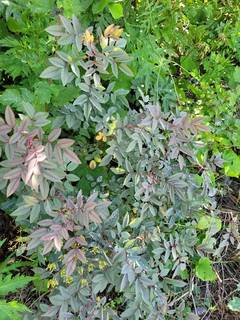
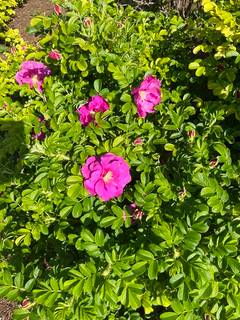
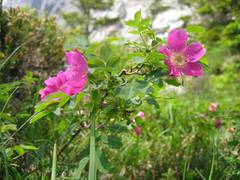
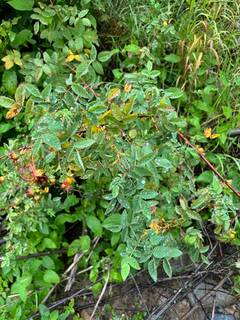
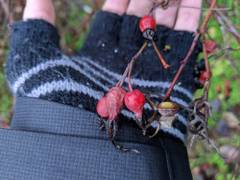
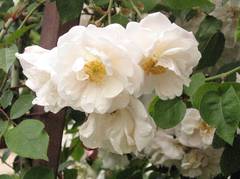
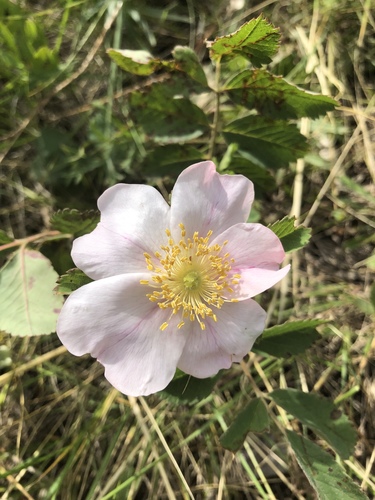
Rosa arkansana is a low, suckering deciduous shrub of the central North American prairies, growing 1-2 ft (30-60 cm) tall, occasionally to 3 ft (90 cm), and spreading by rhizomes into open patches. Many of its slender canes die back in winter and regrow each spring, densely armed with straight, slender prickles. Pinnately compound leaves carry 9-11 serrated leaflets, more numerous than in most native roses, each 0.5-1.2 in (1.5-3 cm) long. Pink to deep-pink five-petaled flowers open 1.5-2.5 in (4-6 cm) across in clusters of several at the stem tips, rather than singly, from late spring into midsummer. Round red hips 0.3-0.5 in (8-12 mm) wide follow and persist into autumn. It grows in dry to medium, well-drained soils on prairies, roadsides, and railway banks across the Great Plains. The rhizomatous habit forms colonies that spread beyond a set planting area, and the dense prickles complicate removal. Foliage can develop blackspot, rust, and powdery mildew in humid or crowded conditions. The hips feed birds and small mammals through winter.
Native Range
Native to the Great Plains and prairie regions of central North America, from Alberta and Manitoba south through the Dakotas to Texas and New Mexico. It grows in tallgrass and mixed-grass prairie, on dry banks, and along roadsides and railways.Suggested Uses
Used in prairie restorations, native plantings, and erosion control on dry banks and roadsides where its rhizomatous habit binds soil. It is planted in masses spaced 2-3 ft (60-90 cm) apart for groundcover on open sites. Flowers support native bees and hips feed birds.How to Identify
Appearance
Size & Dimensions
Height1' - 2'
Width/Spread2' - 4'
Bloom Information
Clusters of pink flowers open from late spring into midsummer, mainly June and July across the Great Plains. A colony blooms over about 4-6 weeks, with scattered later flowers on new growth into August. Red hips develop as flowering ends.
Detailed Descriptions
Foliage Description
greenGrowing Conditions
Sun Requirements
Requires 6-12 hours of direct sunlight daily
• Full Sun: 6+ hours of direct sunlight
• Partial Shade: 3-6 hours of direct sunlight
• Full Shade: Less than 3 hours of direct sunlight
Care & Maintenance
Care Guide
Rosa arkansana grows in full sun on dry to medium, well-drained soils and tolerates sand, loam, and clay at a pH near 6.0-7.5. Established plants are drought-tolerant and need no supplemental water in most prairie climates. It withstands cold to about -40F (-40C) and exposed, windy sites. No fertilizer is needed on average ground. The rhizomes spread laterally, so a root barrier or annual removal of runners keeps colonies in bounds. Blackspot, rust, and rose rosette disease can appear in humid or crowded plantings.Pruning
Cut back winter-killed and weak canes in early spring before growth resumes, since much of the top dies back naturally each year. Flowers form on current and second-year wood, so light spring tidying does not sacrifice bloom. Rhizomes can be cut to limit lateral spread.Pruning Schedule
Prune: March–April
early spring