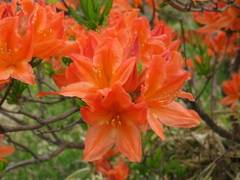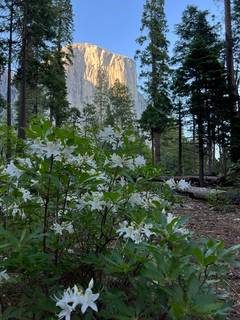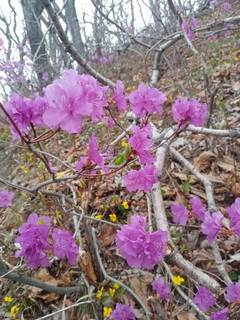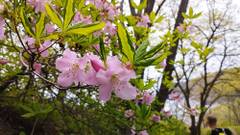
Rhododendron, Genus, catawbiense, Species,
- Genus & species
Catawba rhododendron
Southern and central Appalachian Mountains
Overview
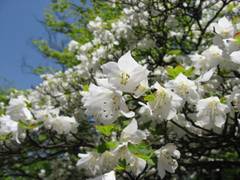
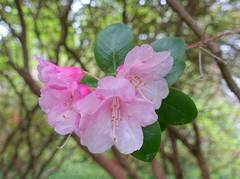
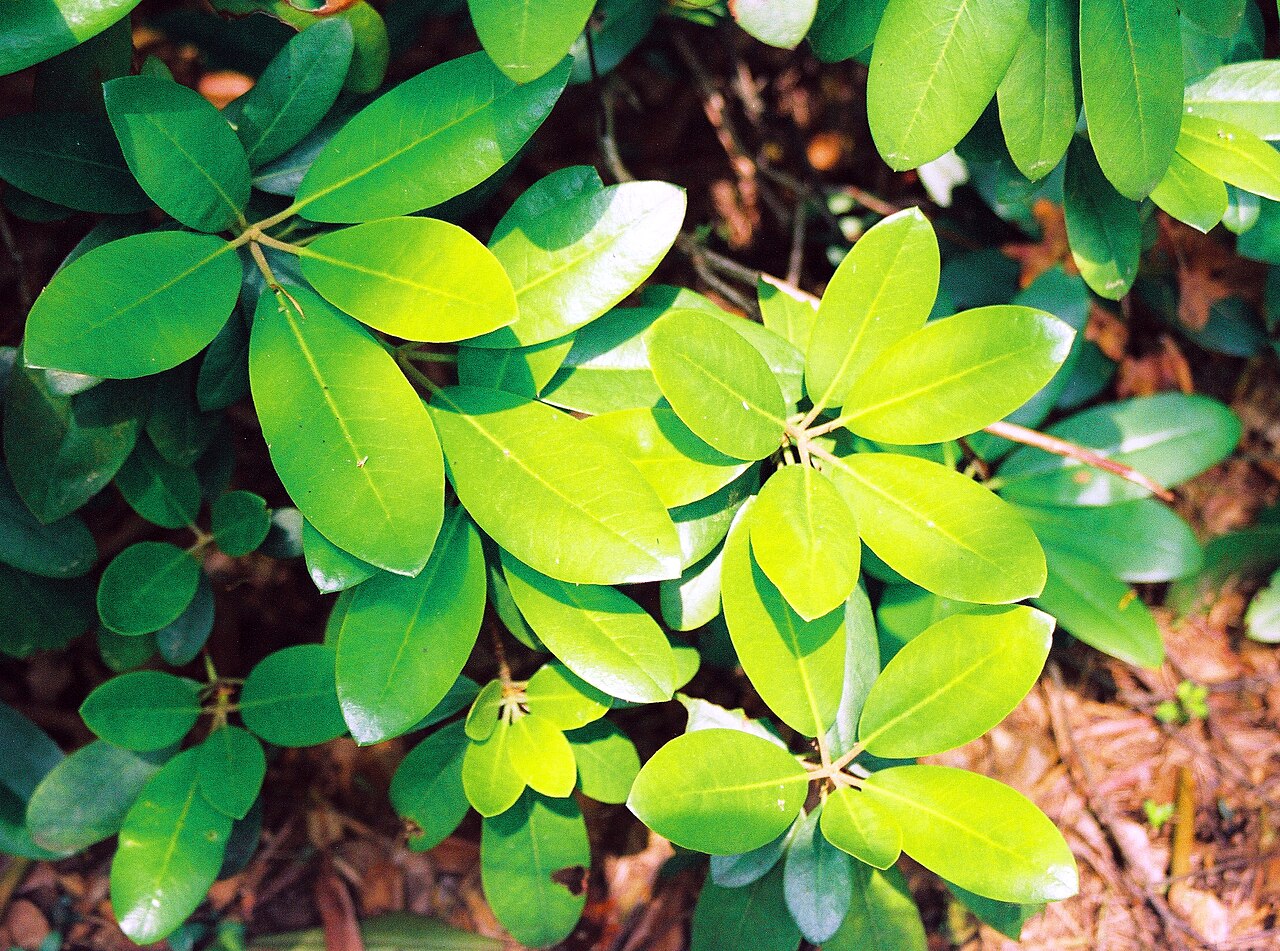
Rhododendron catawbiense is a broadleaf evergreen shrub reaching 6-10 feet (1.8-3 m) tall and 5-8 feet (1.5-2.4 m) wide, occasionally 15 feet (4.5 m) with age, forming a rounded mound of stiff branches. Leaves are elliptic and leathery, 3-6 inches (8-15 cm) long and 1.5-2.5 inches (4-6 cm) wide, dark green above and pale green beneath, holding 3-4 years before dropping. Leaf blades roll into tight tubes and hang vertically below 20F (-7C), reopening as temperatures rise. Flowers are broadly bell-shaped, 2-2.5 inches (5-6 cm) across, lilac-purple to rose-pink with olive-green spotting inside the upper lobe, carried in domed trusses of 15-20 that measure 5-6 inches (13-15 cm) wide. Bloom runs 2-3 weeks in May and June. Seed capsules are dry, 0.5-0.75 inch (12-20 mm) long, and hold on the shrub through winter. Roots are fibrous and sit within the top 12 inches (30 cm) of soil, so plants fail in compacted or waterlogged ground through Phytophthora root rot. All parts contain grayanotoxins, which cause vomiting, low blood pressure, and disturbed heart rhythm when eaten, and honey made from the flowers carries the same compounds.
Native Range
Native to the southern and central Appalachian Mountains from Virginia and West Virginia south to Georgia and Alabama. Grows on mountain balds, rocky slopes, and in the understory of oak and hemlock forest at 3,000-6,600 feet (900-2,000 m). Soils across the range are acid, coarse, and high in organic matter, with summer temperatures moderated by elevation.Suggested Uses
Planted at 6-8 foot (1.8-2.4 m) spacing in woodland gardens, on north and east-facing banks, and as a screen under high deciduous canopy where summer shade falls across the foliage. It is a parent of the hardy hybrid group known as ironclads, grown where winter temperatures reach -25F (-32C). Alkaline soils and heavy clay rule it out without a raised acidic bed 12-18 inches (30-45 cm) deep.How to Identify
Appearance
Size & Dimensions
Height6' - 10'
Width/Spread5' - 8'
Colors
Bloom Information
Flowers for 2-3 weeks in May and June, opening in early May in zones 7-8 and in mid-June in zones 4-5 and at high elevation. Individual trusses hold 10-14 days. Buds set in late summer for the following spring, so drought during August and September lowers the flower count the next year. Temperatures below -5F (-21C) in late winter kill exposed flower buds while the plant itself survives.
Detailed Descriptions
Flower Description
Lilac-purple to rose-pink with olive-green spottingFoliage Description
Dark green above, pale green beneathGrowing Conditions
Sun Requirements
Requires 3-6 hours of direct sunlight daily
• Full Sun: 6+ hours of direct sunlight
• Partial Shade: 3-6 hours of direct sunlight
• Full Shade: Less than 3 hours of direct sunlight
Care & Maintenance
Care Guide
Water weekly through the first three seasons and during droughts longer than 2 weeks thereafter, since shallow fibrous roots dry out ahead of deeper-rooted shrubs. Acid soil from pH 4.5 to 6.0 is required, with leaves yellowing between green veins above pH 6.5. Planting proceeds with the root ball set 1-2 inches (2.5-5 cm) proud of the surrounding soil under a 2-3 inch (5-8 cm) pine bark or leaf mulch spread across the root zone and held clear of the stems. Phytophthora root rot kills plants in heavy, compacted, or seasonally wet soil, showing first as dull drooping foliage that does not recover after watering. Rhododendron lacebug stipples the upper leaf surface yellow-white on plants in full sun and dry positions. Roots occupy the top 12 inches (30 cm), so cultivation and trenching within the branch spread sever a large share of them.Pruning
Spent trusses are snapped off at the base within 2 weeks of flowering ending, before the swelling growth buds behind them are damaged. Cutting is otherwise limited to dead and crossing branches, taken immediately after flowering, since buds for the following year form from July onward. Old plants cut back to 12-24 inches (30-60 cm) in early spring regrow from dormant buds on the old wood over 2-3 seasons and flower in the third year.Pruning Schedule
Prune: June
summer
Container Growing
Suitable for container growing
Minimum container size: 15 gallons