Rhododendron, Genus, mucronulatum, Species,
- Genus & species
Korean azalea
Northeast Asia — Korea, Manchuria, northern China, Mongolia, and Japan; open woodland edges and mountainsides
Overview
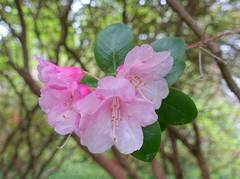
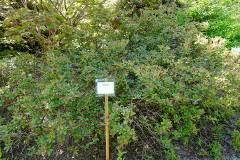
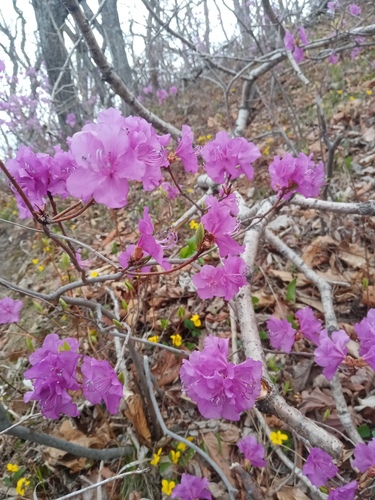
Rhododendron mucronulatum is Korean azalea (Korean rhododendron), an upright deciduous shrub growing 4-8 feet (1.2-2.4 m) tall and 4-8 feet (1.2-2.4 m) wide. Rosy-lavender to purple-pink funnel-shaped flowers 1-1.5 inches (2.5-4 cm) in clusters of 3-6 on bare branches in February-March — among the earliest deciduous azaleas to bloom. Medium to dark green elliptic to lanceolate leaves 1.5-3 inches (4-7 cm) with a small mucronate (pointed) tip. Turns yellow, orange, and red in fall. In Ericaceae. Native to northeast Asia — Korea, Manchuria, northern China, Mongolia, Japan. The early bloom on bare branches is vulnerable to late frost — a hard freeze below 28°F (-2°C) browns the open flowers. This late frost damage to the early bloom is the primary limitation. In areas with unpredictable late winter frosts, the bloom may be destroyed some years. Site on the north side of a building to delay bloom by 1-2 weeks. The cultivar 'Cornell Pink' has clear pink flowers without the lavender tones. Requires acidic well-drained soil (pH 4.5-6.0) — iron chlorosis in alkaline conditions. Shallow fibrous roots — mulch no deeper than 2 inches (5 cm). Not drought-tolerant. All parts are toxic (grayanotoxins). Deer-resistant. Zones 4-8. Part shade. Growth rate is moderate.
Native Range
Native to northeast Asia — Korea, Manchuria, northern China, Mongolia, and Japan. Found on open woodland edges and mountainsides.Suggested Uses
Grown in woodland gardens, shade borders, foundation plantings, and in containers of at least 7 gallons (26 L), spaced 4-8 feet (1.2-2.4 m). Among the earliest azaleas to bloom. Late frost risk — site north of building. Requires acidic soil. Toxic. Zones 4-8.How to Identify
Appearance
Size & Dimensions
Height4' - 8'
Width/Spread4' - 8'
Bloom Information
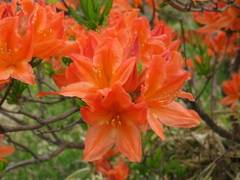
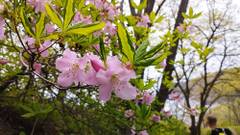
Late winter to early spring (February-March). Rosy-lavender to purple-pink funnel-shaped flowers 1-1.5 inches (2.5-4 cm) in clusters of 3-6 on bare branches. 3 weeks of bloom. Vulnerable to late frost. Bee-visited on warm days.
Detailed Descriptions
Flower Description
Rosy-lavender to purple-pink, funnel-shaped, 1-1.5 inches (2.5-4 cm), single, in clusters of 3-6 on bare branches before leaves emergeFoliage Description
Medium to dark green, elliptic to lanceolate, 1.5-3 inches (4-7 cm), with a small mucronate (pointed) tip — the source of the epithet mucronulatum; turns yellow, orange, and red in fallGrowing Conditions
Sun Requirements
Requires 3-6 hours of direct sunlight daily
• Full Sun: 6+ hours of direct sunlight
• Partial Shade: 3-6 hours of direct sunlight
• Full Shade: Less than 3 hours of direct sunlight
Care & Maintenance
Care Guide
Part shade (3-6 hours — morning sun). Acidic well-drained soil pH 4.5-6.0. Not drought-tolerant. Shallow fibrous roots — mulch no deeper than 2 inches (5 cm). Late frost damages the early bloom — site north of building to delay bloom. Prune after flowering (March-April). Toxic (grayanotoxins). Deer-resistant. Zones 4-8.Pruning
Prune after flowering (March-April) — flower buds for next year form in summer. Shape lightly if needed — do not shear. Remove dead or crossing branches. The upright open form is natural.Pruning Schedule
Prune: March–April
early spring
Container Growing
Suitable for container growing
Minimum container size: 7 gallons