Rhododendron, Genus, menziesii, Species,
- Genus & species
mock azalea
Alaska south through British Columbia, Washington, and Oregon to northern California; moist shaded conifer forests, avalanche tracks, and forest edges
Overview
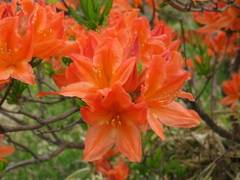
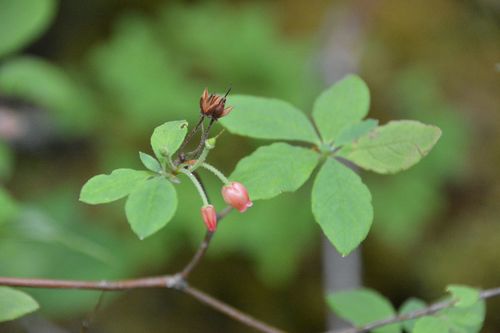
Rhododendron menziesii is rusty mock azalea (fool's huckleberry), an upright deciduous shrub growing 3-6 feet (90-180 cm) tall and 3-5 feet (90-150 cm) wide. Copper-orange to pinkish-orange small urn-shaped (urceolate) tubular flowers 0.3-0.5 inch (8-13 mm) form in drooping clusters in May-June (4 weeks). Medium to dark green elliptic leaves bear rust-colored gland-tipped hairs on leaf margins and petioles, the diagnostic feature; foliage turns yellow to orange in fall. Family Ericaceae; the species was formerly placed in the genus Menziesia as Menziesia ferruginea, which has been merged into Rhododendron based on molecular phylogenetic evidence. The epithet menziesii is named for Archibald Menzies (1754-1842), Scottish botanist on Vancouver's 1791-95 expedition; the former epithet ferruginea means rust-colored. Native to Alaska south through British Columbia, Washington, and Oregon to northern California; the species occurs in moist shaded conifer forests, on avalanche tracks, and at forest edges. Among Pacific coast Rhododendron species, the deciduous habit is uncommon; most natives (R. macrophyllum, R. occidentale) are evergreen. The copper-orange flowers are sometimes misdescribed in older sources as white or pale pink; the actual color is rust-orange to pinkish-orange. All parts contain grayanotoxins, characteristic Ericaceae alkaloids that are toxic to pets, humans, and livestock if ingested; honey made from Ericaceae nectar can also be toxic ('mad honey'). Hardy in zones 5-9. Grown in full to partial shade. Growth rate is slow.
Native Range
Native to Alaska south through British Columbia, Washington, and Oregon to northern California. Found in moist shaded conifer forests, on avalanche tracks, and at forest edges. Named for Archibald Menzies (1754-1842), Scottish botanist who served as surgeon-naturalist on Vancouver's 1791-95 expedition to the Pacific Northwest.Suggested Uses
Rhododendron menziesii is grown in cool moist shaded conifer woodland gardens, native plant gardens, and Ericaceae collections, spaced 3-5 feet (90-150 cm) apart. Establishment is difficult in warm lowland gardens. All parts contain grayanotoxins and are toxic to pets, humans, and livestock. Hardy in zones 5-9.How to Identify
Appearance
Size & Dimensions
Height3' - 6'
Width/Spread3' - 5'
Bloom Information
Late spring to early summer (May-June). Copper-orange to pinkish-orange to dull reddish small urn-shaped tubular flowers 0.3-0.5 inch (8-13 mm) form in drooping clusters for about 4 weeks. Bee-pollinated.
Detailed Descriptions
Flower Description
Copper-orange to pinkish-orange to dull reddish — sometimes misdescribed as white or pale pink in older sources. Small urn-shaped (urceolate) tubular flowers 0.3-0.5 inch (8-13 mm) form in drooping clusters in May-June, before or with the emerging leaves.Foliage Description
Medium to dark green; alternate, elliptic to obovate, 1-3 inches (2.5-7.5 cm); rust-colored gland-tipped hairs on leaf margins and petioles are diagnostic (the source of the former specific epithet ferruginea = rust-colored). Deciduous, which is uncommon for a Pacific coast Rhododendron; turns yellow to orange in fall.Growing Conditions
Sun Requirements
Tolerates up to 3 hours of direct sunlight daily
• Full Sun: 6+ hours of direct sunlight
• Partial Shade: 3-6 hours of direct sunlight
• Full Shade: Less than 3 hours of direct sunlight
Care & Maintenance
Care Guide
Grown in full to partial shade with 0-3 hours of direct sun. Soil is moist, humus-rich, very acidic peat or loam with a pH of 4.5-6.0. Cool moist conifer forest understory conditions are essential; plants are difficult to establish in warm lowland gardens. All parts contain grayanotoxins and are toxic to pets, humans, and livestock if ingested. Deer-resistant. Hardy in zones 5-9.Pruning
Pruned in early spring (February-March) to remove damaged or crossing branches. Minimal pruning is required; the natural form is the typical goal.Pruning Schedule
Prune: February–March
early spring