Rhododendron, Genus, 'Bow Bells', Cultivar,
- Genus
- Cultivar
bow bells rhododendron
Hybrid of garden origin — bred at Exbury Gardens, Hampshire, England by Lionel de Rothschild and registered in 1934; parentage: {R.} 'Corona' × {R. williamsianum}
Overview
Rhododendron 'Bow Bells' is a compact mounding broadleaf evergreen hybrid rhododendron in the heath family Ericaceae growing 36-48 inches (90-120 cm) tall and 48-60 inches (120-150 cm) wide — the wider-than-tall mounding habit is a defining cultivar character inherited from the R. williamsianum parent and separates the cultivar from the typical upright tree-form rhododendron silhouette. The cultivar was bred at Exbury Gardens in Hampshire, England by Lionel de Rothschild — the banker, Liberal politician, and amateur horticulturist whose private garden at Exbury supported an extensive 20th-century rhododendron breeding program in British horticulture — and was registered in 1934 from the cross of R. 'Corona' (a pink-flowered hardy hybrid in the Loderi group lineage) with R. williamsianum (a Chinese species native to Sichuan with bell-shaped pink flowers, coppery new growth, and a naturally compact mounding habit). The R. williamsianum parent is the source of the cultivar's three primary identifying characters: the bell-shaped flower form, the coppery-bronze new spring growth flush that holds for several weeks before maturing to the dark green summer foliage color, and the compact mounding wider-than-tall plant habit. The R. 'Corona' parent is the source of the soft pink flower color that fades to near-white as the bloom matures across the 2-3 week mid-spring bloom period. Soft pink bell-shaped flowers 2 inches (5 cm) across open in loose open trusses of 5-7 flowers each in April through May, and the new growth flush emerges immediately after the flowering period in coppery-bronze tones that supply a secondary spring ornamental display before the foliage matures to dark green. Limitation: the cultivar (and rhododendrons broadly) requires strictly acidic soil with a pH of 4.5-6.0 and develops chlorosis at higher pH levels, calling for naturally acidic native soil or sustained acidification through pine-needle mulch, leaf-mould mulch, and elemental-sulfur amendment to maintain the low pH at the root zone. The cultivar is susceptible to Phytophthora root rot in heavy or poorly drained soils, and sharp drainage with an organic mulch layer (bark chips, leaf mould) is the primary cultural defense against the pathogen — sites with heavy clay soil that retains standing water after rain are unsuitable for the cultivar without significant drainage improvement. The root ball must be planted at the original nursery soil level rather than buried below grade because burying the crown traps moisture against the bark and promotes collar rot. All parts of the plant — leaves, stems, flowers, and nectar — contain grayanotoxin (the same sodium-channel-binding diterpenoid present in the related Pieris japonica and Kalmia latifolia), and ingestion is severely toxic to humans, livestock, cats, dogs, and horses. Spent flower trusses are deadheaded by snapping at the base immediately after bloom finishes, and care is taken not to damage the small growth buds at the base of each truss. Not deer-resistant. Hardy in USDA zones 6-8.
Native Range
Hybrid of garden origin — bred at Exbury Gardens in Hampshire, England by Lionel de Rothschild (1882-1942), the British banker, Liberal politician, and amateur horticulturist whose private garden at Exbury supported an extensive 20th-century rhododendron breeding program in British horticulture. The cultivar was registered in 1934 from the cross of Rhododendron 'Corona' (a pink-flowered hardy hybrid in the Loderi group lineage) with Rhododendron williamsianum (a Chinese species native to the mountains of western Sichuan province at 7,000-9,000 feet (2,100-2,750 m) elevation, with bell-shaped pink flowers, coppery new growth, and a naturally compact mounding habit).Suggested Uses
Used in shade gardens, woodland understory plantings under high deciduous canopy, mixed acidic-soil shade borders alongside Pieris, Kalmia, and Camellia companions, foundation plantings on the north or east side of buildings, and container specimens in containers of at least 10 gallons (38 L) with acidic potting mix at 48-60 inch (120-150 cm) spacing between plants in USDA zones 6 through 8. The compact mounding wider-than-tall plant habit, the soft pink bell-shaped spring flowers, the coppery-bronze new growth flush, the year-round dark green glossy evergreen foliage, and the cultivar's documented Exbury Gardens breeding history combine to make 'Bow Bells' a high-value compact rhododendron for acidic shade gardens. Alkaline-soil positions, sites with heavy poorly drained clay where Phytophthora pressure is significant, dry-summer regions without supplemental irrigation, and full-sun hot-afternoon-exposure positions are unsuitable because of the cultural requirements of the cultivar. Households with children, pets, livestock, or horses should account for the severe grayanotoxin toxicity of all plant parts and the toxicity of the nectar to honey-foraging bees.How to Identify
Appearance
Size & Dimensions
Height3' - 4'
Width/Spread4' - 5'
Bloom Information
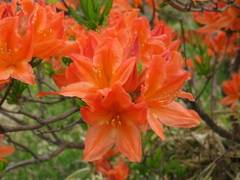
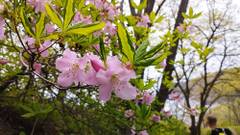
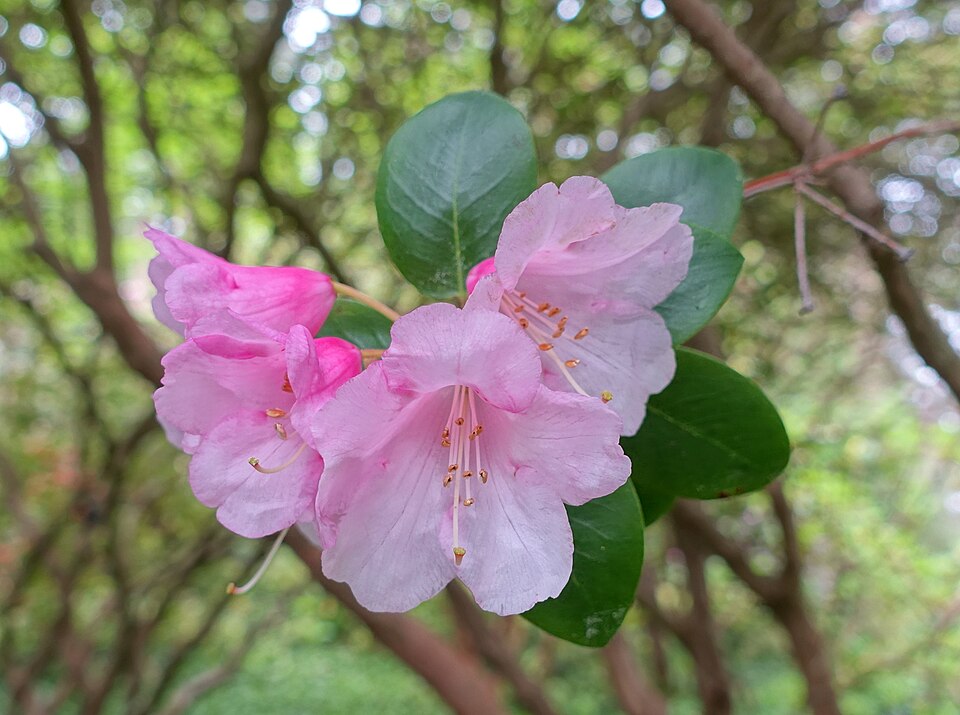
Mid-spring (April through May) across a 2-3 week bloom period. Soft pink bell-shaped flowers 2 inches (5 cm) across that fade to near-white as the bloom matures, carried in loose open trusses of 5-7 flowers each. The bell-shaped flower form is inherited from the R. williamsianum parent and the soft pink coloration is the contribution of the R. 'Corona' parent. Honeybees and bumblebees work the flowers for nectar across the spring bloom — the nectar contains grayanotoxin and is toxic in volume to humans (the mad-honey concern that applies broadly to flowers in the family Ericaceae). The coppery-bronze new growth flush emerges immediately after the flowering period and supplies a secondary spring ornamental display before the foliage matures to the dark green summer color.
Detailed Descriptions
Flower Description
soft pink bell-shaped flowers 2 inches (5 cm) across that fade to near-white as the bloom matures, carried in loose open trusses of 5-7 flowers each in mid-spring (April through May) across a 2-3 week bloom period; the bell-shaped flower form is inherited from the R. williamsianum parent and the soft pink coloration is the contribution of the R. 'Corona' parentFoliage Description
dark green and glossy at maturity, oval, leathery, 2-4 inches (5-10 cm) long; the new spring growth flush emerges in coppery-bronze tones that hold for several weeks before maturing to the dark green summer color — the coppery new growth is a trait inherited from the Rhododendron williamsianum parent and is one of the cultivar's primary identifying characters; evergreen year-roundGrowing Conditions
Sun Requirements
Requires 3-6 hours of direct sunlight daily
• Full Sun: 6+ hours of direct sunlight
• Partial Shade: 3-6 hours of direct sunlight
• Full Shade: Less than 3 hours of direct sunlight
Care & Maintenance
Care Guide
Site in part shade with 3-6 hours of direct sun per day, ideally morning sun with afternoon shade in a position protected from hot afternoon exposure, in well-drained acidic loam or peat-amended soil with a strictly acidic pH of 4.5-6.0 — the cultivar develops chlorosis at higher pH levels and calls for naturally acidic native soil or sustained acidification through pine-needle mulch, leaf-mould mulch, and elemental-sulfur amendment to maintain the low pH at the root zone. Sharp drainage with an organic mulch layer (bark chips, leaf mould) is the primary cultural defense against Phytophthora root rot, and sites with heavy clay soil that retains standing water are unsuitable without drainage improvement. The root ball is planted at the original nursery soil level — burying the crown below grade traps moisture against the bark and promotes collar rot. The cultivar is not drought-tolerant and calls for consistent moisture through the growing season, particularly during the spring bloom and new-growth flush. Spent flower trusses are deadheaded by snapping at the base immediately after bloom finishes, with care to preserve the small growth buds at the base of each truss. All parts contain grayanotoxin and are severely toxic to humans, livestock, cats, dogs, and horses if ingested. Not deer-resistant. Hardy in USDA zones 6-8.Pruning
Spent flower trusses are deadheaded by snapping at the base immediately after bloom finishes (June), and care is taken not to damage the small growth buds at the base of each truss because next year's flower bud and the new vegetative growth both initiate from these positions. The compact mounding habit develops naturally without intervention and requires minimal corrective pruning. The cultivar tolerates light renovation pruning to remove leggy or damaged stems back into the canopy, with regrowth from latent buds typically following within 1-2 growing seasons.Pruning Schedule
Prune: June
summer
Container Growing
Suitable for container growing
Minimum container size: 10 gallons