Rhododendron, Genus, japonicum, Species,
- Genus & species
Japanese azalea
Japan, on the islands of Honshu, Shikoku, and Kyushu; open mountain meadows and grasslands
Overview
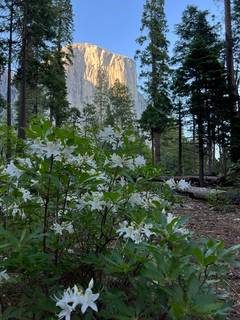
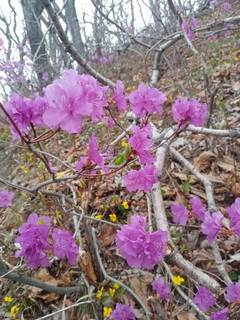
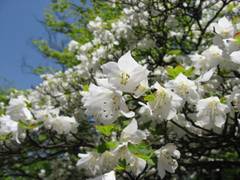
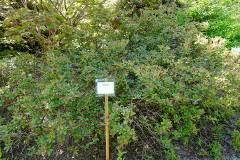
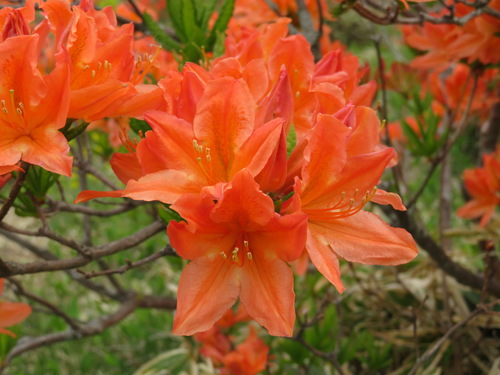
Rhododendron japonicum is a mounding deciduous shrub in the family Ericaceae reaching 3–6 feet (0.9–1.8 m) tall and 3–6 feet (0.9–1.8 m) wide with a rounded multi-stemmed habit. Leaves are alternate, oblong to lance-shaped, 2–4 inches (5–10 cm) long, medium to bright green with short hairs on the surfaces, and turn yellow, orange, and red in fall before dropping — the fall leaf color is the character that separates the deciduous azaleas from the evergreen azaleas, which hold their foliage through winter. Salmon-orange to scarlet-red funnel-shaped flowers 2–3 inches (5–7 cm) across open in terminal trusses of 6–12 flowers in April and May across about 3 weeks and carry a moderate sweet fragrance. Seedling populations in the wild include yellow and pink variations in addition to the typical salmon and scarlet range. R. japonicum is one of the two main parent species of the widely planted Mollis hybrid azaleas (R. × kosterianum), together with R. molle from China, and has contributed the orange through red color range of the Mollis cultivars. Limitation: the species calls for a soil pH of 4.5–6.0 and develops iron chlorosis and eventual decline on soils above pH 6.0, the shallow fibrous root system does not tolerate compaction, root disturbance, or deep mulch layers above 2 inches (5 cm) over the root zone, and the species is not drought-tolerant so soil moisture should remain consistent through summer dry periods. Azalea lace bug (Stephanitis pyrioides) feeds on the leaf undersides and produces stippled silvery damage on the upper surfaces in sunny positions. All parts of the plant including the leaves, stems, and flowers contain grayanotoxins, and ingestion of quantity produces nausea, vomiting, and cardiac arrhythmia in humans, pets, and grazing livestock.
Native Range
Native to Japan on the islands of Honshu, Shikoku, and Kyushu, growing in open mountain meadows and grasslands at middle to high elevations. The species is one of the two main parent species of the Mollis hybrid azaleas (Rhododendron × kosterianum), together with R. molle from China, and has been in cultivation in Europe and North America since the mid-19th century.Suggested Uses
Used in woodland gardens, shade borders, foundation plantings, and mixed shrub borders at 3–6 foot (0.9–1.8 m) spacing, and in containers of at least 7 gallons (26 L) with acidic well-drained potting mix. The April and May bloom and the yellow, orange, and red fall foliage supply two seasons of interest, and the species is the orange-through-red parent of the widely grown Mollis hybrid azalea group for gardens where the Mollis cultivars are the design anchor. Alkaline soils above pH 6.0 and positions subject to root compaction or deep mulch are unsuitable.How to Identify
Appearance
Size & Dimensions
Height3' - 6'
Width/Spread3' - 6'
Bloom Information
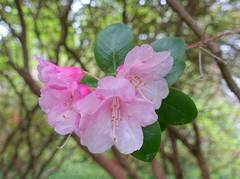
Salmon-orange to scarlet-red funnel-shaped flowers 2–3 inches (5–7 cm) across open in terminal trusses of 6–12 flowers from April through May across about 3 weeks, with seedling populations in the wild including yellow and pink color variations. The flowers are moderately fragrant with a sweet scent and are pollinated by bees and butterflies. Deadheading of the spent trusses after flowering improves the next year's bloom because flower buds form on current-season growth through summer.
Detailed Descriptions
Flower Description
salmon-orange to scarlet-red funnel-shaped flowers 2-3 inches (5-7 cm) across in terminal clusters (trusses) of 6-12 flowers; moderately fragrant; seedling populations include yellow and pink variationsFoliage Description
medium to bright green through the growing season; alternate, oblong to lance-shaped, 2-4 inches (5-10 cm) long with short hairs on the surfaces; turns yellow, orange, and red in fall before droppingGrowing Conditions
Sun Requirements
Requires 3-6 hours of direct sunlight daily
• Full Sun: 6+ hours of direct sunlight
• Partial Shade: 3-6 hours of direct sunlight
• Full Shade: Less than 3 hours of direct sunlight
Care & Maintenance
Care Guide
Site in part shade with 3–6 hours of direct sun per day; morning sun with afternoon shade holds flower color and foliage quality in hot summer positions. Soil should be acidic and well-drained with a pH of 4.5–6.0; soils above pH 6.0 produce iron chlorosis and eventual decline, and a soil test before planting is called for on sites with unknown soil chemistry. The species is not drought-tolerant and consistent soil moisture through summer dry periods holds foliage and flower bud quality for the following year. Mulch over the root zone is kept to 2 inches (5 cm) deep because the shallow fibrous root system does not tolerate deeper layers, and grading, trenching, or foot traffic across the root zone causes decline. Azalea lace bug (Stephanitis pyrioides) produces stippled silvery damage on the upper leaf surfaces in sunny positions; shadier positions reduce lace bug pressure. Hardy in USDA zones 5–8. All parts of the plant contain grayanotoxins and are toxic if ingested.Pruning
Pruning is done after flowering in May and June because flower buds for the following year form on current-season growth through summer, and later pruning removes the next year's flowers. Deadheading the spent flower trusses immediately after bloom directs plant energy into bud formation rather than seed production and improves the following year's bloom. Shaping cuts are light rather than shearing because the mounding form develops naturally and sheared plants lose the loose open character of the species. Dead or crossing branches are removed at the base as they appear.Pruning Schedule
Prune: May–June
late spring
Container Growing
Suitable for container growing
Minimum container size: 7 gallons