Image 1 of 6
1 / 6
Plant Reference
Rhododendron, Genus, quinquefolium, Species,
- Genus & species
quinquefolium azalea
Japan — the main islands of Honshu and Shikoku; montane deciduous forests at 2,000-6,000 feet (600-1,800 m) elevation
Overview
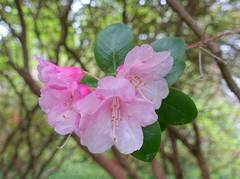
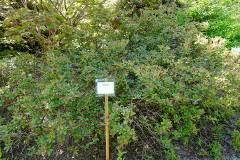
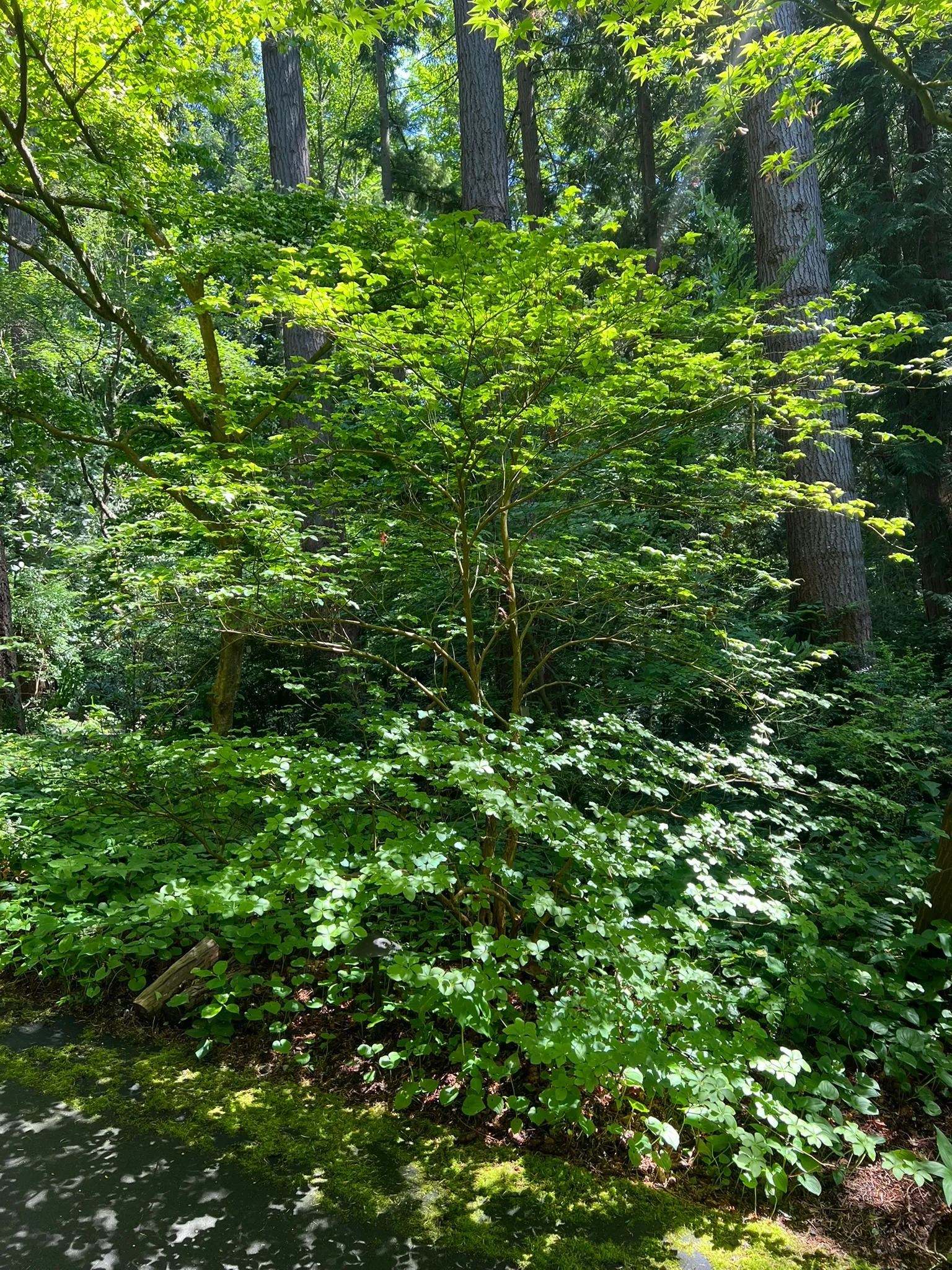
Rhododendron quinquefolium is an upright deciduous azalea in the heath family Ericaceae growing 6–12 feet (1.8–3.7 m) tall and 5–10 feet (1.5–3 m) wide from a slowly expanding woody crown that produces tiered branches at regular intervals along the main stems. The specific epithet quinquefolium is Latin for five-leaved and refers to the whorled arrangement of 5 leaves at each branch tip — this 5-leaved whorled arrangement is atypical for azaleas because most azaleas carry leaves in an alternate arrangement along the stems rather than in fixed whorls at the branch tips, and the whorled pattern is the main field character that separates R. quinquefolium from the other deciduous azaleas in cultivation. Leaves are 1.5–3 inches (4–7 cm) long, broadly elliptic in outline, and emerge in spring with a red-purple edge that fades to mid-green through summer as the leaves mature. Fall color ranges through orange to deep red across the canopy. White broadly funnel-shaped flowers 1.5–2 inches (4–5 cm) across with green spots scattered across the upper lobe open in small clusters of 2–3 flowers at the branch tips in April and May across a 2–3 week bloom period, and the flowers open with or just before the red-purple-edged new foliage emerges — the simultaneous spring display of white green-spotted flowers, red-purple-edged new leaves in 5-leaved whorls, and the tiered branching silhouette is the main ornamental feature of the species and a common reason for the careful choice of a prominent planting position in the woodland garden. The species is native to the main Japanese islands of Honshu and Shikoku, growing in montane deciduous forest habitats at 2,000–6,000 feet (600–1,800 m) elevation under the canopy of oak, beech, and maple forests across central and southern Japan. Limitation: the species is very slow growing and takes 8–15 years to reach full mature size from a young nursery plant — this extremely slow growth rate combined with the strict acidic soil requirement are the main cultural limitations and restrict garden use to sites where a long-lived specimen shrub is wanted and the gardener can wait through the multi-year establishment period before the full ornamental display develops. The species calls for strictly acidic soil with a pH of 4.5–6.0 and develops chlorosis and decline in alkaline or neutral soils, and the species is not drought-tolerant and calls for consistent moisture through the growing season. All parts of the plant contain grayanotoxins, a group of polyhydroxylated cyclic diterpenes that are toxic to humans, dogs, and cats if the foliage or flowers are ingested — grayanotoxin poisoning produces vomiting, cardiac arrhythmia, and neurologic symptoms, and the toxicity is shared by most members of the genus Rhododendron and several related genera in the Ericaceae. Deer browse the foliage.
Native Range
Native to Japan on the main islands of Honshu and Shikoku, growing in montane deciduous forest habitats at 2,000–6,000 feet (600–1,800 m) elevation under the canopy of oak, beech, and maple forests across central and southern Japan. The species was described by western botanists in the late 19th century from Japanese material and has been cultivated in Japanese gardens for centuries before its introduction to western horticulture, where it remains uncommon outside of specialist rhododendron and azalea collections because of the slow growth rate and the narrow cultural requirements that limit broad nursery production.Suggested Uses
Used as a long-lived specimen shrub in woodland gardens, ericaceous borders, and Japanese-style gardens alongside Acer palmatum, Pieris japonica, Kalmia latifolia, and other acid-loving shrubs and trees at 5–10 foot (1.5–3 m) spacing between plants. The combination of red-purple-edged new foliage in 5-leaved whorls, white green-spotted funnel-shaped flowers, and orange to deep red fall color carries the species through three seasons of ornamental interest in the woodland garden, and the very slow growth rate (8–15 years to mature size) and long lifespan suit the species to carefully designed long-term plantings rather than fast-establishing landscape schemes. Gardens with alkaline or neutral soils, gardens that call for fast establishment within a few years of planting, and gardens where pet or child access to the foliage and flowers is a concern are unsuitable because of the narrow acidic pH requirement, the very slow growth rate, and the grayanotoxin content in all parts of the plant.How to Identify
Appearance
Size & Dimensions
Height6' - 12'
Width/Spread5' - 10'
Bloom Information
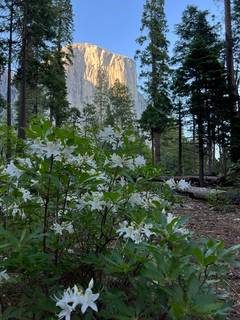
White broadly funnel-shaped flowers 1.5–2 inches (4–5 cm) across with green spots scattered across the upper lobe open in small clusters of 2–3 flowers at the branch tips in April and May across a 2–3 week bloom period. Flowers open with or just before the red-purple-edged new foliage emerges in 5-leaved whorls at the branch tips, and the simultaneous display of white green-spotted flowers against the red-purple-edged emerging leaves is the main ornamental feature during the spring bloom window. Honeybees and native solitary bees work the flowers for nectar during the bloom period, and the flowers are among the early-opening deciduous azaleas each year alongside R. schlippenbachii (royal azalea) and R. reticulatum (Rose Azalea).
Detailed Descriptions
Flower Description
white broadly funnel-shaped flowers 1.5-2 inches (4-5 cm) across with green spots scattered across the upper lobe; carried in small clusters of 2-3 flowers at the branch tips; the flowers open with or just before the red-purple-edged new foliage emerges in mid to late springFoliage Description
new growth emerges with a red-purple edge and matures to mid-green through summer, 1.5-3 inches (4-7 cm) long, broadly elliptic in outline; the leaves are arranged in whorled groups of 5 at the branch tips (the specific epithet quinquefolium is Latin for five-leaved and refers to this whorled arrangement); fall color ranges through orange to deep red across the canopyGrowing Conditions
Sun Requirements
Requires 2-6 hours of direct sunlight daily
• Full Sun: 6+ hours of direct sunlight
• Partial Shade: 3-6 hours of direct sunlight
• Full Shade: Less than 3 hours of direct sunlight
Care & Maintenance
Care Guide
Site in part shade to full shade with 2–6 hours of direct sun per day, typically under the high canopy of deciduous trees in a woodland garden or ericaceous border where morning sun with afternoon shade or filtered all-day shade suits the species across temperate climates. Moist well-drained acidic soil with a pH of 4.5–6.0 is required because the species develops chlorosis and decline in alkaline or neutral soils, and planting positions in gardens with naturally high-pH soil call for amendment with peat, composted pine bark, and acid-forming mulch to bring the soil pH into the 4.5–6.0 range at the planting hole and across the root zone. The species is not drought-tolerant and calls for consistent moisture through the growing season, and supplemental irrigation during dry periods supports foliage health and flower bud production for the following spring. Growth is very slow and the shrub takes 8–15 years to reach full mature size from a young nursery plant, which makes careful siting at planting time more important than for faster-growing azaleas because the slow growth rate means a transplant later in the life of the shrub sets the plant back by several years. All parts of the plant contain grayanotoxins and are toxic to humans, dogs, and cats if ingested. Deer browse the foliage. Hardy in USDA zones 5–8.Pruning
Pruning is done immediately after flowering (May or June) and is limited to the careful removal of spent flower trusses by snapping them off by hand at the base of the truss, taking care not to damage the developing flower buds for next year that form immediately below the current truss. Crossing, dead, or damaged branches are removed at the branch collar during the same post-bloom window. Hard pruning and reshaping cuts are avoided because the very slow growth rate means the shrub takes many years to redevelop from hard cuts, and the natural tiered branching form is the main ornamental feature that holds its shape without shaping intervention.Pruning Schedule
Prune: May–June
late spring