Ranunculus, Genus, glaberrimus, Species,
- Genus & species
sagebrush buttercup
Overview
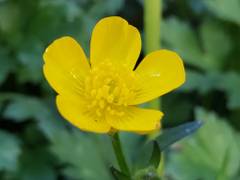
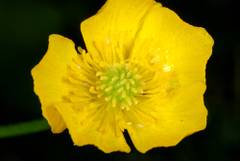
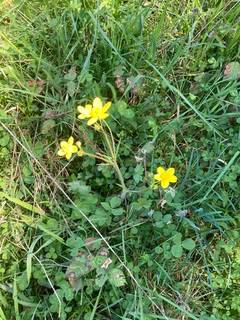
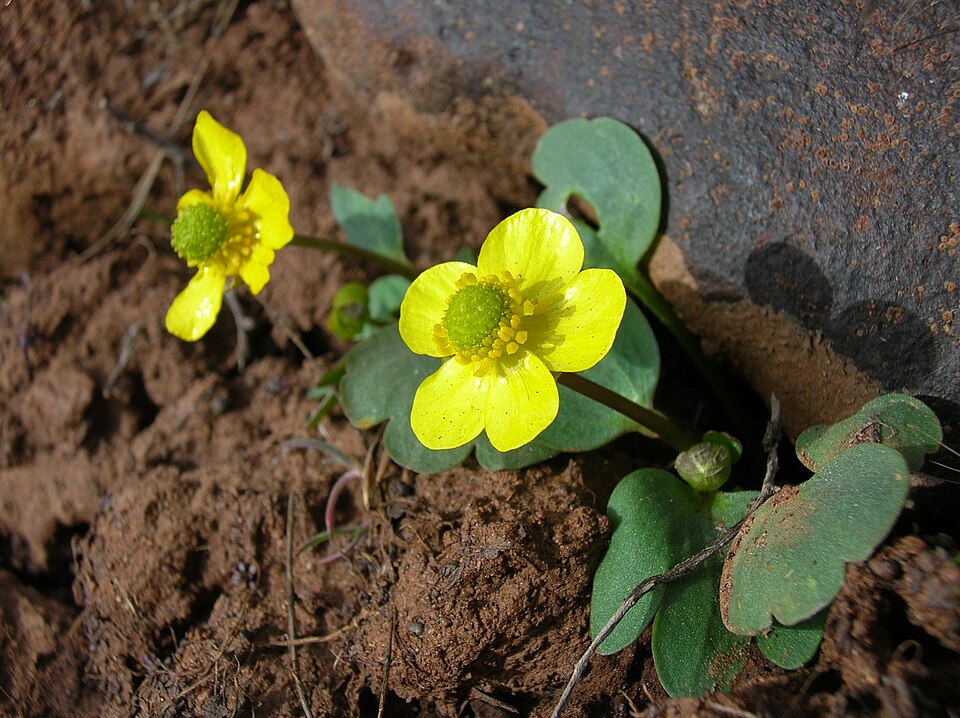
A low-growing perennial reaching 2–8 inches (5–20 cm) tall, forming small tufts from a cluster of fleshy roots. It blooms soon after snowmelt, two to four weeks ahead of most associated wildflowers. Basal leaves are oval to spoon-shaped, sometimes shallowly three-lobed, 0.5–1.5 inches (1.3–4 cm) long, thick and somewhat fleshy, and bright green. Glossy yellow flowers, 0.5–1 inch (1.3–2.5 cm) across, have five to ten petals with a varnished sheen and a green-yellow center. Bloom occurs from February to May, depending on elevation and snowmelt. Petals often fade to white or pink-tinged with age. Clusters of small dry achenes follow. The plant grows from fleshy roots, completes most of its growth in early spring, and goes dormant by early summer as the soil dries. Like other buttercups, the sap contains protoanemonin, which is toxic and can irritate skin and mucous membranes. Foliage withers and disappears by midsummer.
Native Range
Native to western North America from British Columbia and Alberta south to California, Arizona, and New Mexico. Grows in sagebrush steppe, grasslands, and open pine woodland on dry to seasonally moist soils, from valley floors to mid elevations.Suggested Uses
Grown in rock gardens, native plantings, and dryland meadows at 6–10 inch (15–25 cm) spacing. Used as an early-spring wildflower in sagebrush and steppe restorations. Suited to sites that dry out in summer, where its dormancy matches the seasonal cycle.How to Identify
Appearance
Size & Dimensions
Height2" - 8"
Width/Spread4" - 8"
Bloom Information
Detailed Descriptions
Foliage Description
Bright greenGrowing Conditions
Sun Requirements
Requires 6-10 hours of direct sunlight daily
• Full Sun: 6+ hours of direct sunlight
• Partial Shade: 3-6 hours of direct sunlight
• Full Shade: Less than 3 hours of direct sunlight