Ranunculus, Genus, bulbosus, Species,
- Genus & species
bulbous buttercup
Overview
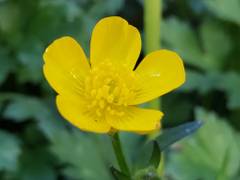
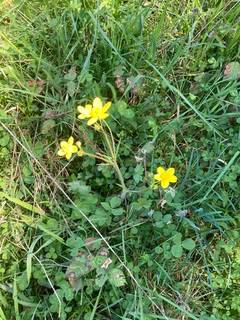
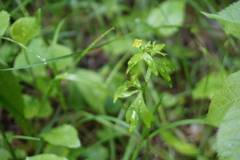
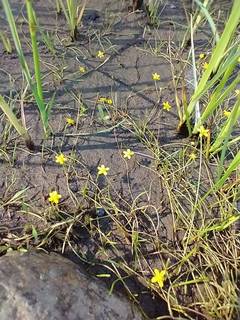
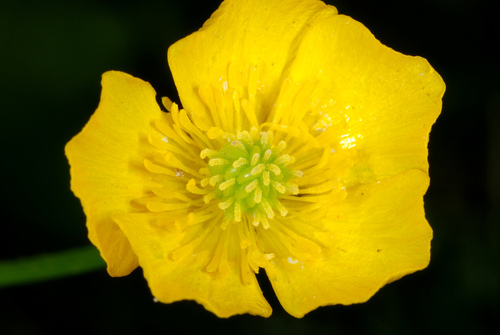
Ranunculus bulbosus is a herbaceous perennial in the Ranunculaceae family, growing 6–16 inches (15–40 cm) tall from a swollen, corm-like stem base 0.4–0.6 inch (10–15 mm) in diameter — the "bulb" referenced in the common name. Basal leaves are ternate, with three deeply lobed and toothed segments, 1–3 inches (2.5–8 cm) across on long petioles; stem leaves are smaller, sessile, and more deeply divided. Stems are erect, branching, hairy. Flowers are glossy yellow, 0.75–1 inch (2–2.5 cm) across with five rounded petals displaying the characteristic waxy sheen of buttercups — caused by a dual-layer epidermal reflective structure. A key diagnostic feature is the reflexed sepals — they bend sharply downward against the flower stalk immediately after the flower opens, visible from the side. Flowers are borne in open cymes of 3–10 blooms per stem. The species goes summer-dormant earlier than R. acris, with foliage dying back by mid to late summer in dry conditions, surviving as the underground corm until autumn rains trigger new basal leaf growth. All parts contain ranunculin, converting to the vesicant protoanemonin on tissue damage — toxic to livestock when fresh, though toxicity degrades in dried hay. Naturalised throughout temperate North America in lawns, meadows, and disturbed ground.
Native Range
Ranunculus bulbosus is native to Europe, North Africa, and western Asia, from the British Isles and Scandinavia south to the Mediterranean. It has naturalised extensively in North America, particularly in the eastern and Pacific Northwest states, in meadows, lawns, and roadsides.Suggested Uses
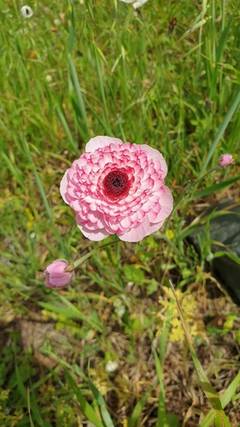
Used in wildflower meadow plantings and naturalised grassland on dry, well-drained sites. The double cultivar 'Flore Pleno' is grown in cottage garden borders for its long-lasting yellow rosette flowers. Tolerates dry, calcareous soils where R. acris struggles. The early bloom period fills the gap between spring bulbs and summer perennials.How to Identify
Appearance
Size & Dimensions
Height6" - 1'4"
Width/Spread6" - 10"
Bloom Information
Flowers appear from April through June in the Pacific Northwest, approximately 2–4 weeks earlier than R. acris. Bloom period spans 4–6 weeks. Individual flowers last 5–7 days. Pollinated by a wide range of short-tongued insects including bees, flies, and beetles. Achenes mature by late June, after which the plant goes dormant.
Detailed Descriptions
Foliage Description
Medium greenGrowing Conditions
Sun Requirements
Requires 4-10 hours of direct sunlight daily
• Full Sun: 6+ hours of direct sunlight
• Partial Shade: 3-6 hours of direct sunlight
• Full Shade: Less than 3 hours of direct sunlight
Care & Maintenance
Care Guide
Plant in full sun to partial shade in well-drained to dry soil with a pH of 5.5–7.5. Space 8–10 inches (20–25 cm) apart. Tolerates lean, sandy, and calcareous soils — performs better in dry conditions than most buttercups. Water sparingly; the species tolerates summer drought by entering corm dormancy. No fertilisation is required. In wildflower meadow plantings, do not mow until after seed has set in late June. The double-flowered form 'Flore Pleno' (syn. 'Pleniflorus') is grown ornamentally and does not set seed. Handle with gloves — sap is a skin irritant.Pruning
Cut back dead foliage and flower stems in midsummer after the plant enters dormancy. In meadow settings, delay cutting until seed has dispersed. No other pruning is required. New basal leaves may emerge in autumn with the return of cool, moist conditions.Pruning Schedule
Prune: July
summer