Ranunculus, Genus, omiophyllus, Species,
- Genus & species
round-leaved crowfoot
Overview
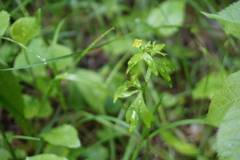
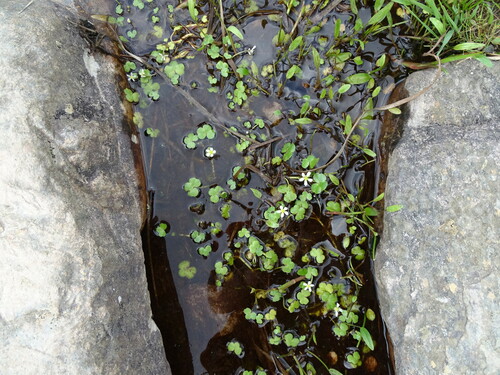
Ranunculus omiophyllus is a small semi-aquatic perennial of wet mud, springs, and shallow ditches, forming low creeping mats rather than tall growth. Unlike many water-crowfoots it bears only rounded, kidney-shaped leaves with three to seven shallow lobes, 0.4-1.2 inches (1-3 cm) wide, and lacks the thread-like submerged leaves of its relatives. The slender stems trail across wet ground and root at the nodes, spreading the plant a few inches above the surface. From spring through late summer it produces small white five-petaled flowers 0.3-0.5 inch (8-12 mm) across, each with a yellow center, held just above the foliage. The flowers give way to small heads of dry single-seeded fruits. It grows on bare, peaty or muddy ground that stays wet but is not deeply flooded, often where water seeps over acidic soils. The plant tolerates seasonal drying once seed is set but cannot persist in dense competing vegetation or deep water. Its low, creeping habit and small flowers keep it inconspicuous outside its damp habitats. Like other buttercups, the sap contains protoanemonin and can irritate skin.
Native Range
Ranunculus omiophyllus is native to western Europe and northwest Africa, from Britain and France south to Spain, Portugal, and Morocco. It grows on damp, acidic, peaty ground beside springs, flushes, ditches, and woodland rides.Suggested Uses
Grown at the wet margins of wildlife ponds, in bog gardens, and in damp, acidic seepage areas for ground-level summer flowers. It suits naturalistic and conservation plantings on peaty ground. Its low spreading habit fills bare wet mud between larger marginal plants.How to Identify
Appearance
Size & Dimensions
Height2" - 4"
Width/Spread8" - 1'8"
Bloom Information
Detailed Descriptions
Flower Description
White with yellow centerFoliage Description
Bright greenGrowing Conditions
Sun Requirements
Requires 4-8 hours of direct sunlight daily
• Full Sun: 6+ hours of direct sunlight
• Partial Shade: 3-6 hours of direct sunlight
• Full Shade: Less than 3 hours of direct sunlight
Care & Maintenance
Care Guide
Grows in full sun to part shade on wet, peaty, acidic mud at the edges of springs, ditches, and bog gardens, where the ground stays saturated but is not deeply flooded. It is hardy to USDA zone 6 and dies back to overwintering buds and seed in cold weather. Constant surface moisture is needed, and the plant fails on dry or limey soils. It spreads by creeping rooting stems and self-sown seed where the ground stays open. Dense grasses and taller marginal plants crowd it out, and it has few pests in cultivation.Pruning
No routine pruning is needed. Overgrown mats are thinned by hand to keep the plant in its intended area. Old growth dies down naturally in winter and is cleared as it decays.Container Growing
Suitable for container growing
Minimum container size: 2 gallons