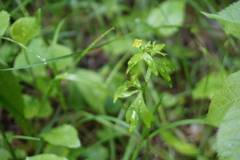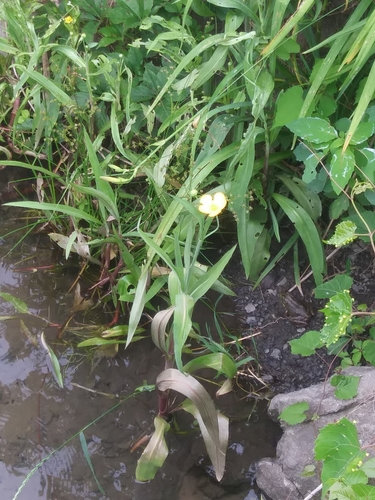
Ranunculus, Genus, lingua, Species,
- Genus & species
greater spearwort
Overview
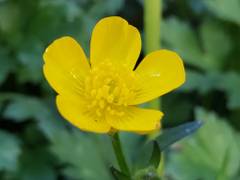
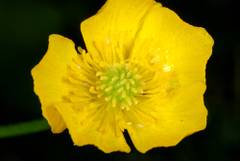
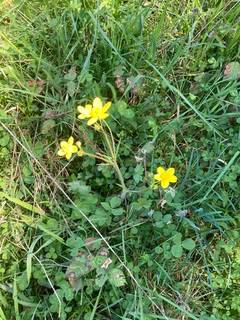
Ranunculus lingua is a robust aquatic perennial of pond and ditch margins, growing 2-4 feet (60-120 cm) tall from stout creeping rhizomes that root at the nodes and spread the plant through shallow water. The erect hollow stems are often flushed reddish and carry lance-shaped (spear-shaped) leaves up to 10 inches (25 cm) long; lower leaves are stalked while the upper ones clasp the stem. From early summer to early autumn it produces glossy yellow buttercup flowers 0.8-2 inches (2-5 cm) across, each with five petals, borne singly or in few-flowered clusters at the stem tips. The flowers give way to rounded heads of small dry single-seeded fruits. The plant grows in standing or slow-moving water up to 8 inches (20 cm) deep and along saturated margins, dying back to the rhizome in winter. Its spreading rhizomes can colonize large stretches of a pond edge and crowd out smaller marginal plants, a limitation in small water features. The sap contains protoanemonin and irritates skin and mucous membranes on contact.
Native Range
Native to Europe and western Asia, Ranunculus lingua grows in fens, marshes, reed swamps, and the margins of ponds, lakes, and slow rivers. It ranges from Britain and Scandinavia eastward across Russia, favoring base-rich still or slow water.Suggested Uses
Grown in the shallow margins of wildlife and ornamental ponds, bog gardens, and rain gardens for its summer-long yellow flowers. It gives cover for amphibians and aquatic insects. Containing the roots in a planting basket limits its spread in smaller ponds.How to Identify
Appearance
Size & Dimensions
Height2' - 4'
Width/Spread1'6" - 3'
Bloom Information
Flowering runs from June to September, with glossy yellow flowers 0.8-2 inches (2-5 cm) across opening over a long summer season. The flowers are pollinated by bees, hoverflies, and beetles. Spherical heads of small dry fruits follow and ripen by late summer.
Detailed Descriptions
Foliage Description
Grey-green to blue-greenGrowing Conditions
Sun Requirements
Requires 4-10 hours of direct sunlight daily
• Full Sun: 6+ hours of direct sunlight
• Partial Shade: 3-6 hours of direct sunlight
• Full Shade: Less than 3 hours of direct sunlight
Care & Maintenance
Care Guide
Grows in full sun to partial shade in permanently wet ground or standing water up to 8 inches (20 cm) deep, in fertile, base-rich mud. It establishes in pond margins, bog gardens, and the shallow shelves of wildlife ponds and cannot tolerate drying out. Plants are hardy to USDA zone 5 and overwinter as dormant rhizomes beneath the water. Growth is rapid once established, and the rhizomes spread widely unless contained in a planting basket. Aphids occasionally colonize the soft stems, and powdery mildew can appear late in the season on crowded plants.Pruning
Spent flower stems and yellowing leaves are cut back through the season to limit self-seeding. Plants in containers are lifted and divided every two to three years to control spread. Final cutting back is done in late autumn after the foliage dies down.Pruning Schedule
Prune: October–November
fall
Container Growing
Suitable for container growing
Minimum container size: 3 gallons