Eucalyptus, Genus, deglupta, Species,
- Genus & species
rainbow eucalyptus tree
Philippines, eastern Indonesia, Papua New Guinea
Overview
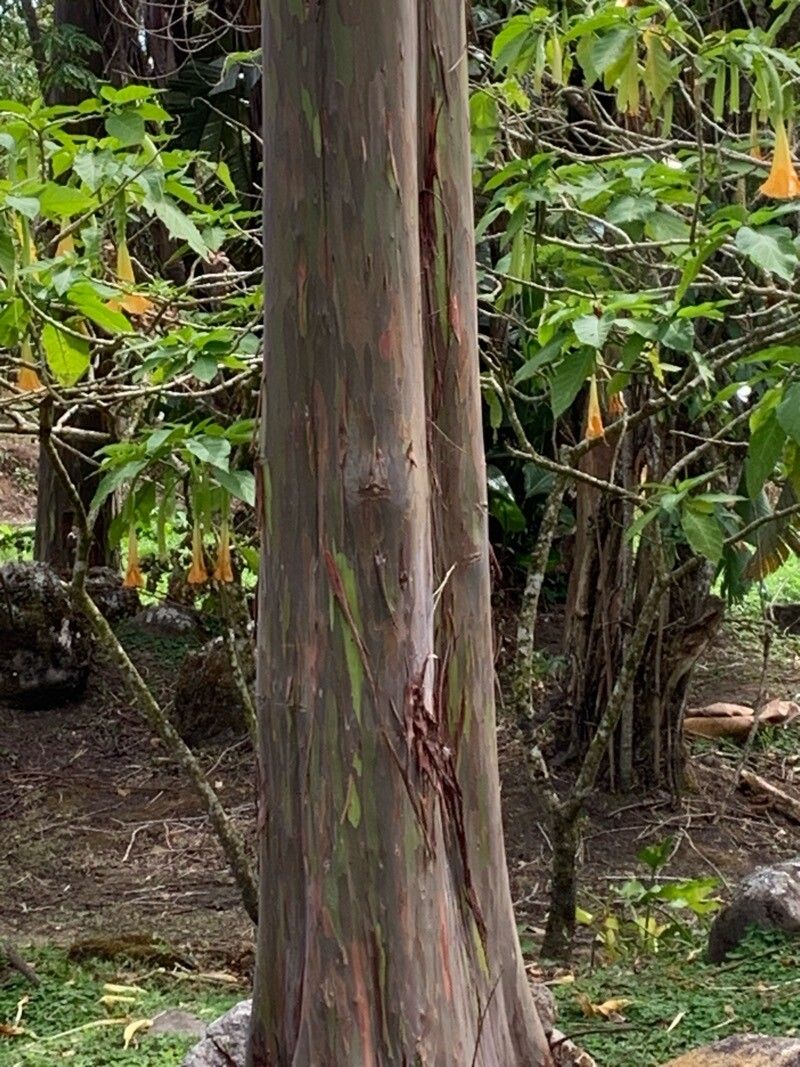
Eucalyptus deglupta is a tropical evergreen tree reaching 100-150 feet (30-45 m) tall in cultivation and 200-250 feet (60-75 m) in native habitat, with a single straight trunk 3-6 feet (0.9-1.8 m) in diameter and an open spreading crown. Trunk bark is smooth and exfoliating in irregular patches that reveal new layers in succession, cycling through bright green at first exposure, then blue, purple, orange, and maroon as patches age, oxidize, and shed. Lance-shaped evergreen leaves are 4-6 inches (10-15 cm) long and 1-2 inches (2.5-5 cm) wide, glossy mid-green, with red petioles on new growth. Small white flowers appear in clusters of 7 from spring through summer, each 0.4 inch (1 cm) across with prominent stamens. Woody capsule fruits 0.2-0.3 inch (5-8 mm) across follow flowering and contain numerous tiny seeds. Growth rate is rapid at 3-5 feet (0.9-1.5 m) per year through the first decade. Cold tolerance is limited; foliage damage occurs below 28°F (-2°C) and stems are killed below 25°F (-4°C). Roots are aggressive and shallow, lifting paving and damaging foundations within 30-50 feet (9-15 m) of the trunk.
Native Range
E. deglupta is native to the Philippines (Mindanao, Mindoro), eastern Indonesia (Sulawesi, Seram, New Guinea), and Papua New Guinea, in lowland tropical rainforest along streams and on volcanic soils up to 4,000 feet (1,200 m) elevation. The Philippine portion of the range is the only natural occurrence of Eucalyptus north of the equator.Suggested Uses
Planted as a specimen tree on tropical and subtropical estates in zones 10-11 at 60-80 foot (18-24 m) spacing. Grown in commercial plantations for pulp, paper, and lumber in Southeast Asia, Hawaii, and Brazil. Mature size and aggressive roots make street, foundation, or small-yard placement unsuitable; container culture is impractical because of rapid growth and eventual size.How to Identify
Appearance
Size & Dimensions
Height100' - 150'
Width/Spread30' - 60'
Bloom Information
Flowering occurs from late spring through summer in zones 10-11, with peak bloom from May through August. In equatorial climates, sporadic flowering continues year-round. Individual flower clusters last 5-10 days; flowers are wind- and bee-pollinated.
Detailed Descriptions
Foliage Description
glossy mid-green; red petioles on new growthGrowing Conditions
Sun Requirements
Requires 8-12 hours of direct sunlight daily
• Full Sun: 6+ hours of direct sunlight
• Partial Shade: 3-6 hours of direct sunlight
• Full Shade: Less than 3 hours of direct sunlight
Care & Maintenance
Care Guide
Water deeply twice weekly during the first growing season; established trees tolerate brief drought but grow more slowly without consistent moisture. Trees develop chlorosis on alkaline soils above pH 7.0; iron amendments correct the symptom on otherwise suitable sites. Wood is brittle and prone to wind damage above 60 mph (95 km/h), and large branches drop without warning. Cold damage occurs in zone 9 and below: foliage browns at 28°F (-2°C) and sustained 25°F (-4°C) kills stems to the ground. Lerp psyllids, longhorn borers, and gall wasps occur on stressed trees in cultivation outside the native range.Pruning
Pruning during the dormant period (cool dry season in tropics) reduces sap loss and disease entry. Removal of co-dominant leaders during years 1-5 develops a single straight trunk; mature trees with multiple leaders split under wind load. Hard topping is followed by epicormic regrowth that disrupts the natural form. Surface roots are not cut because root pruning destabilizes the entire tree.Pruning Schedule
Prune: January–February
winter