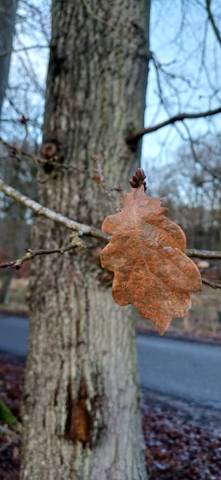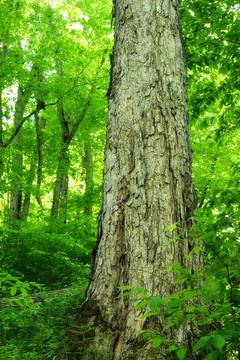
Quercus, Genus, ×, Hybrid, undulata, Species,
- Genus & species
- Hybrid
wavyleaf oak
Overview
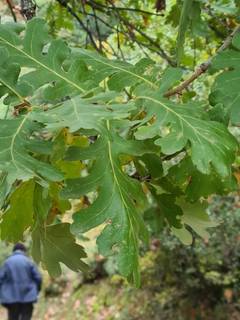
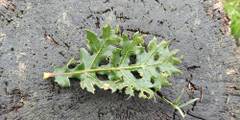
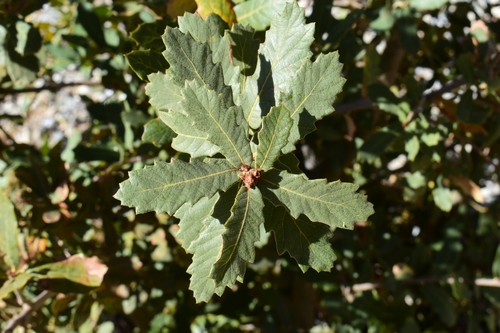
Quercus × undulata is a semi-evergreen shrub to small tree of the southwestern United States, arising from hybridization between the deciduous Gambel oak Q. gambelii and evergreen scrub oaks such as Q. turbinella. It typically grows 3–10 feet (1–3 m) tall, occasionally to 15 feet (4.6 m), and spreads by rhizomes to form thickets 6–15 feet (1.8–4.6 m) wide. The leaves are 1–2.5 inches (2.5–6 cm) long, blue-green to gray-green, leathery, with wavy and shallowly lobed or spine-toothed margins that give the plant its common name. Many leaves persist through mild winters and drop in colder years, so foliage habit varies with climate. Yellow-green catkins open in April and May, wind-pollinated, and acorns 0.5–0.8 inch (12–20 mm) long mature in a single season. The plant grows on dry slopes, mesas, and canyon edges from 4,000 to 8,000 feet (1,200–2,400 m) elevation, on rocky, fast-draining soils. It is drought-tolerant once established but slow-growing, and its thicket-forming habit can crowd small plantings. Acorns and foliage contain tannins toxic to grazing livestock and dogs in quantity.
Native Range
Quercus × undulata occurs across the southwestern United States, including Colorado, New Mexico, Arizona, Utah, and Texas, wherever Gambel oak Q. gambelii overlaps with evergreen scrub oaks.Suggested Uses
Used in native, water-conserving, and erosion-control plantings across the interior West, and as habitat where acorns feed deer, turkeys, and small mammals. The spreading thicket habit suits naturalized slopes and large areas rather than confined beds. Stems give cover and nesting sites for birds.How to Identify
Appearance
Size & Dimensions
Height3' - 10'
Width/Spread6' - 15'
Bloom Information
Yellow-green catkins emerge with new leaves in April and May. The flowers are wind-pollinated and inconspicuous. Acorns ripen through summer and fall in autumn of the same year.
Detailed Descriptions
Foliage Description
blue-green to gray-greenGrowing Conditions
Sun Requirements
Requires 6-12 hours of direct sunlight daily
• Full Sun: 6+ hours of direct sunlight
• Partial Shade: 3-6 hours of direct sunlight
• Full Shade: Less than 3 hours of direct sunlight
Care & Maintenance
Care Guide
Growth is strongest in full sun on dry, rocky, fast-draining soils, including gravelly or sandy loams. Water during the first two or three years supports establishment, after which the plant relies on natural rainfall and tolerates extended drought. Excess irrigation and poorly drained soils lead to root rot. Soil pH from 6.0 to 7.5 is suitable, and supplemental feeding is rarely needed. The plant is hardy to USDA zone 4 and withstands cold mountain winters. Rhizome suckers extend the colony each year and can be cut back to limit spread.Pruning
Pruning to remove dead or damaged wood is done in late winter during dormancy. Cutting back rhizome suckers each year keeps the thicket within bounds. Hard rejuvenation cuts near ground level produce vigorous regrowth from the base.Pruning Schedule
Prune: February–March
winter