Quercus, Genus, ×, Hybrid, saulii, Species,
- Genus & species
- Hybrid
Saul's oak
Overview
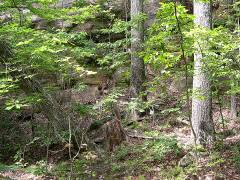
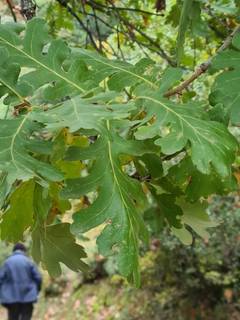
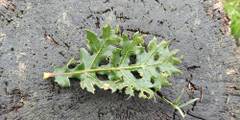
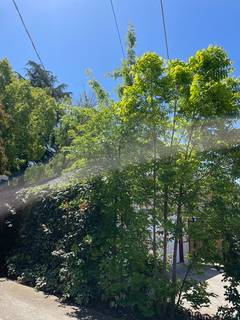
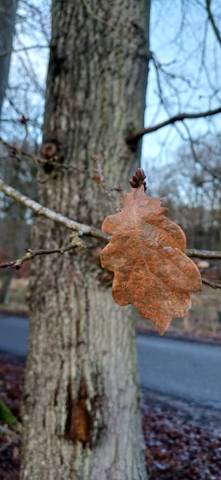
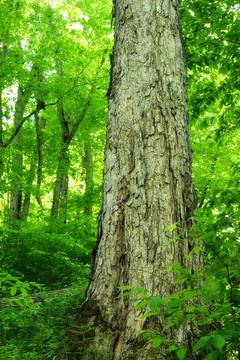
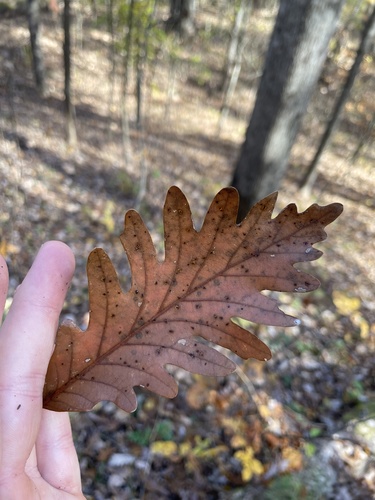
Quercus × saulii, Saul's oak, is a naturally occurring hybrid between Q. alba and Q. montana, found in eastern North America. It grows as a deciduous tree 50–80 feet (15–24 m) tall with a broad, rounded crown and a stout trunk bearing pale grey, ridged bark. The leaves are 4–7 inches (10–18 cm) long with shallow rounded lobes or coarse teeth, intermediate between the deeply lobed white oak and the toothed chestnut oak. Foliage emerges pinkish, matures dull green, and turns red-brown to russet before dropping in autumn. The tree bears slender catkins in spring as the leaves expand, with wind-borne pollen. Acorns mature in one season, 0.75–1 inch (2–2.5 cm) long, sweet-tasting, with a shallow warty cap. Like its parents it grows slowly and is long-lived, developing a deep taproot that makes large specimens difficult to transplant. It grows on upland slopes and ridges in mixed hardwood forest.
Native Range
Quercus × saulii occurs in eastern North America where the ranges of Q. alba and Q. montana overlap. It is found in upland forests, on slopes and ridges, from the eastern United States through the Appalachian region.Suggested Uses
Used as a shade and specimen tree in large gardens, parks, and woodland edges. The acorns feed deer, squirrels, and birds. Spaced 35–50 feet (10.5–15 m) apart to allow for the broad mature crown.How to Identify
Appearance
Size & Dimensions
Height50' - 80'
Width/Spread40' - 60'
Bloom Information
Catkins appear in spring, from April to May, as the new leaves expand. Male flowers hang in slender yellow-green clusters and release wind-borne pollen, while the small female flowers are inconspicuous. Acorns ripen in a single season and drop in autumn.
Detailed Descriptions
Foliage Description
greenGrowing Conditions
Sun Requirements
Requires 6-12 hours of direct sunlight daily
• Full Sun: 6+ hours of direct sunlight
• Partial Shade: 3-6 hours of direct sunlight
• Full Shade: Less than 3 hours of direct sunlight
Care & Maintenance
Care Guide
Grows in full sun in deep, well-drained soil, tolerating a soil pH from 5.0 to 7.0 and dry upland sites. Water needs are low once established, as the deep taproot reaches soil moisture. Hardy in USDA zones 4–8, it withstands cold winters across its range. Growth is slow, and the taproot makes large trees difficult to move, so planting young is the usual practice. The broad canopy casts dense shade beneath mature trees. Oak wilt and various leaf-feeding insects can affect trees in some regions.Pruning
Pruning is limited to removing dead, damaged, or crossing branches in winter while dormant, when the risk of oak wilt spread is lowest. The natural rounded form needs no shaping. Large cuts heal slowly and can admit decay.Pruning Schedule
Prune: December–January
winter