Quercus, Genus, palustris, Species,
- Genus & species
pin oak
Eastern North America from Massachusetts south to North Carolina and west to Wisconsin and Oklahoma; poorly drained bottomlands, floodplains, and clay flats that experience periodic flooding
Overview
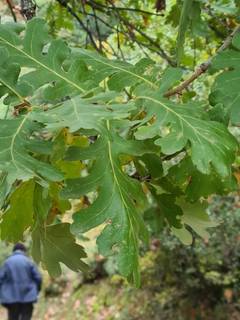
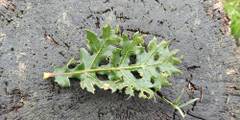
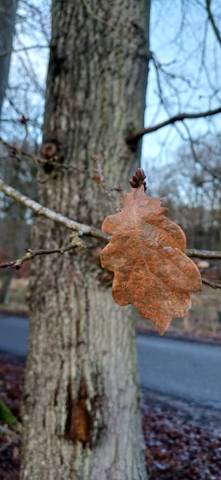
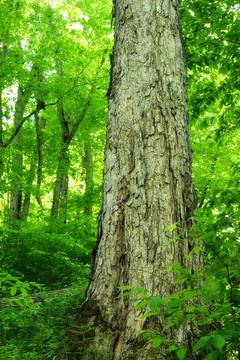
Quercus palustris is a large deciduous tree in the family Fagaceae reaching 50–70 feet (15–21 m) tall and 25–45 feet (7.6–14 m) wide with a pyramidal crown and a strong central leader. The branching structure is the main identification character: the upper branches ascend at about 45 degrees from horizontal, the middle branches extend horizontally from the trunk, and the lower branches droop sharply downward toward the ground, creating a three-tiered canopy silhouette that is not matched by other common oak species in North American landscapes. Bark is smooth and gray-brown in youth and develops shallow ridges and narrow furrows with age but remains smoother than most other oaks. Leaves are alternate, simple, 3–6 inches (8–15 cm) long, and carry 5–7 deeply cut bristle-tipped lobes separated by wide U-shaped sinuses that extend nearly to the midrib; small tufts of tan hairs at the vein axils on the leaf underside are a diagnostic character for the species. Fall color is a russet-red to bronze-red that is less vivid than scarlet oak (Q. coccinea), and leaves on young trees and lower branches are marcescent and persist brown on the branches through winter before dropping as new growth pushes in spring. Acorns are small, nearly hemispherical, 0.5 inch (13 mm) across, with a thin saucer-shaped cup enclosing only the base of the nut, and mature in two growing seasons. Growth is moderate to rapid for an oak at 12–24 inches (30–61 cm) per year, and trees are long-lived at 100–200+ years. The root system is shallow and fibrous rather than the typical oak taproot, which makes Q. palustris one of the easier oaks to transplant at larger caliper sizes. Limitation: iron chlorosis develops on alkaline soils above pH 6.5, producing interveinal yellowing on the foliage that can be severe enough to weaken the tree and shorten its lifespan; soil pH testing before planting is called for, and alkaline or lime-amended urban sites are unsuitable because supplemental iron treatments treat the symptom rather than the underlying soil chemistry. The drooping lower branches sweep down to ground level on open-grown trees and interfere with foot and vehicle traffic in street and park plantings, so lower branch removal is a recurring pruning task on trees sited near paths and roadways.
Native Range
Native to eastern North America from Massachusetts south to North Carolina and west to Wisconsin and Oklahoma. Grows on poorly drained bottomlands, floodplains, and clay flats that experience periodic flooding, and tolerates seasonal inundation better than most other large oak species. The common name refers to the many small pin-like dead branchlets found in the interior of the crown rather than to the habitat.Suggested Uses
Used as a shade tree, street tree, and park tree at 30–40 foot (9–12 m) spacing from structures where the pyramidal form, the russet-red fall color, and the marcescent winter foliage supply multi-season interest. The shallow fibrous root system makes Q. palustris easier to transplant at larger caliper than other oak species, which has contributed to its widespread use in urban plantings. Alkaline soil sites above pH 6.5 are unsuitable because of the iron chlorosis issue, and soil pH testing before planting is the single most important site evaluation step for this species.How to Identify
Appearance
Size & Dimensions
Height50' - 70'
Width/Spread25' - 45'
Bloom Information
Monoecious catkins open in April and May concurrent with leaf emergence. Male catkins are pendulous and yellowish, 2–4 inches (5–10 cm) long, and female flowers are tiny and inconspicuous at the tips of the new shoots. The bloom is wind-pollinated and is not ornamentally significant. Acorns mature in two growing seasons and ripen in September and October of the second year.
Detailed Descriptions
Flower Description
monoecious; male catkins are pendulous and yellowish, 2-4 inches (5-10 cm) long, and female flowers are tiny and inconspicuous at the tips of the new shootsFoliage Description
glossy dark green on the upper surface, paler beneath; alternate, simple, 3-6 inches (8-15 cm) long with 5-7 deeply cut bristle-tipped lobes separated by wide U-shaped sinuses that extend nearly to the midrib, with small tufts of tan hairs at the vein axils on the underside; turns russet-red to bronze-red in fallGrowing Conditions
Sun Requirements
Requires 6-12 hours of direct sunlight daily
• Full Sun: 6+ hours of direct sunlight
• Partial Shade: 3-6 hours of direct sunlight
• Full Shade: Less than 3 hours of direct sunlight
Care & Maintenance
Care Guide
Site in full sun with 6–12 hours of direct sun per day in moist acidic soil with a pH of 4.5–6.5. Soil pH testing before planting is called for because iron chlorosis develops on alkaline soils above pH 6.5 and produces severe interveinal yellowing that weakens the tree; alkaline sites are unsuitable for this species regardless of other site conditions. The species tolerates seasonal flooding, clay soils, and urban compaction better than most other large oaks and maintains better growth with consistent soil moisture through summer. Supplemental irrigation through the first two growing seasons establishes the shallow fibrous root system; chelated iron soil drenches can reduce chlorosis symptoms on borderline alkaline sites but do not eliminate the underlying cause. Drooping lower branches sweep down to ground level on open-grown trees and call for removal in street and park positions to allow clearance for foot and vehicle traffic. Hardy in USDA zones 4–8.Pruning
Pruning is done in late winter (January and February) while the tree is dormant. Young trees are trained to a strong central leader with the natural pyramidal form preserved; the tiered branching pattern is the species signature and should not be removed in shaping cuts. Lower branches are raised progressively as the tree grows to maintain clearance over walkways, streets, and parking areas, and the sharply drooping lowest branches are the main recurring pruning target in street plantings. Dead, damaged, and crossing branches can be removed at the same time. Marcescent leaves on lower branches of young trees persist through winter and drop naturally when new growth pushes in spring, which is typical for the species and not a sign of disease.Pruning Schedule
Prune: January–February
winter