Quercus, Genus, ×, Hybrid, ganderi, Species,
- Genus & species
- Hybrid
gander oak
Overview
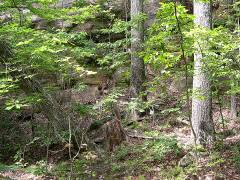
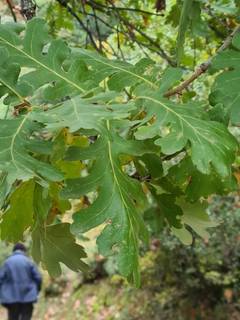
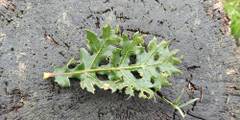
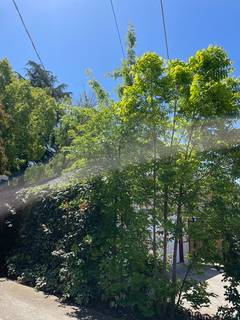
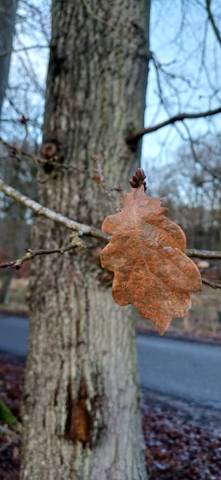
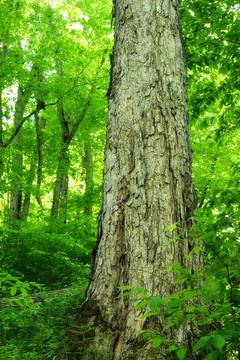
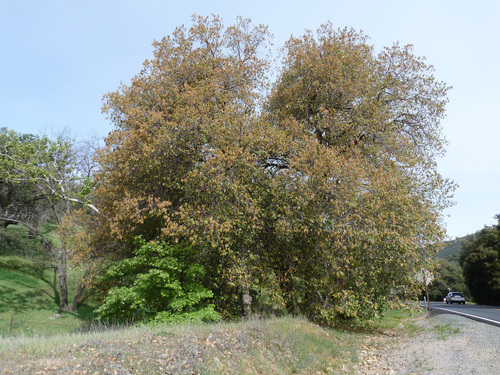
Quercus × ganderi, the Gander oak, is a naturally occurring hybrid between Q. agrifolia and Q. kelloggii, found in southern California. It grows as a small to medium tree 20–50 feet (6–15 m) tall with a broad, rounded crown and a stout trunk. Leaves are 1.5–3.5 inches (4–9 cm) long, leathery, with shallow lobes ending in bristle tips, intermediate between the spiny-margined coast live oak and the deeply lobed black oak. Foliage is semi-evergreen, holding through mild winters and shedding in colder spells. The tree bears slender catkins in spring, with wind-borne pollen, and acorns mature over one to two seasons, 0.75–1.25 inches (2–3 cm) long, with a deep scaly cap. Intermediate leaf shape and acorn form vary from tree to tree depending on parent influence. It grows on dry slopes and canyon sides in the chaparral and oak woodland of the region, and is restricted to areas with mild winters and dry summers.
Native Range
Quercus × ganderi is native to southern California, where it occurs in the coastal foothills and inland canyons of San Diego County and nearby areas. It grows where the ranges of Q. agrifolia and Q. kelloggii overlap in chaparral and oak woodland.Suggested Uses
Used as a shade or specimen tree in large dry-climate gardens and in California habitat restoration. The acorns feed birds, squirrels, and deer. Spaced 25–35 feet (7.5–10.5 m) apart to allow for the broad mature crown.How to Identify
Appearance
Size & Dimensions
Height20' - 50'
Width/Spread20' - 40'
Bloom Information
Catkins appear in spring, from March to May, as new leaves emerge. Male flowers hang in slender clusters and release wind-borne pollen, while the small female flowers are inconspicuous. Acorns ripen over one to two seasons, dropping in autumn.
Detailed Descriptions
Foliage Description
greenGrowing Conditions
Sun Requirements
Requires 6-12 hours of direct sunlight daily
• Full Sun: 6+ hours of direct sunlight
• Partial Shade: 3-6 hours of direct sunlight
• Full Shade: Less than 3 hours of direct sunlight
Care & Maintenance
Care Guide
Grows in full sun on dry, well-drained slopes in rocky, sandy, or loamy soil. It tolerates a soil pH from 6.0 to 7.5 and low fertility. Water needs are very low once established, matching the dry-summer climate of its native range, and summer irrigation of established trees can encourage root disease. Hardy in USDA zones 8–10, it is restricted to areas with mild winters. Growth is moderate, and the deep root system develops before significant canopy spread. Mature trees cast dense shade that limits understorey planting.Pruning
Pruning is limited to removing dead, damaged, or crossing branches in late winter while dormant. The natural broad crown needs no shaping. Large cuts on oaks heal slowly and can admit decay fungi, so heavy reduction is uncommon.Pruning Schedule
Prune: January–February
winter