Quercus, Genus, ×, Hybrid, alvordiana, Species,
- Genus & species
- Hybrid
Alvord oak
Overview
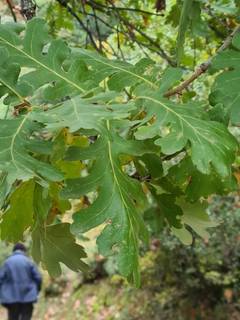
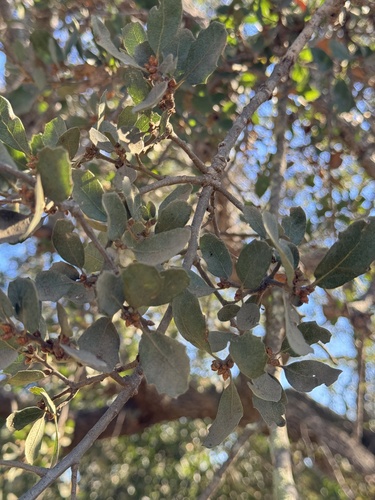
Quercus × alvordiana is a naturally occurring hybrid between Q. douglasii and Q. turbinella, found in the foothills of California. It grows as a large shrub to small tree 10–25 feet (3–7.5 m) tall, with a rounded crown and stout, often crooked branches. Leaves are small, 0.5–1.5 inches (1.5–4 cm) long, leathery, blue-green, with shallowly toothed or spine-tipped margins, and are semi-evergreen, persisting through mild winters and dropping in colder ones. The tree carries typical oak catkins in spring, with male flowers in slender hanging clusters and inconspicuous female flowers on the same plant. Acorns mature in one season, 0.5–1 inch (1.5–2.5 cm) long, with a shallow scaly cap. Intermediate leaf and acorn traits reflect both parent species. Growth is slow, and the plant is adapted to hot, dry foothill slopes, tolerating drought but limited to regions with mild winters. It is found on rocky slopes and chaparral margins where the parent oaks overlap.
Native Range
Quercus × alvordiana is native to California, where it occurs in the inner Coast Ranges and southern Sierra Nevada foothills. It grows on dry rocky slopes and the margins of chaparral and oak woodland where Q. douglasii and Q. turbinella ranges meet.Suggested Uses
Used in dry native and habitat plantings, on slopes for erosion control, and in California foothill restoration. The acorns feed birds and mammals. Spaced 15–20 feet (4.5–6 m) apart where grown as a specimen or screen.How to Identify
Appearance
Size & Dimensions
Height10' - 25'
Width/Spread10' - 20'
Colors
Bloom Information
Catkins appear in spring, from March to April, as the new leaves expand. Male flowers hang in slender yellow-green clusters while the smaller female flowers sit in the leaf axils. Wind carries the pollen, and acorns ripen in a single season by autumn.
Detailed Descriptions
Foliage Description
blue-greenGrowing Conditions
Sun Requirements
Requires 6-12 hours of direct sunlight daily
• Full Sun: 6+ hours of direct sunlight
• Partial Shade: 3-6 hours of direct sunlight
• Full Shade: Less than 3 hours of direct sunlight
Care & Maintenance
Care Guide
Grows in full sun on dry, well-drained rocky or sandy soils, including shallow and low-fertility ground. It tolerates a soil pH from 6.0 to 8.0. Water needs are very low once established, matching its hot, dry native foothills, and it withstands extended summer drought. Hardy in USDA zones 7–9, it is limited to areas with mild winters and does not tolerate prolonged hard freezes. Growth is slow, and young plants build a deep root system before much top growth appears. Supplemental summer irrigation in heavy soils can promote root rot.Pruning
Pruning is limited to removing dead or crossing branches in late winter while dormant. The natural rounded form needs no shaping. Heavy cutting produces slow regrowth, and large pruning wounds on oaks invite decay.Pruning Schedule
Prune: January–February
winter