Prunus, Genus, salicina, Species,
- Genus & species
Chinese plum
Yangtze River basin of central and eastern China
Overview
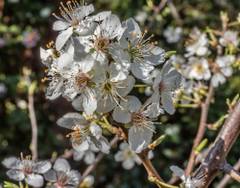
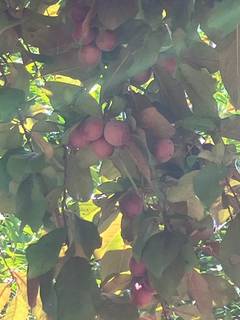
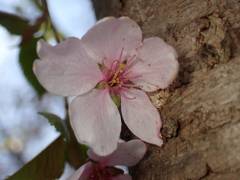
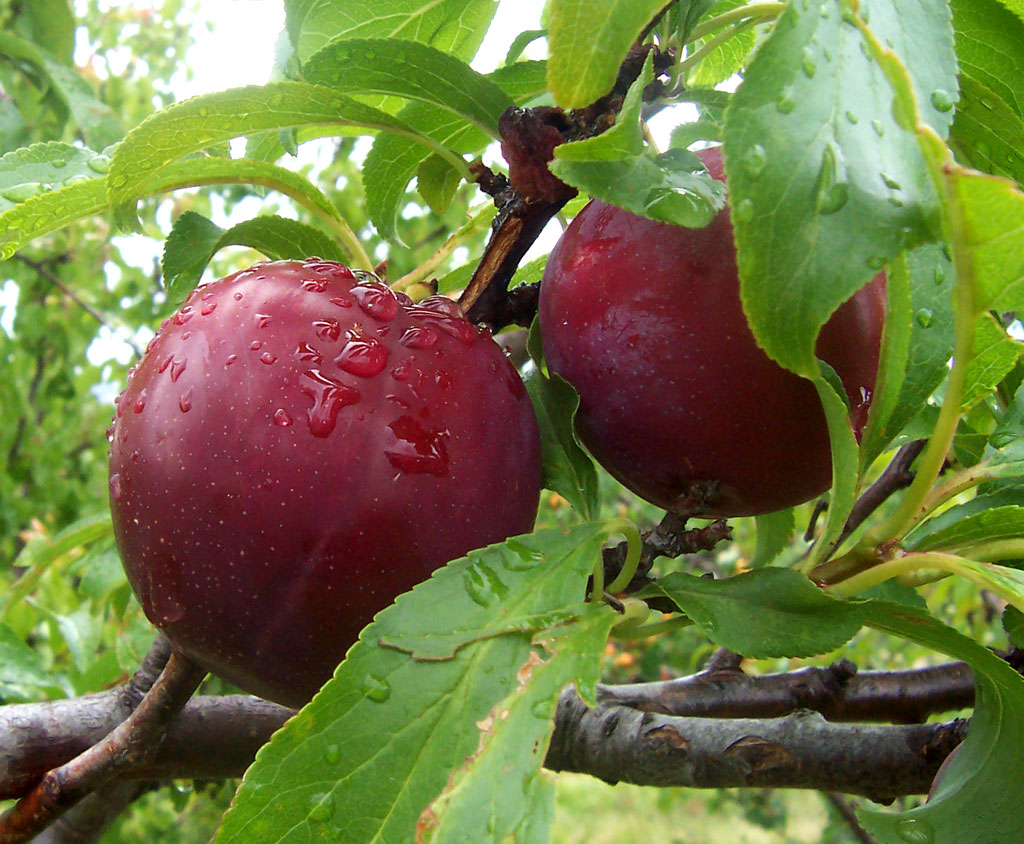
Prunus salicina is a deciduous tree growing 15-25 feet (4.5-7.5 m) tall and about as wide, with a spreading crown, red-brown twigs, and grey bark that develops shallow fissures with age. Leaves are alternate, obovate to oblong-lance-shaped, 2.5-5 inches (6-12 cm) long, glossy mid-green with finely toothed margins and a drawn-out pointed tip. Flowers open before or with the leaves in clusters of 3 along one-year-old wood; each is white, 0.6-0.8 inch (1.5-2 cm) across, with 5 rounded petals and a light honey scent. Fruit is a rounded to heart-shaped drupe 1.5-2.8 inches (4-7 cm) across, yellow through red to purple-black with a waxy bloom, the flesh yellow to red and usually clinging to the stone. Most cultivars are self-incompatible and set a crop only when a second compatible cultivar flowers at the same time within about 100 feet (30 m). The chilling requirement of 500-800 hours below 45F (7C) is lower than that of European plums, so flowering starts 1-3 weeks earlier and spring frost below 28F (-2C) at bloom regularly destroys the crop. Leaves, bark, and stones contain cyanogenic glycosides that release hydrogen cyanide when chewed or wilted.
Native Range
Prunus salicina is native to central and eastern China, centred on the Yangtze River basin, where it grows in valleys and on hill slopes and has been cultivated for more than 2,000 years. It was carried to Japan several centuries ago and from there to the United States in the 1870s. Nearly all commercial plums grown in California, Australia, South Africa, and Chile derive from this species or from its hybrids with P. cerasifera and P. americana.Suggested Uses
Grown in home orchards and commercial blocks in USDA zones 6-9, planted 15-20 feet (4.5-6 m) apart on seedling rootstock or 10-12 feet (3-3.7 m) apart on semi-dwarfing rootstock. Fruit is eaten fresh and used for jam, umeboshi-style pickling, drying, and plum wine. Spring flowers supply an early nectar and pollen source for bees, and fallen fruit is taken by birds and mammals.How to Identify
Appearance
Size & Dimensions
Height15' - 25'
Width/Spread15' - 25'
Bloom Information
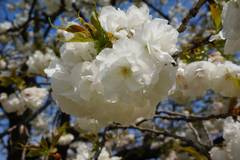
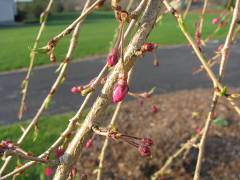
Flowering runs from late February in USDA zone 9 to mid April in zone 6, with the full display lasting 7-14 days. Flowers open before the leaves expand, so the whole crown is white at peak bloom. Because bloom is early, frost below 28F (-2C) during flowering kills the open flowers and eliminates that year fruit. Fruit ripens 100-150 days after bloom, from June to September depending on cultivar.
Detailed Descriptions
Foliage Description
Glossy mid-greenGrowing Conditions
Sun Requirements
Requires 6-10 hours of direct sunlight daily
• Full Sun: 6+ hours of direct sunlight
• Partial Shade: 3-6 hours of direct sunlight
• Full Shade: Less than 3 hours of direct sunlight
Care & Maintenance
Care Guide
Cropping requires full sun with 6 or more hours of direct light; shaded branches set flower buds sparsely and drop fruit early. Soil should be deep and free-draining at a pH of 5.5-7.0, since roots in waterlogged ground are killed by Phytophthora within a season. Watering to supply 1-1.5 inches (2.5-4 cm) a week from bloom through fruit swell prevents fruit drop, and irregular watering during ripening splits the skins. A second compatible cultivar within about 100 feet (30 m) is needed for pollination on most cultivars, and bees carry out the transfer during a 7-14 day window. Thinning young fruit to 4-6 inches (10-15 cm) apart about 4 weeks after bloom reduces limb breakage and increases the size of the remaining fruit. Brown rot, bacterial canker, and plum curculio are the common problems in humid regions, and fallen mummified fruit carries brown rot into the following season.Pruning
P. salicina fruits on 1-year-old shoots and on short spurs that stay productive for 3-5 years, and it is trained to an open vase of 3-4 scaffold limbs at 24-30 inches (60-75 cm) from the ground. Pruning is carried out in summer after harvest rather than in winter, since cuts made in cold wet weather admit silver leaf and bacterial canker. Annual removal of about one-fifth of the older wood, along with vertical watershoots, keeps the centre open and renews fruiting spurs. Trees left unpruned build height quickly and carry their crop out of reach on brittle upper limbs.Pruning Schedule
Prune: July–August
summer