Persicaria, Genus, virginiana, Species,
- Genus & species
jumpseed
Eastern North America (Quebec to Florida, west to Minnesota and Texas; moist deciduous forests, woodland edges, and streamside areas)
Overview
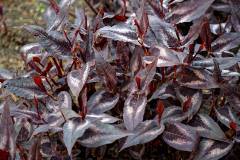
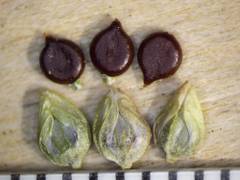
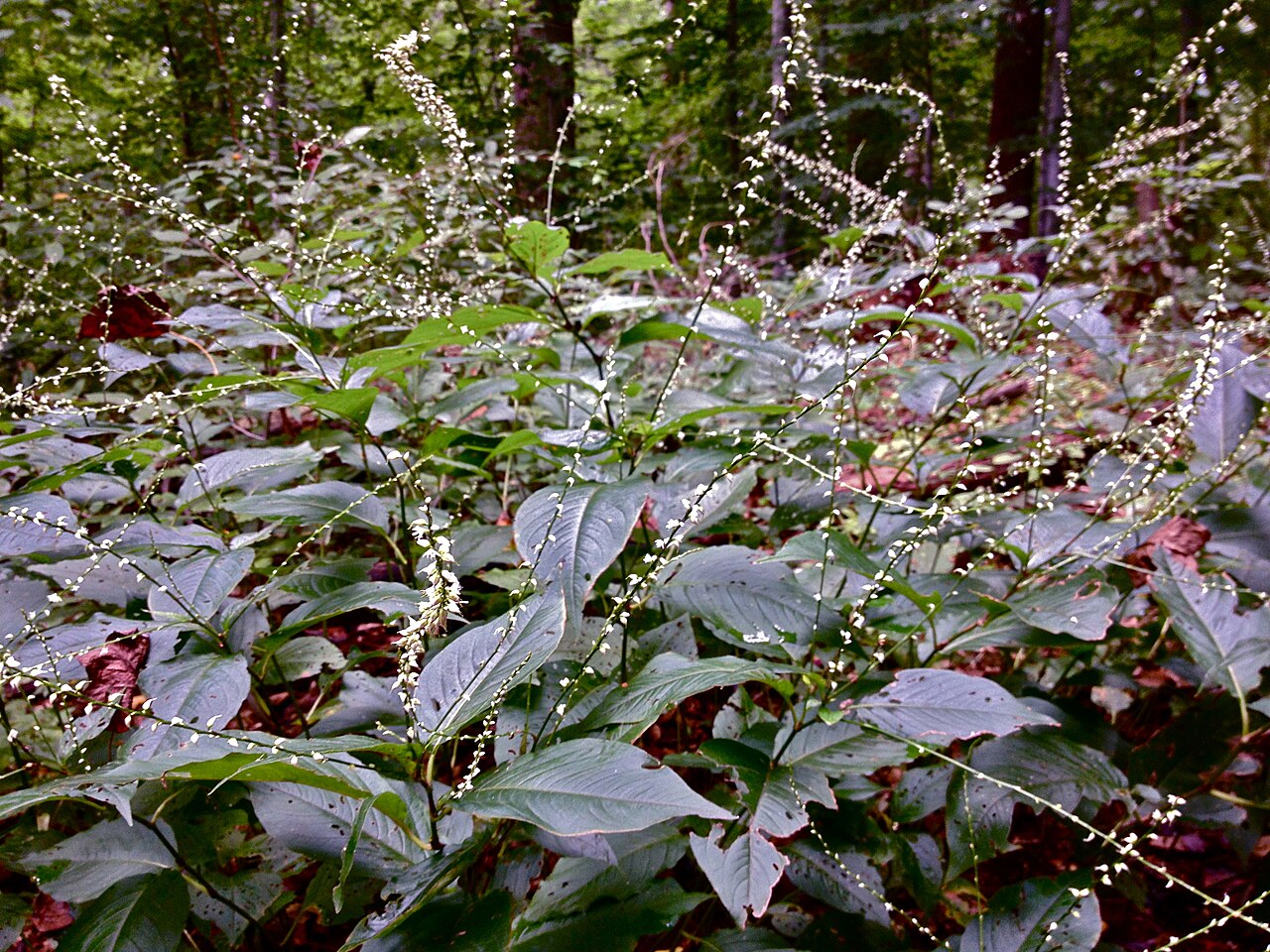
Persicaria virginiana (synonym Tovara virginiana) is a deciduous clump-forming perennial reaching 2–4 feet (0.6–1.2 m) tall with a spread of 2–3 feet (0.6–0.9 m) and an upright bushy habit. Native to eastern North America, this woodland species is cultivated primarily for its foliage—alternate broadly ovate leaves run 4–8 inches (10–20 cm) long and carry a pronounced dark brown to maroon chevron or V-shaped marking centered on each leaf blade. Flowers run tiny, greenish-white to pinkish, and open on slender wiry terminal and axillary spikes 6–12 inches (15–30 cm) long from July through September. The common name 'jumpseed' traces to the mature seeds that spring away when touched—a dehiscence mechanism that scatters seed across the immediate forest floor and supports the species' moderate self-seeding in favorable woodland garden conditions. Growth rate runs moderate. Hardy to zone 4. Self-seeding runs freely in favorable woodland conditions, so the species establishes colonies from initial single plantings. The variegated cultivar 'Painter's Palette' runs more commonly stocked in the North American nursery trade than the straight species.
Native Range
Persicaria virginiana is native to eastern North America, ranging from Quebec and Maine south to Florida and west to Minnesota and Texas. The species grows in moist deciduous forests, woodland edges, and streamside habitats across its broad native range. The moist-woodland native ecology translates in garden cultivation to a shade requirement combined with a preference for humus-rich moist soils.Suggested Uses
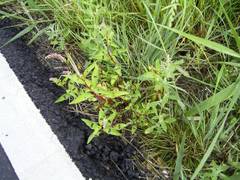
Planted in woodland gardens or shaded perennial borders at 2–3 foot (0.6–0.9 m) spacing in zone-4-and-warmer gardens. The chevron-marked foliage runs the primary ornamental feature and supplies woodland garden interest across the full growing season independent of the low-impact flowers. Shade is essential for preserving the chevron leaf markings. Self-seeding runs freely in favorable conditions, which means the species may establish seedling colonies beyond its original planting in woodland garden settings. Native North American woodland species origin fits the cultivar to native plant garden designs and pollinator-habitat plantings. Full-sun positions, dry soils, and sites where self-seeding would become problematic are poor fits for the species.How to Identify
Appearance
Size & Dimensions
Height2' - 4'
Width/Spread2' - 3'
Bloom Information
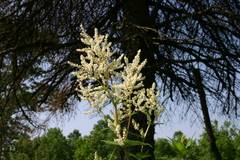
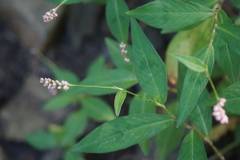
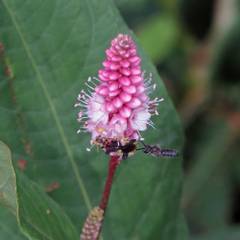
Slender wiry terminal and axillary spikes 6–12 inches (15–30 cm) long carry tiny greenish-white to pinkish flowers from July through September. Flowers run small and not showy; the chevron-marked foliage runs the primary ornamental feature across the growing season. Mature seeds disperse by springing away when touched, which is the source of the 'jumpseed' common name applied to the species.
Detailed Descriptions
Flower Description
Tiny greenish-white to pinkish; slender wiry terminal and axillary spikes 6-12 inches; July-September; flowers not showy—foliage runs the primary ornamental featureFoliage Description
Green with dark brown to maroon chevron or V-shaped marking centered on each leaf; broadly ovate 4-8 inches; alternate arrangementGrowing Conditions
Sun Requirements
Requires 2-5 hours of direct sunlight daily
• Full Sun: 6+ hours of direct sunlight
• Partial Shade: 3-6 hours of direct sunlight
• Full Shade: Less than 3 hours of direct sunlight
Care & Maintenance
Care Guide
Partial shade to full shade in moist humus-rich soil (pH 5.5–7.0) matches the species' cultivation needs. Hardy to zone 4 (−30°F / −34°C). Shade is essential because the dark brown leaf chevron markings fade toward green in full-sun positions and the foliage loses its characteristic patterned appearance. The species tolerates deep shade positions where many woodland perennials fail. Self-seeding runs freely in favorable conditions, so the species may establish in gardens beyond the original planting area where woodland conditions support seedling recruitment.Pruning
All stems are cut back in late autumn or early spring. Unwanted volunteer seedlings are removed as they emerge in spring to control colonial spread in gardens where the species has established beyond its original planting.Pruning Schedule
Prune: March
early spring