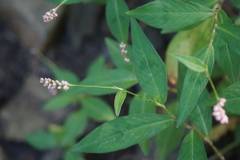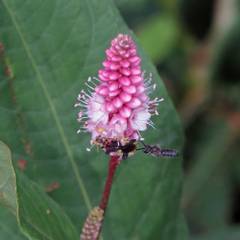
Persicaria, Genus, polymorpha, Species,
- Genus & species
giant fleece flower
Himalayas and eastern Asia (China, Japan, Korea; moist forests, stream banks, and mountain meadows)
Overview
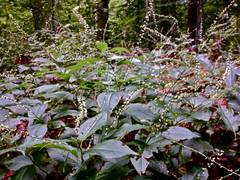
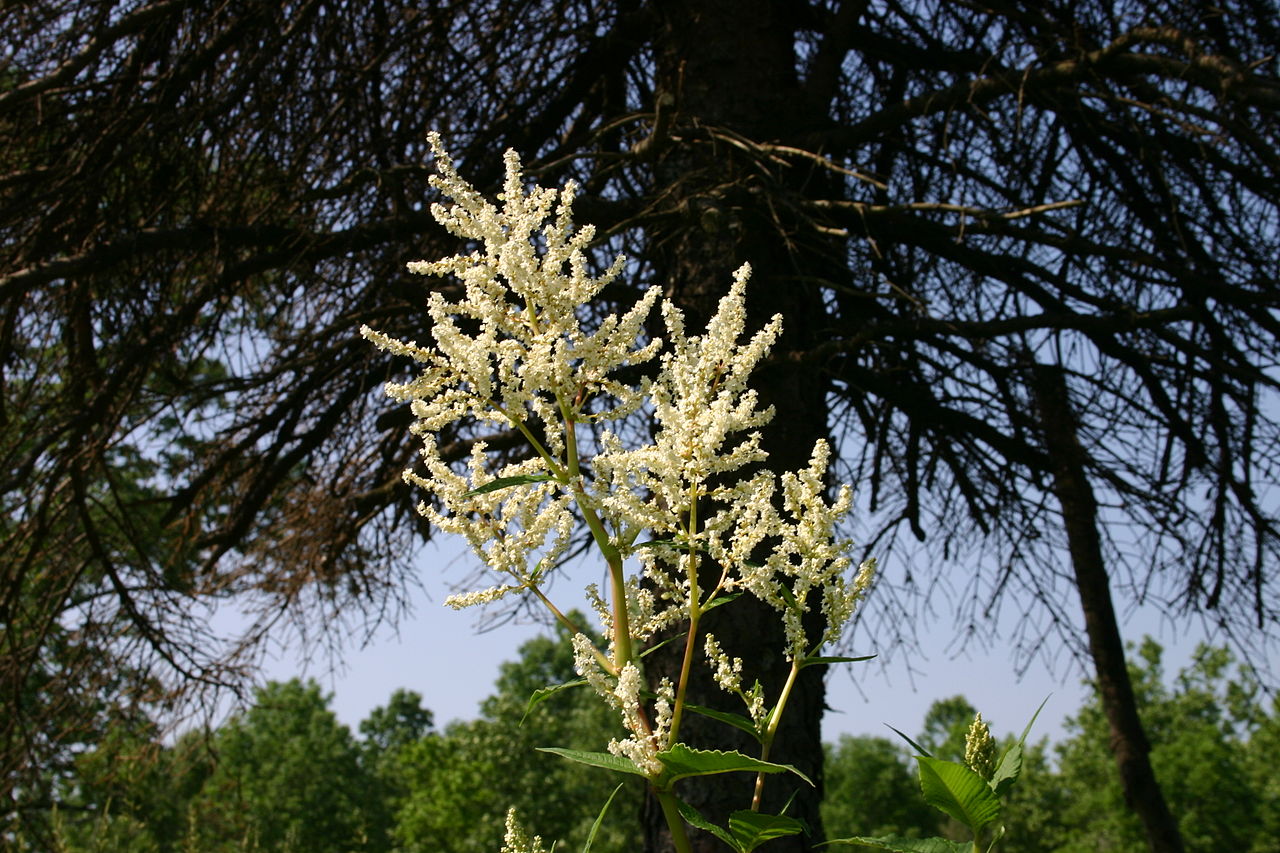
Persicaria polymorpha is a deciduous clump-forming perennial reaching 4–6 feet (1.2–1.8 m) tall with a spread of 3–5 feet (0.9–1.5 m) and a massive upright shrub-like habit held on thick hollow stems. Native to the Himalayas and eastern Asia, this species runs the largest herbaceous Persicaria in commercial cultivation—mature clumps form a substantial presence reminiscent of a small shrub or a giant Astilbe in garden scale. Alternate oblong-lanceolate leaves run 6–10 inches (15–25 cm) long and dark green in color. Large terminal plume-like panicles 6–12 inches (15–30 cm) long and 6–8 inches (15–20 cm) wide open in tiny creamy-white flowers from June through September and age through pink tones to rust-red as the bloom window progresses and seeds set. Growth rate runs fast. Hardy to zone 3. The large mature size does not translate into invasive colonial spread: the species runs a true clump-former without rhizome-based lateral spread. The species is occasionally mistaken at a distance for Fallopia japonica (Japanese knotweed), but the non-spreading clump-forming habit and plume-like flower structure separate the two entirely.
Native Range
Persicaria polymorpha is native to the Himalayas and across eastern Asia, ranging through China, Japan, and Korea. The species grows in moist forests, stream banks, and mountain meadow habitats across its native range. The moist mountain-meadow native ecology translates in garden cultivation to a preference for consistent soil moisture combined with tolerance of a broad range of soils from light loam through heavy clay.Suggested Uses
Planted as a large-scale specimen, as the rear anchor of a deep perennial border, or as a screening planting at 4–5 foot (1.2–1.5 m) spacing in zone-3-and-warmer gardens. The massive shrub-like presence combined with the large plumes and their white-to-pink-to-rust color transition supplies garden interest from midsummer through autumn across a 10-to-14-week window. Non-invasive clump-forming habit allows the species to hold the rear-border position without aggressive lateral spread. The species requires garden space to develop its characteristic shrub-like scale, and emergence runs late in spring relative to most perennials. Dry sites, small-scale confined borders, and compact garden beds are poor fits for the species.How to Identify
Appearance
Size & Dimensions
Height4' - 6'
Width/Spread3' - 5'
Bloom Information
Large terminal plume-like panicles 6–12 inches (15–30 cm) long and 6–8 inches (15–20 cm) wide open in tiny creamy-white flowers from June through September. Flower color ages through pink tones during the bloom window and finishes in rust-red as seeds set during August and September. Fresh bloom duration runs 10–14 weeks including the color transition. Dried seed heads persist through autumn and hold structural form into winter.
Detailed Descriptions
Flower Description
Creamy-white aging through pink to rust-red; large plume-like panicles 6-12 inches long and 6-8 inches wide; June-SeptemberFoliage Description
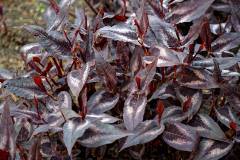
Dark green; oblong-lanceolate 6-10 inches; alternate arrangement; held on thick hollow stemsGrowing Conditions
Sun Requirements
Requires 4-10 hours of direct sunlight daily
• Full Sun: 6+ hours of direct sunlight
• Partial Shade: 3-6 hours of direct sunlight
• Full Shade: Less than 3 hours of direct sunlight
Care & Maintenance
Care Guide
Full sun to partial shade in moist fertile soil (pH 5.5–7.5) matches the species' cultivation needs. Hardy to zone 3 (−40°F / −40°C). The species tolerates a broad range of soils from light loam through heavy clay, which separates it from the drainage-fussy Mediterranean perennials that defeat in heavy soils. Consistent soil moisture supports the strongest growth and the fullest bloom window. The massive clump emerges late in spring relative to most perennials, so marking the clump location prevents accidental disturbance during early spring garden cleanup. Non-invasive colonial behavior does not require rhizome barriers despite the large mature scale.Pruning
All thick hollow stems are cut back to ground level in late autumn or early spring. The hollow stems can harbor overwintering garden pests if left standing through winter, so autumn cutback is chosen over spring cutback in pest-prone gardens.Pruning Schedule
Prune: March & November
fallearly spring